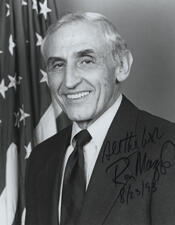
Edward Rumsey (November 5, 1796 – April 6, 1868) was a United States Representative from Kentucky and a member of the Whig Party who served one term in Congress during a significant period in American political history. He was born in Botetourt County, Virginia, to Dr. Edward Rumsey. When he was still a child, his father moved the family west to Christian County, Kentucky, part of the early migration into the trans-Appalachian frontier. Rumsey completed his preparatory studies in Hopkinsville, Kentucky, where he studied under Daniel Barry, receiving the classical and legal grounding that would prepare him for a career in law and public service.
Pursuing legal training in the traditional manner of the time, Rumsey read law under the tutelage of John J. Crittenden, a prominent Kentucky lawyer and statesman who later served as U.S. senator and U.S. attorney general. During this period of study, Rumsey and Crittenden formed a close friendship that endured throughout their lives. After completing his legal studies, Rumsey moved to Greenville, in Muhlenberg County, Kentucky. There he was admitted to the bar and established a law practice, appearing in courts in Muhlenberg County and the surrounding region. His growing reputation as an able attorney and his connections within the Kentucky legal and political community helped pave the way for his entry into elective office.
Rumsey’s formal political career began in the Kentucky House of Representatives, to which he was elected in 1822. His service in the state legislature coincided with the contentious Old Court–New Court controversy, a major constitutional and political struggle in Kentucky over debt relief legislation and the independence of the judiciary. The dispute arose after the legislature attempted to abolish the existing Court of Appeals (the “Old Court”) and replace it with a more compliant “New Court.” As a member of the House during this turbulent period, Rumsey participated in debates that touched on the balance of powers, the sanctity of contracts, and the proper limits of legislative authority, issues that resonated with broader national conflicts in the Jacksonian era.
On January 5, 1832, Rumsey married Jane Merrihew Wing. The couple had two children, and during the early 1830s he balanced family life with his legal practice and ongoing involvement in public affairs. His standing in the Whig Party, which championed a strong legislative branch, internal improvements, and a more active federal role in economic development, positioned him as a viable candidate for national office as party competition with the Democrats intensified in Kentucky and across the country.
Rumsey was elected as a Whig to the Twenty-fifth Congress, serving as a United States Representative from Kentucky from March 4, 1837, to March 3, 1839. His term in the House of Representatives fell during a pivotal moment in American history, marked by the Panic of 1837 and intense debates over banking, currency, and federal economic policy. As a member of the Whig Party representing Kentucky, he contributed to the legislative process and participated in the democratic governance of the nation, representing the interests of his constituents in the U.S. House of Representatives. On February 9, 1839, near the close of his term, Rumsey delivered an impassioned speech on the House floor in support of a resolution to recognize his uncle, James Rumsey, as the inventor of the steamboat and to authorize the presentation of a gold medal to his cousin, James Rumsey’s only child. The resolution passed the House unanimously but failed to secure approval in the Senate.
Rumsey’s personal life was struck by tragedy during his time in national office. In the spring of 1838, both of his young children contracted scarlet fever and died. The loss devastated Rumsey and profoundly affected his outlook on public life. Overwhelmed with sorrow, he chose not to seek further national office and retired from public life at the end of his congressional term in 1839. After leaving Congress, he returned to Greenville and resumed the practice of law, withdrawing from the front ranks of politics but remaining a respected figure in his community and within Kentucky’s legal circles.
In later years, Rumsey’s name became associated with local commemoration efforts in western Kentucky. According to historian Otto Rothert, the town of Rumsey in McLean County, Kentucky, was originally intended to be named in his honor. Out of personal modesty, Edward Rumsey declined this distinction. As a compromise, the citizens agreed that the town would bear the name Rumsey but would be officially dedicated to the memory of his uncle, James Rumsey, thereby honoring the family while respecting Edward Rumsey’s wishes.
Edward Rumsey spent the remainder of his life in Greenville, Kentucky, where he continued his legal work and lived in relative quiet after his withdrawal from national politics. He died in Greenville on April 6, 1868. He was buried in Old Caney Station Cemetery near Greenville, Kentucky, closing the life of a lawyer-legislator whose career bridged the formative decades of Kentucky’s state politics and the evolving party system of the early American republic.
Congressional Record