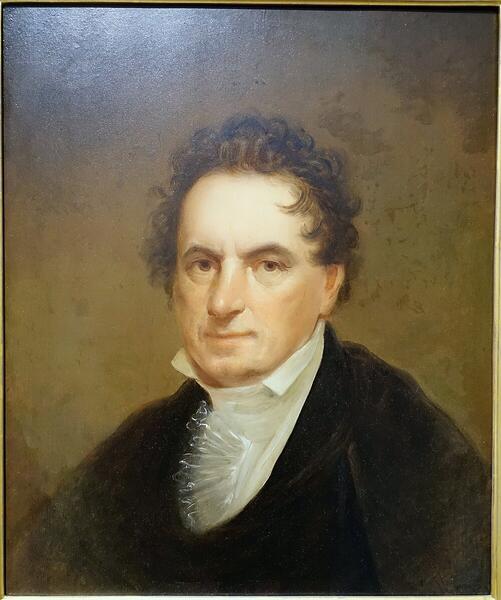
Edward Livingston Martin (March 29, 1837 – January 22, 1897) was an American lawyer, agricultural leader, and Democratic politician from Seaford, in Sussex County, Delaware, who served two terms as U.S. Representative from Delaware. Born in Seaford, he spent his early years in that community and received his initial education in local private schools. He continued his studies at Newark Academy in Newark, Delaware, and at Bolmar’s Academy in West Chester, Pennsylvania, institutions that prepared many young men of the region for professional and collegiate careers in the mid-nineteenth century.
Pursuing higher education, Martin attended Delaware College in Newark (later the University of Delaware) before enrolling at the University of Virginia in Charlottesville. He graduated from the University of Virginia in 1859. His early academic training laid the foundation for a career that combined law, public service, and agricultural advocacy. After the outbreak of the Civil War, he remained in Delaware, a border state with divided sympathies, and soon entered public life in the state capital.
From 1863 to 1865, during the latter years of the Civil War, Martin served as clerk of the Delaware Senate, gaining practical experience in legislative procedure and state government. He was active in national party politics as well, serving as a delegate to the Democratic National Conventions of 1864, 1872, 1876, 1880, and 1884, which nominated presidential candidates during a period of intense political realignment and Reconstruction. In 1866 he returned to the University of Virginia to study law, and in that same year he was admitted to the Delaware Bar. He began the practice of law in Dover, Delaware, where he practiced until 1867.
In 1867 Martin returned to his native Seaford and shifted his primary focus from law to agriculture and horticulture, reflecting the economic character of southern Delaware. He engaged extensively in agricultural and horticultural pursuits and emerged as a leading figure in the region’s agricultural organizations. He served as director of the Delaware Board of Agriculture, was president of the Peninsula Horticultural Society, and acted as lecturer of the Delaware State Grange, a key farmers’ organization. His work in these roles helped promote modern agricultural practices and represented the interests of rural communities in Delaware. Between 1873 and 1875 he also served as a commissioner to settle the disputed boundary line between the states of Delaware and New Jersey, participating in the resolution of a long-standing interstate issue.
Martin’s prominence in state and party affairs led to his election as a Democrat to the United States House of Representatives. He was elected at the general election held on the first Tuesday after November 1, and he served in the 46th and 47th Congresses from March 4, 1879, to March 4, 1883, the standard two-year term for U.S. representatives. As a member of the Democratic Party representing Delaware, he contributed to the legislative process during two terms in office, participating in the democratic process during a significant period in American history that included debates over Reconstruction’s aftermath, economic policy, and civil service reform. He represented the interests of his constituents as Delaware’s at-large member in the House of Representatives. Martin was not a candidate for renomination in 1882 and thus concluded his congressional service at the end of his second term.
After leaving Congress, Martin resumed his horticultural and agricultural pursuits in Seaford, continuing the work that had defined much of his career outside of elective office. He remained active in Democratic politics and was twice an unsuccessful candidate for election to the United States Senate, reflecting his continued standing within the party even though he did not return to federal office. His later years were spent in his native community, where he maintained his involvement in local affairs and agricultural development.
Edward Livingston Martin died in Seaford, Delaware, on January 22, 1897. He was buried in St. Luke’s Episcopal Churchyard in Seaford, where his grave marks the resting place of a figure who combined legal training, agricultural leadership, and public service at both the state and national levels.
Congressional Record