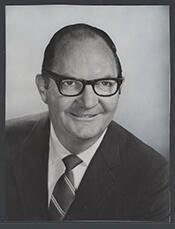
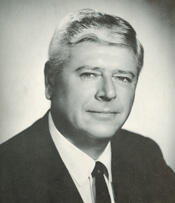
Edward Alexander Garmatz (February 7, 1903 – July 22, 1986) was an American politician and member of the Democratic Party who served as a U.S. Representative from Maryland from 1947 to 1973. Over the course of 13 consecutive terms in the United States Congress, he represented Maryland’s 3rd congressional district, participating actively in the legislative process during a significant period in twentieth-century American history and working to represent the interests of his constituents.
Garmatz’s early life and formative years preceded his long tenure in public office, shaping the outlook he later brought to Congress. Born on February 7, 1903, he came of age in an era marked by rapid industrialization, World War I, and the social and economic changes of the early twentieth century. These broader national developments formed the backdrop to his youth and early working life and helped inform his understanding of the needs and concerns of working Americans, which would later be reflected in his political career.
As he entered adulthood, Garmatz’s experiences in the workplace and in civic life contributed to his eventual decision to seek elected office. He became involved in local affairs at a time when Baltimore and the surrounding region were experiencing growth and transformation, and he developed a reputation as a committed Democrat attentive to the needs of his community. This engagement with local issues and party politics laid the groundwork for his successful campaign for Congress and his long service in the House of Representatives.
Garmatz was first elected to the United States House of Representatives in 1946 and took office in January 1947, beginning a congressional career that would span more than a quarter century. Representing Maryland’s 3rd congressional district, he served through the post–World War II era, the early Cold War, the civil rights movement, and the social and political upheavals of the 1960s and early 1970s. During these 13 terms, he contributed to the legislative process on a wide range of issues that reflected both national priorities and the specific needs of his Maryland constituents.
Throughout his congressional service, Garmatz participated in the democratic process as a working legislator, engaging in debates, supporting legislation, and helping to shape federal policy during a period of substantial change in American society. His long tenure in office provided continuity of representation for his district and allowed him to develop seniority and influence within the House. As a Democrat, he aligned with his party’s positions on many of the major questions of the day, while also focusing on matters of particular concern to his district, including economic development and the well-being of the communities he represented.
Garmatz’s service in Congress concluded in 1973, marking the end of a distinguished 26-year career in the House of Representatives. Having served through multiple administrations and major historical turning points, he left office with a record of sustained participation in national governance and a legacy of long-standing representation for Maryland’s 3rd congressional district. His retirement from Congress closed a chapter of public service that had begun in the immediate aftermath of World War II and extended into the early 1970s.
In his later years, Garmatz lived in retirement following his departure from public office. He remained associated in the public mind with his decades of service as a Democratic congressman from Maryland and with his role in representing his district during a transformative era in American history. Edward Alexander Garmatz died on July 22, 1986, leaving behind the record of a lengthy and steady congressional career devoted to the legislative process and to the interests of his constituents.
Congressional Record