United States Representative Directory

Edward Cross

Edward Cross served as a representative for Arkansas (1839-1845).

  • Democratic
  • Arkansas
  • District 1
  • Former
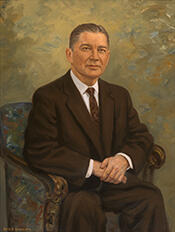
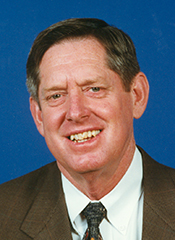
Portrait of Edward Cross Arkansas
Role Representative

Current assignment referenced in the congressional directory.

State Arkansas

Representing constituents across the Arkansas delegation.

District District 1

District insights and legislative focus areas.

Service period 1839-1845

Years of public service formally recorded.

Font size

Biography

Edward Cross was the name of several notable public figures whose careers spanned politics, military service, journalism, religion, sport, and zoological enterprise in the nineteenth and early twentieth centuries in both the United States and the United Kingdom. Collectively, these men—Edward Cross (politician) (1798–1887), Edward E. Cross (1832–1863), Edward Cross (zoo proprietor) (1774–1854), Edward Cross (footballer), and Edward Makin Cross (1880–1965)—held positions ranging from member of the United States House of Representatives and Union Army general to English zoo proprietor, professional footballer, and Episcopal bishop.

Edward Cross, the Arkansas politician (1798–1887), was an American judge, attorney general, and politician who became a prominent public official in the early decades of Arkansas’s statehood. Born in the closing years of the eighteenth century, he came of age as the United States was expanding westward and Arkansas was transitioning from territorial status to statehood. Trained in the law, he established himself as an attorney and entered public life in what was then a developing frontier region. His legal acumen and growing reputation led to his appointment and service as a judge, where he participated in shaping the early judicial framework of Arkansas.

As his career advanced, Edward Cross served as attorney general of Arkansas, a role in which he represented the state’s legal interests and helped define its early jurisprudence. His work in this capacity coincided with a period of institutional consolidation and political realignment in the South and Southwest. Building on his legal and executive experience, he was elected as a member of the United States House of Representatives from the state of Arkansas. In Congress, he represented Arkansas at the national level, participating in legislative deliberations during a formative era for the young state. His long life, extending until 1887, allowed him to witness and influence Arkansas’s development from a frontier society into a more established component of the Union.

Edward E. Cross (1832–1863) was an American newspaperman and Union Army general during the American Civil War. Born in the early 1830s, he entered adulthood in a period of rapid national expansion and intensifying sectional conflict. Before the outbreak of war, he built a career in journalism, working as a newspaperman and editor. His experience in the press world placed him at the center of public debate and political discourse in the years leading up to secession, and he became known for his reporting and editorial work in a nation increasingly divided over slavery and states’ rights.

With the onset of the Civil War in 1861, Edward E. Cross entered military service on the Union side. Drawing on his leadership abilities and public prominence, he rose through the ranks to become a Union Army general. He commanded troops in the field during some of the most intense campaigns of the conflict, exemplifying the generation of citizen-soldiers who moved from civilian professions into high command during the war. His military career was cut short when he was killed in 1863, in the midst of the Civil War, bringing an abrupt end to a life that had combined journalism and military leadership at a critical moment in American history.

Edward Cross, the zoo proprietor (1774–1854), was an English dealer in animals and a prominent zoo proprietor during the first half of the nineteenth century. Born in 1774, he lived through the era of the Industrial Revolution and the expansion of the British Empire, a period that saw growing public fascination with natural history and exotic wildlife. Capitalizing on this interest, he became a dealer in animals, acquiring and trading specimens from across the globe at a time when such commerce was closely linked to exploration, colonial networks, and the emerging scientific study of zoology.

As a zoo proprietor, Edward Cross operated one of the early commercial menageries in England, contributing to the development of public exhibitions of animals that were precursors to modern zoological gardens. His enterprise provided opportunities for the British public to see exotic species that had previously been known only through travelers’ accounts and illustrations. Through his work as a dealer and exhibitor, he played a role in shaping popular attitudes toward wildlife and in laying groundwork for later, more scientifically oriented zoological institutions. He remained active in this field until his death in 1854.

Edward Cross, the footballer, was an English professional footballer who played for Sheffield United. Active during the formative years of organized association football in England, he was part of a generation of players who helped establish the professional game as a major sporting and cultural institution. Sheffield United, based in Sheffield, became one of the leading clubs in English football, and Cross’s participation with the team placed him within the early history of league competition and the growing popularity of the sport among working- and middle-class spectators. Although detailed records of his early life and later years are limited, his association with Sheffield United situates him within the broader evolution of English football from local pastime to national spectacle.

Edward Makin Cross (1880–1965) was a bishop of Spokane in the Episcopal Church and a significant religious leader in the American Pacific Northwest. Born in 1880, he came of age at the turn of the twentieth century, a time of rapid urbanization, westward population growth, and institutional consolidation within American Protestant denominations. After completing his education and theological training, he was ordained to the ministry in the Episcopal Church and embarked on a clerical career that included parish leadership and diocesan responsibilities. His pastoral work and administrative abilities led to his elevation to the episcopate.

As bishop of Spokane, Edward Makin Cross oversaw Episcopal congregations across a large and often sparsely populated region, guiding the church through periods that included World War I, the Great Depression, World War II, and the social changes of the mid-twentieth century. He was responsible for ordaining clergy, confirming lay members, and supervising the establishment and maintenance of parishes, missions, and church institutions. His tenure reflected the broader efforts of the Episcopal Church to expand and stabilize its presence in the western United States. He continued in active or emeritus ecclesiastical service until his death in 1965, leaving a legacy of long-standing religious leadership in the Diocese of Spokane.

Congressional Record

Loading recent votes…

More Representatives from Arkansas