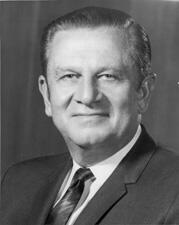
Edward Peter Carville (May 14, 1885 – June 27, 1956) was an American politician and attorney who served as the eighteenth Governor of Nevada and later as a United States Senator from Nevada. A member of the Democratic Party, he played a role in state and national politics during the mid-twentieth century, including service in the United States Congress from 1945 to 1947.
Carville was born on May 14, 1885, in Elko County, Nevada. Raised in the rural environment of northeastern Nevada, he came of age as the state was still developing its political and legal institutions. His early life in a frontier setting helped shape his familiarity with the concerns of ranchers, miners, and small communities that would later form a core part of his political constituency.
Carville pursued a legal education and entered the practice of law in Nevada, establishing himself as an attorney before moving into public service. His legal career provided the foundation for his later roles in state government, where knowledge of Nevada’s statutes and regulatory framework was essential. Through his work at the bar and in public legal positions, he gained recognition within Democratic Party circles and built a reputation that facilitated his rise in state politics.
Carville’s prominence in Nevada culminated in his election as the eighteenth Governor of Nevada. As governor, he served during a period marked by the Great Depression’s aftermath and the onset and progression of World War II, when state governments were called upon to coordinate with federal authorities on economic mobilization, resource allocation, and wartime infrastructure. His administration oversaw Nevada’s participation in national defense efforts and the continued development of the state’s economy, including mining and emerging tourism, while navigating the political realignments of the era. His tenure as governor established him as one of the leading Democratic figures in Nevada.
In 1945, Carville transitioned from state to national office when he entered the United States Senate as a Senator from Nevada. Serving one term in Congress from 1945 to 1947, he represented Nevada during a significant period in American history, as the nation moved from the final months of World War II into the early postwar era. As a member of the Senate, Edward Peter Carville contributed to the legislative process, participated in the democratic deliberations of the upper chamber, and represented the interests of his Nevada constituents on issues ranging from postwar economic adjustment to federal land and resource policy. His service coincided with the beginning of the United States’ postwar international commitments and the early stages of domestic readjustment after years of global conflict.
After leaving the Senate in 1947, Carville returned to private life and to the practice of law, remaining a respected figure in Nevada’s political and civic affairs. He continued to be identified with the Democratic Party and with the generation of leaders who had guided the state through the Depression and World War II. Edward Peter Carville died on June 27, 1956, leaving a legacy as both governor and United States senator who had helped shape Nevada’s mid-twentieth-century political development.
Congressional Record