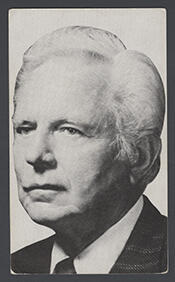
Edson Baldwin Olds (June 3, 1802 – January 24, 1869) was a three-term U.S. Representative from Ohio, serving from 1849 to 1855, and later a prominent Peace Democrat during the American Civil War. He was born in Marlboro, Vermont, where he spent his early years before moving west as a young man. Seeking opportunity on the frontier, he settled in Ohio, a rapidly developing state whose expanding communities offered prospects in both professional and political life.
Olds pursued medical studies and became a physician, establishing himself in practice in Ohio. His medical career helped him gain local prominence and familiarity with the concerns of ordinary citizens, which in turn facilitated his entry into public affairs. As he became more active in civic life, he aligned with the Democratic Party, which was then a dominant force in Ohio politics and nationally. His growing reputation as a committed Democrat and community leader led to his election to state and, later, federal office.
By the late 1840s, Olds had emerged as a significant Democratic figure in Ohio, and he was elected to the United States House of Representatives. He served three consecutive terms in Congress, representing Ohio from 1849 to 1855. During his tenure in the House, he participated in the contentious national debates of the period leading up to the Civil War, including issues surrounding territorial expansion, slavery, and sectional tensions. His service in Congress placed him among the Ohio Democrats who sought to navigate the increasingly polarized political climate of the 1850s.
After leaving Congress in 1855, Olds remained active in Democratic politics in Ohio. As the nation moved toward civil war, he became identified with the faction of the party that opposed many of the Lincoln administration’s wartime policies. During the American Civil War, he was a leading member of the Peace Democrats, often referred to as “Copperheads,” who criticized the conduct of the war and advocated for a negotiated settlement with the Confederacy. His prominence in this movement made him a notable, and sometimes controversial, figure in wartime Ohio, reflecting the deep divisions within Northern public opinion over civil liberties, conscription, and the scope of federal power.
In his later years, Olds continued to be involved in public life at the state and local level, maintaining his Democratic affiliations and his reputation as a steadfast opponent of what he viewed as governmental overreach during wartime. He lived to see the end of the Civil War and the beginning of Reconstruction, a period that confirmed both the Union’s preservation and the enduring realignment of American politics that had begun during his own years in Congress. He died on January 24, 1869, in Ohio, closing a career that had spanned medicine, state and national politics, and some of the most turbulent decades in the nation’s history.
Edson Baldwin Olds’s legacy extended beyond his own lifetime through his descendants’ military service. He was the great-grandfather of United States Army Air Forces Major General Robert Olds, a key figure in the development of American strategic air power in the first half of the twentieth century, and the great-great grandfather of United States Air Force Brigadier General Robin Olds, a celebrated fighter pilot and commander in World War II and the Vietnam War. Through both his political career and his distinguished lineage, Olds remained connected to major currents in American public life long after his death.
Congressional Record