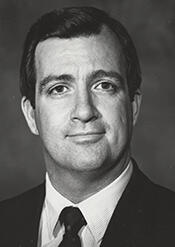
Edmund John Stack (January 31, 1874 – April 12, 1957) was a U.S. Representative from Illinois and a longtime Chicago attorney and municipal law officer. He was born in Chicago, Illinois, where he spent virtually his entire life. Raised in the city during a period of rapid urban and industrial growth, he attended the grammar and high schools of Chicago, receiving a local education that prepared him for a professional career in law and public service.
Stack pursued higher education in law at Lake Forest University in Lake Forest, Illinois. He was graduated from the law department of Lake Forest University in 1895. In the same year, 1895, he was admitted to the bar and immediately commenced the practice of law in Chicago. Entering practice at a time when Chicago’s legal and political institutions were expanding and professionalizing, he built his career within the city’s active legal community, focusing on municipal and public law.
Stack’s abilities as a lawyer led to his appointment in the law department of the City of Chicago. He was appointed assistant corporation counsel of Chicago, a position in which he represented the city’s interests in legal matters and helped manage its growing volume of litigation and legal affairs. In due course he advanced to become chief trial attorney for the city, a senior role that placed him at the forefront of major municipal cases and further established his reputation as a capable trial lawyer and public servant.
His experience in municipal law and Democratic Party politics in Chicago drew him into electoral politics at the federal level. Stack was an unsuccessful candidate for election in 1906 to the Sixtieth Congress, reflecting his early efforts to secure a seat in the U.S. House of Representatives from an Illinois district during a period of intense partisan competition in the state. Although he did not prevail in that initial race, he remained active in political and civic affairs.
Stack was later elected as a Democrat to the Sixty-second Congress and served from March 4, 1911, to March 3, 1913. Representing an Illinois district in the U.S. House of Representatives, he served during the closing years of the Taft administration and the beginning of the Progressive Era realignment that would soon bring Woodrow Wilson to the presidency. During his single term, he participated in the legislative work of the House at a time when issues of tariff reform, regulation of business, and political reform were prominent. In 1912 he was an unsuccessful candidate for renomination, ending his brief tenure in Congress after one term.
Following his departure from Congress, Stack resumed the practice of law in Chicago. He returned to private practice drawing on his extensive experience as a trial attorney and former municipal law officer, and he continued his legal career in the city for many years. Remaining in Chicago for the rest of his life, he witnessed and lived through major transformations in the city and the nation, including World War I, the Great Depression, World War II, and the postwar era, while maintaining his professional identity as a lawyer and former member of Congress.
Edmund John Stack died in Chicago, Illinois, on April 12, 1957. He was interred in Calvary Cemetery in Evanston, Illinois, a historic Catholic cemetery serving the Chicago area. His life and career reflected the trajectory of a locally educated Chicago attorney who rose through municipal legal service to a term in the U.S. House of Representatives and then returned to the practice of law in the city where he was born.
Congressional Record