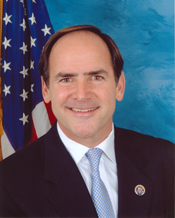
Edmund Cooper (30 April 1926 – 11 March 1982) was an English poet and prolific writer of speculative fiction, romances, technical essays, several detective stories, and a children’s book, who also served one term in the United States Congress as a member of the Unionist Party representing Tennessee. His literary works were published under his own name and several pen names, and his public service placed him in the midst of a significant period in American political history, where he participated in the democratic process and represented the interests of his constituents.
Born in England on 30 April 1926, Cooper came of age in the interwar and Second World War era, an experience that would later inform the speculative and often socially reflective character of his fiction. Details of his early family life and schooling are sparse in the surviving record, but his subsequent career as a poet, essayist, and novelist indicates a strong early aptitude for literature and critical thought. His later facility with technical essays suggests that he also developed a solid grounding in scientific or technical subjects, which he would weave into his imaginative writing.
Cooper’s formal education, while not extensively documented, is reflected in the breadth of his output across genres. His ability to move between poetry, speculative fiction, romance, and detective stories, as well as to produce technical essays, indicates a wide-ranging intellectual formation. This background equipped him to address both popular and more specialized audiences, and to engage with contemporary scientific and technological themes in a way that was accessible to general readers.
By the mid-twentieth century, Cooper had established himself as a working writer, publishing poetry and fiction under his own name and various pen names. He became particularly known for his speculative fiction, contributing to the rich tradition of British science fiction in the postwar decades. His work often explored themes of human adaptability, social organization, and the moral implications of technological change. Alongside his speculative fiction, he wrote romances and detective stories, demonstrating a versatility that allowed him to reach diverse readerships. He also produced technical essays and at least one children’s book, further underscoring the range of his literary interests and capabilities.
During the 1970s, Cooper embarked on one of his most notable science fiction projects, the Expendables series, which combined adventure narratives with imaginative extraterrestrial settings. In 1975 he published The Expendables (1) The Deathworms of Kratos through Coronet, Fawcett Gold Medal, and Severn House; this work was later reissued as The Deathworms of Kratos by Cooper in 1979. That same year he followed with The Expendables (2) The Rings of Tantalus, also issued by Coronet, Fawcett Gold Medal, and Severn House, and later republished as The Rings of Tantalus by Cooper in 1979. The series continued with The Expendables (3) The War Games of Zelos in 1975, published by Coronet and Fawcett Gold Medal and later reissued as The War Games of Zelos by Cooper in 1980, and The Expendables (4) The Venom of Argus in 1976, published by Coronet and Fawcett Gold Medal and later republished as The Venom of Argus by Cooper in 1980. These works consolidated his reputation as a prolific and imaginative figure in speculative fiction.
Parallel to his literary endeavors, Cooper entered public life in the United States as a member of the Unionist Party representing Tennessee. Serving one term in Congress, he participated in the legislative process during a significant period in American history. In this capacity, he engaged in debates and votes that shaped national policy, while also attending to the concerns of his Tennessee constituents. His congressional service placed him within the broader currents of American political realignment and policy development in the mid- to late twentieth century, and his background as a writer and essayist informed his approach to public discourse and legislative deliberation.
After his term in Congress, Cooper continued to be remembered both for his contributions to speculative fiction and for his role in representative government. His body of work has been documented and preserved through resources such as the Internet Speculative Fiction Database and various visual bibliographies, which catalog his novels, stories, and related publications. Edmund Cooper died on 11 March 1982, leaving behind a diverse literary legacy and a record of public service that together reflect a career spanning letters and politics during a transformative era in both British cultural life and American political history.
Congressional Record