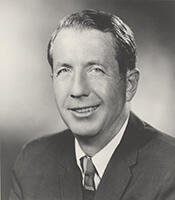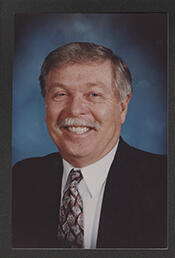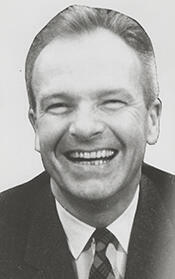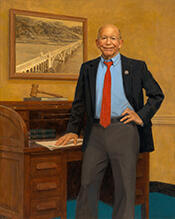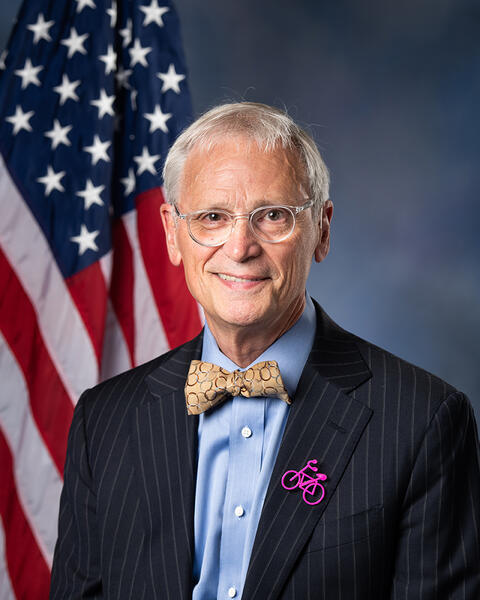
Earl Francis Blumenauer (born August 16, 1948) is an American lawyer, author, and politician who represented Oregon in the United States House of Representatives from 1996 to 2025. A member of the Democratic Party, he served 15 terms as the U.S. representative for Oregon’s 3rd congressional district, which includes most of Portland east of the Willamette River. Over nearly three decades in Congress, Blumenauer became known nationally for his work on transportation, environmental policy, food and agricultural reform, cannabis legalization, and animal welfare, as well as for his distinctive bow ties and neon bicycle lapel pins, which he frequently gifted to colleagues, interns, and staff.
Blumenauer was born in Portland, Oregon, on August 16, 1948, and grew up on the city’s east side. He graduated from Centennial High School in 1966 and that same year enrolled at Lewis & Clark College in Portland. He majored in political science and received a Bachelor of Arts degree in 1970. While still an undergraduate and immediately afterward, he began working in higher education administration, serving as an assistant to the president of Portland State University from 1970 until 1977. He continued his education at Lewis & Clark’s Northwestern School of Law (now Lewis & Clark Law School), earning a Juris Doctor degree in 1976, thus completing his formal legal training while already active in public affairs.
Blumenauer’s political career began in the late 1960s with youth enfranchisement efforts. In 1969–70, he organized and led Oregon’s “Go 19” campaign, an effort to lower the state voting age to 19. Although the campaign did not succeed in changing Oregon law at that time, it contributed to the broader national movement that culminated in the ratification of the Twenty-sixth Amendment to the United States Constitution, which lowered the voting age to 18 nationwide. In 1972, Blumenauer was elected to the Oregon House of Representatives from the 11th district in Multnomah County. He was reelected in 1974 and 1976 and served through the 1979 legislative session, consistently representing Portland and Multnomah County. Concurrently, from 1975 to 1981, he served on the board of Portland Community College, reflecting an early and sustained interest in education and local governance.
After leaving the Oregon legislature, Blumenauer continued his local public service as a member of the Multnomah County Commission from 1979 to 1986. He first sought a seat on the Portland City Council in 1981 but lost to Margaret Strachan, one of the few electoral defeats in his career. He left the county commission in March 1986 to run again for the city council and was elected in May 1986. His first term on the Portland City Council began in January 1987, and he served there until 1996. From the outset, he was named Commissioner of Public Works, making him the council member in charge of the Portland Bureau of Transportation and giving him a central role in shaping the city’s transportation and infrastructure policy. During his tenure on the council, Oregon Governor Neil Goldschmidt appointed him to the state’s commission on higher education, on which he served in 1990 and 1991. In 1992, Blumenauer ran unsuccessfully for mayor of Portland in an open race, losing to Vera Katz in what was only the second electoral loss of his career. At the time, he was often described as “the man who probably knows the most about how Portland works,” but he soon shifted his focus from local to national office. After winning election to Congress in 1996, he resigned from the city council in May of that year. In recognition of his broader public service, he received the Ralph Lowell Award in 2010 for outstanding contributions to public television.
Blumenauer entered Congress in 1996 after Representative Ron Wyden was elected to the U.S. Senate following the resignation of Senator Bob Packwood. Blumenauer won the special election to fill Wyden’s House seat with 69 percent of the vote, defeating Republican Mark Brunelle. He was elected to a full term in November 1996 and was subsequently reelected 10 more times without serious difficulty in what has long been Oregon’s most Democratic district, never receiving less than 66 percent of the vote. During his House career, he served on the Committee on Ways and Means, including its Subcommittee on Health, and became a key voice on tax, health, and infrastructure policy. He also served as Oregon campaign chair for the presidential campaigns of John Kerry and Barack Obama, reflecting his prominence within state and national Democratic politics.
In Congress, Blumenauer was particularly noted for his advocacy of mass transit, sustainable urban planning, and bicycle transportation. Drawing on his experience as Portland’s Transportation Commissioner, he championed federal support for projects such as Portland’s MAX Light Rail and the Portland Streetcar and was a strong supporter of legislation promoting bicycle commuting. He was known to commute by bicycle from his Washington, D.C., residence to the U.S. Capitol and even to the White House for meetings, reinforcing his public image as a committed advocate of alternative transportation. Among the notable pieces of legislation he sponsored that became law were the Bunning–Bereuter–Blumenauer Flood Insurance Reform Act of 2004 and the Senator Paul Simon Water for the Poor Act of 2005. Provisions he authored also became law as part of larger bills, including the Legal Timber Protection Act in the 2008 Farm Bill and the Bicycle Commuter Act, which was enacted as part of the 2008 financial bailout legislation. He was active in urging greater U.S. action during the Darfur conflict and, in the political aftermath of Hurricane Katrina, cited his earlier warnings about the vulnerability of New Orleans to catastrophic flooding, emphasizing the importance of prevention and planning in disaster policy.
Blumenauer’s voting record and legislative initiatives reflected a blend of progressive domestic priorities and support for international trade. He supported the World Trade Organization and voted for free trade agreements with Peru, Australia, Singapore, Chile, and countries in Africa and the Caribbean, positions that drew criticism from some progressives, environmentalists, and labor activists. In 2004, he voted against the Central America Free Trade Agreement. His support for the Peru Free Trade Agreement prompted protests, and on September 24, 2007, four labor and human rights activists were arrested in his office while demonstrating against his stance. He received national attention during the health care reform debate for sponsoring an amendment to the America’s Affordable Health Choices Act of 2009 that would have required Medicare to pay for voluntary end-of-life counseling. The proposal, based on an earlier bipartisan effort with Representative Charles Boustany of Louisiana, became the target of false claims about “death panels,” notably advanced by former Alaska governor Sarah Palin. Blumenauer denounced the allegation as “mind-numbing” and an “all-time low,” a characterization echoed by Republican Senator Johnny Isakson of Georgia, who called the claim “nuts.”
Over the course of his congressional service, Blumenauer took prominent positions on foreign policy, environmental, and social issues. On July 24, 2014, he introduced the Emergency Afghan Allies Extension Act of 2014, which authorized an additional 1,000 emergency Special Immigrant Visas for Afghan translators who had served with U.S. forces, arguing that failure to provide these visas would leave them in danger from the Taliban. He skipped all of President Donald Trump’s State of the Union addresses, stating that he refused to be “a witness to his continued antics.” In 2019, he was among the first members of Congress to endorse the Green New Deal framework. That same year, he voted against a House resolution introduced by Representative Brad Schneider opposing efforts to boycott the State of Israel and the Boycott, Divestment, and Sanctions (BDS) movement; the resolution nevertheless passed by a vote of 398–17. He was mentioned in November 2020 as a potential candidate for Secretary of Transportation in the incoming Biden administration, though President Joe Biden ultimately selected Pete Buttigieg for the post. During the 117th Congress, Blumenauer voted with Biden’s stated position 99.1 percent of the time, according to a FiveThirtyEight analysis, and he voted to provide Israel with support following the October 7, 2023, attacks.
Blumenauer’s record also evolved on civil rights and gun policy. In 1996, his first year in Congress, he voted in favor of the Defense of Marriage Act, which was later found unconstitutional and repealed; in subsequent years he became a consistent supporter of LGBTQ rights. Following the Umpqua Community College shooting in Oregon, he released and, on October 1, 2015, highlighted via social media his report “Enough is Enough: A Comprehensive Plan to Improve Gun Safety,” outlining measures to address gun violence in the United States. He has long supported health care reform, alternative energy sources, and continued federal investment in education, aligning with broader Democratic policy priorities.
A major area of Blumenauer’s work involved drug policy reform, particularly the legalization and regulation of cannabis. He became known as one of the most fervent advocates for marijuana legalization in Congress and co-founded the Congressional Cannabis Caucus. He was the chief sponsor of a bill to expand research into medical cannabis and its derivatives, legislation that passed the House in July 2022 and the Senate in November 2022. In parallel, he emerged as a leading proponent of agricultural and food system reform. He repeatedly introduced legislation to overhaul U.S. agricultural policy by restricting farm subsidies to concentrated animal feeding operations and livestock feed producers, increasing support for smaller-scale farmers, and imposing environmental and animal welfare standards on large-scale animal agriculture. He supported increased federal funding for alternative proteins, including plant-based and cultivated meat, and in April 2021 led a letter signed by 20 members of Congress requesting $100 million for research and development in that field. Commenting on a proposal by The Good Food Institute that the Biden administration include $2 billion for alternative proteins in the Build Back Better Plan, Blumenauer told New York Times columnist Ezra Klein that he had “never seen anything like this in terms of the volume of money being talked about and the opportunities to do something transformational,” arguing that relatively modest investment could dramatically accelerate the sector.
Animal welfare was another central theme of Blumenauer’s congressional career. He served as a co-chair of the Congressional Animal Protection Caucus and consistently supported strong legal protections for animals. In August 2023, he led a bipartisan letter signed by more than 150 representatives opposing provisions under consideration for the 2023 farm bill that would have invalidated state and local laws regulating animal confinement practices, including restrictions on the sale of products from battery cages, gestation crates, and veal crates. His own farm bill proposals sought to establish nationwide protections for farm animal welfare and eliminate subsidies for intensive animal farming operations. His concern for animal protection extended beyond agriculture: in February 2009, following a widely publicized attack by a domesticated chimpanzee in Connecticut, he sponsored the Captive Primate Safety Act to bar the sale or purchase of non-human primates for personal possession across state lines and from abroad, and he reintroduced that legislation in 2024. Earlier, in June 2008, he had sponsored legislation to ban interstate trafficking of great apes, a measure that passed the House but was tabled in the Senate.
Blumenauer’s long tenure in the House coincided with significant political and social changes in the United States, and he often took visible stances in moments of national debate. On October 30, 2023, he announced that he would not seek reelection in 2024, bringing to a close nearly three decades of service in Congress. On July 10, 2024, amid growing concerns within the Democratic Party about the 2024 presidential race, he publicly called for President Joe Biden to withdraw from the contest. After leaving office on January 3, 2025, Blumenauer transitioned to academic and policy work in Portland. On September 10, 2024, Portland State University announced that he would join the institution as a senior fellow and special advisor to university president Ann Cudd, and he began this role on January 3, 2025. He also serves as a Presidential Fellow of the Institute of Portland Metropolitan Studies at Portland State University. Through these positions, he continues to engage in public policy, urban affairs, and civic life in the region he represented for much of his career.
Congressional Record