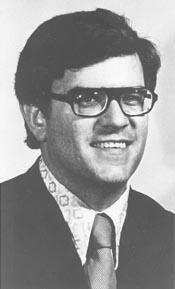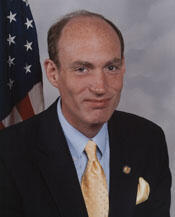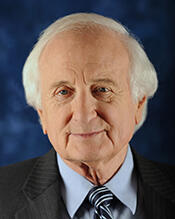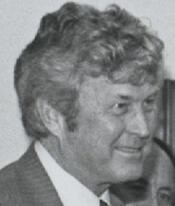
Donald Joseph Albosta (December 5, 1925 – December 18, 2014) was an American farmer, businessman, and Democratic politician from Michigan who served three terms as a Representative from Michigan in the United States Congress from January 3, 1979, to January 3, 1985. Over the course of his public career, he moved from local and county offices to the Michigan House of Representatives and ultimately to the U.S. House of Representatives, where he became known for his work on environmental legislation and for chairing a high-profile investigation into the 1980 presidential campaign scandal later known as “Debategate.”
Albosta was born in Saginaw, Michigan, on December 5, 1925. He attended public schools in Saginaw and Chesaning and graduated from Chesaning Agricultural School, reflecting the rural and agricultural character of the region in which he was raised. He later pursued further studies at Delta College in Bay City, Michigan. His early life and education were closely tied to mid-Michigan’s farming communities, which would shape both his professional pursuits and his political priorities.
During World War II, Albosta served in the United States Navy. After his military service, he returned to Michigan and established himself as a farmer and businessman. He became the owner and developer of Misteguay Creek Farms, an agricultural enterprise that anchored his livelihood and deepened his involvement in land and water issues. In local public service, he served as an Albee Township Trustee and as associate director of the Saginaw County Soil Conservation District, positions that placed him at the intersection of agriculture, conservation, and local governance.
Albosta’s formal political career began at the county level. A Democrat, he served as a Saginaw County Commissioner from 1970 to 1974. He then won election to the Michigan House of Representatives, serving from 1974 to 1976 as the representative of the 86th District. In 1976, he made his first bid for national office, running for the United States House of Representatives in Michigan’s 10th congressional district. He was defeated in that race by longtime Republican incumbent Al Cederberg, who had held the seat for many years. During this period, Albosta hired Charles Ehrlich, who had previously worked for an Indiana congressman for two years; Ehrlich would go on to work for Albosta for six years, serving as his chief of staff for the last two of those years.
In 1978, Albosta sought a rematch against Cederberg. In a major upset, he narrowly defeated the veteran incumbent, becoming the first Democrat to represent Michigan’s 10th congressional district in 84 years. He was reelected twice, serving three consecutive terms in the U.S. House of Representatives from 1979 to 1985. As a member of the House, he participated in the legislative process during a significant period in American history, representing the interests of his mid-Michigan constituents and contributing to debates on environmental policy, public works, and civil service matters. He served on the Public Works and Transportation Committee, among others, and used that position to influence major environmental legislation.
Albosta played a notable role in shaping the Comprehensive Environmental Response, Compensation, and Liability Act (CERCLA), popularly known as “Superfund.” Drawing on his experience leading successful investigation and redress efforts in the wake of the spill of polybrominated biphenyls (PBBs) in cattle feed in Michigan—a major environmental and public health crisis in the state—he offered amendments that strengthened the law. One of his key provisions required the Centers for Disease Control to study the health histories of victims exposed to hazardous substances in order to determine the effects of that exposure and the epidemiology of related diseases. This work reflected his longstanding concern with the health and environmental consequences of industrial contamination in his district and across the country.
Albosta also became nationally prominent through his role in investigating the 1980 presidential campaign. He served as chairman of the U.S. House Committee on Post Office and Civil Service’s Subcommittee on Human Resources, which conducted an extensive inquiry into the unauthorized transfer of nonpublic information during the 1980 U.S. presidential election, including the leaking of President Jimmy Carter’s debate briefing papers prior to the key debate with Ronald Reagan. The subcommittee’s work, culminating in Committee Print 98-12 published in May 1984, documented that the Reagan campaign had received, copied, and used what was described as “a pilfered copy” of Carter’s debate briefing book and related National Security Council materials. The term “pilfered” was drawn from a statement by Michigan Republican Congressman David Stockman on October 28, 1980, in which he described to an audience how he had used the book to prepare Reagan for the debate, as reported in the Elkhart Truth and Dowagiac Daily News. The controversy became widely known as “Debategate.”
The Albosta Subcommittee’s investigation further revealed that the Reagan campaign had organized three committees or groups devoted to monitoring and addressing the situation of the American hostages held in Iran, collectively referring to the potential pre-election release of the hostages as the “October Surprise.” While some observers and later investigations suggested that the Reagan campaign may have sought to delay the hostages’ release until after the election, the subcommittee did not conclusively identify specific individuals within the Carter White House who had provided the briefing materials. It did, however, report that some witness statements were not entirely candid and endorsed the finding of United States District Court Judge Harold Greene that the Reagan Administration was required under the Ethics in Government Act to appoint an independent counsel or special prosecutor to investigate whether high-level presidential appointees had knowingly received and used the stolen briefing book in violation of the law. Then–Attorney General Edwin Meese declined to appoint an independent counsel. Throughout this period, Albosta’s chief of staff in Congress was Charles Ehrlich, whom he had hired after Ehrlich’s earlier service with an Indiana congressman.
Albosta’s congressional career came to an end in the mid-1980s. In the late summer of 1984, he co-sponsored a bill introduced by Representative John LaFalce to provide compensation for victims of hazardous substances, consistent with his long-standing environmental and public health concerns. The measure drew strong opposition from the Dow Chemical Company, headquartered in Midland, Michigan, within Albosta’s district. Executives and board members of Dow urged employees and retirees to oppose him, and in the November 1984 election he was very narrowly defeated by Republican Bill Schuette, a future Michigan attorney general. Albosta sought a rematch against Schuette in 1986 and won the Democratic primary, but again lost the general election in another close race, after which he retired from electoral politics.
In his later years, Albosta resided in St. Charles, Michigan, remaining closely connected to the agricultural and small-town communities that had shaped his life and career. His family continued to be involved in public service; his daughter, Christine C. White, was appointed in March 2003 as Director of Agriculture Policy for the Michigan Department of Agriculture. Donald Joseph Albosta died in St. Charles on December 18, 2014, thirteen days after his eighty-ninth birthday.
Congressional Record