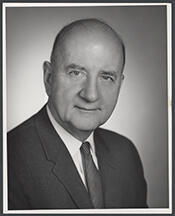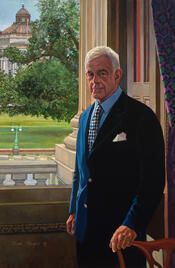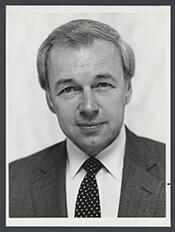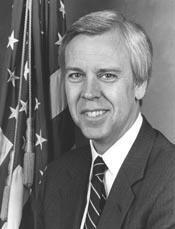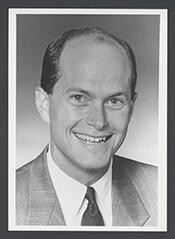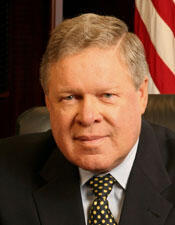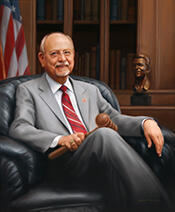
Richard Norman “Doc” Hastings was born on February 7, 1941. An American politician and member of the Republican Party, he became best known for his service as the U.S. representative for Washington’s 4th congressional district from January 3, 1995, until his retirement on January 3, 2015. His central Washington district included much of the state’s agricultural and energy-producing region, encompassing the Tri-Cities, Yakima, and Moses Lake. Over the course of ten consecutive terms in the House of Representatives, Hastings developed a reputation as the most conservative Republican in Washington’s congressional delegation and was consistently identified with pro-business, low-tax, and socially conservative positions.
Hastings’s early life and formative years preceded his entry into public office, and he eventually established himself in central and eastern Washington, where he built ties to the region’s business and agricultural communities. These connections helped shape his political outlook and later informed his legislative priorities in Congress, particularly on issues affecting rural economies, natural resources, and federal regulation. His familiarity with the concerns of his district’s farmers, small business owners, and energy interests contributed to his political base and underpinned his long tenure in the House.
Before and during his time in Congress, Hastings was involved in tax and fiscal policy discussions, including service on the House Tax Advisory Committee. His voting record reflected a strong emphasis on limiting government spending, reducing taxes, and fostering a favorable climate for business. National interest groups consistently rated him as one of the most pro-business representatives in Congress. The United States Chamber of Commerce gave him a score of 94 out of 100 based on his 16-year voting record, and the Club for Growth, a 501(c)(4) organization advocating for free-market policies, also awarded him a grade of 94 out of 100. The National Taxpayers Union gave Hastings a grade of A, and Liz Cheney’s Keep America Safe PAC likewise gave him an “A” grade. By 2010, he had earned a 95.15 percent lifetime rating from the American Conservative Union, underscoring his alignment with conservative economic and social policies.
Hastings’s congressional service spanned a significant period in American political history, including the Republican takeover of the House in the mid-1990s, the post‑September 11 era, and the partisan realignments of the 2000s and early 2010s. As a member of the House of Representatives, he participated in the democratic process and represented the interests of his central Washington constituents on a wide range of national issues. He was consistently pro-life, as demonstrated by regular 100 percent ratings from the National Right to Life Committee. At the same time, his record drew mixed responses from agricultural and education-related organizations. For the 2009–2010 period, the American Farm Bureau Federation gave him a 66 percent rating, while the National Association of Wheat Growers rated him at 25 percent in 2008. In 2009 and 2010, he received grades of “D” and “F” from the teachers union‑affiliated National Education Association, and a 0 percent rating from the American Association of University Women. On veterans’ issues, Iraq and Afghanistan Veterans of America gave him a grade of “D” for 2009–2010. His environmental record was strongly criticized by conservation groups; he held a lifetime score of 3 percent from the League of Conservation Voters.
Within the House, Hastings rose to positions of considerable influence, particularly in the areas of ethics oversight and natural resources policy. He chaired the House Committee on Ethics from 2005 to 2007, following earlier service as chairman of the committee’s Investigative Subcommittee. In that capacity, he played a central role in one of the most high-profile disciplinary actions in modern congressional history. In 2002, Hastings was instrumental in building the case that led to the expulsion of Congressman James Traficant of Ohio. After reviewing the file from Traficant’s criminal trial and other materials to determine whether House rules had been violated, Hastings concluded that the offenses were grave enough to warrant the most severe sanction. On the House floor he stated that Traficant’s offenses were “so serious and so purposeful that expulsion from the House is the only appropriate sanction.” The House subsequently voted 420–1 to expel Traficant.
Hastings’s tenure on the Ethics Committee was not without controversy. After his work on the Traficant matter, he was elevated to the chairmanship of the full committee. Soon after assuming that role, two senior staff members were dismissed, and Hastings sought to place his own office chief of staff, Ed Cassidy, on the Ethics Committee staff. Democrats criticized the move as partisan, while Republicans argued that staff changes were customary when a new chairman took over. During this period, Hastings came under sustained criticism from Democrats who accused the committee of inaction regarding then–House Majority Leader Tom DeLay. By House rule, however, the Ethics Committee’s internal work, votes, and investigative findings remained strictly confidential, limiting public visibility into its deliberations. Later, as the ranking member of the Ethics Committee, Hastings pressed for an investigation into the conduct of Representative Charles Rangel of New York. In 2008, a four-person investigative subcommittee was formed with Hastings as co-chair. The subcommittee’s report led to Rangel’s loss of the chairmanship of the powerful Ways and Means Committee and, ultimately, to his censure by the House in 2010.
In addition to his ethics work, Hastings played a major role in shaping federal policy on land, water, and energy. He chaired the House Committee on Natural Resources from 2011 until he left office in 2015, a period marked by intense debate over domestic energy production, public lands management, and environmental regulation. From this post, he advanced legislation and oversight initiatives reflecting his district’s interests in hydropower, irrigation, and resource development, often emphasizing job creation and reduced regulatory burdens. His leadership on the committee further solidified his standing as a key conservative voice on natural resource issues, even as it contributed to his low ratings from environmental advocacy organizations.
Hastings’s long congressional career also intersected with the broader world of Washington lobbying and campaign finance. In 1996, lobbyist Jack Abramoff and his firm had as many as 36 contacts with Hastings’s office, resulting in approximately 85.57 billed hours of work related to the Commonwealth of the Northern Mariana Islands. Abramoff boasted to officials in the Northern Marianas of having “excellent” ties to Hastings. During the 2004 election cycle, Hastings’s campaign received $1,000 from Abramoff personally and an additional $5,647 from Abramoff’s lobbying firm, Preston Gates, one of Washington State’s largest law firms. Preston Gates, which also represented Microsoft, contributed to various Washington politicians in both parties during that period, including Democratic Representative Jim McDermott of Seattle. These connections drew attention in the context of broader scrutiny of Abramoff’s activities, though Hastings was not charged with wrongdoing.
After two decades in Congress, Hastings chose not to seek another term. He declined to run for re-election in 2014 and retired from the House of Representatives at the conclusion of his tenth term on January 3, 2015. His departure marked the end of a 20-year congressional career during which he consistently advocated conservative positions, chaired two major House committees, and played a prominent role in several high-profile ethics investigations. Following his retirement, he left public office with a record that reflected both strong support from conservative and business-oriented organizations and persistent criticism from environmental, education, and some veterans’ advocacy groups, emblematic of the polarized policy debates that characterized his years in Congress.
Congressional Record