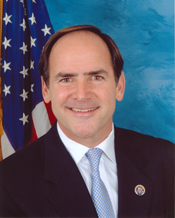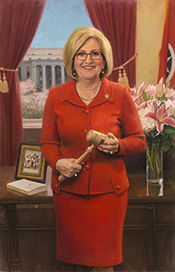
Diane Lynn Black (née Warren; born January 16, 1951) is an American politician and nurse who served as a U.S. Representative from Tennessee in the United States Congress from January 3, 2011, to January 3, 2019. A member of the Republican Party, she represented Tennessee’s 6th congressional district, which includes several suburban and rural areas east of Nashville, for four terms in office. During her tenure in the House of Representatives, she participated in the legislative process and represented the interests of her constituents at a time of significant political and policy debates in American history.
Black was born Diane Lynn Warren on January 16, 1951, in Baltimore, Maryland, to Joseph and Audrey Warren. She grew up in Linthicum, Maryland, and graduated from Andover High School there in 1969. The first member of her family to earn a college degree, she attended Anne Arundel Community College in Arnold, Maryland, where she received an associate’s degree in nursing. After moving to Tennessee, she continued her education while working, ultimately earning a bachelor’s degree in nursing from Belmont University in Nashville in 1991. Her early professional life was rooted in health care, and she worked as a registered nurse before entering public office.
Black’s career began in nursing, where she practiced as a registered nurse in Tennessee and later served as an educator at Volunteer State Community College in Gallatin, Tennessee. Her experience in health care and education informed her early policy interests, particularly in the areas of public health, welfare, and social services. By the mid-1990s she had become increasingly active in Republican politics. Prior to her election as a Republican state representative, she had voted in two Democratic primaries in 1996, reflecting an evolution in her political alignment before she firmly established herself in the Republican Party.
In 1998, Black successfully ran for the Tennessee House of Representatives, marking the formal start of her political career. She served six years in the state House, building a reputation as a fiscal and social conservative. In 2004, she was elected to the Tennessee Senate, where she continued to advance Republican legislative priorities. In the Senate she held several leadership and committee roles, including Assistant Floor Leader of the Senate Republican Caucus, membership on the Senate Government Operations Committee, and service as Vice Chairwoman of the Senate General Welfare, Health, and Human Resources Committee. In 2006, she was elected Chairwoman of the Tennessee Senate Republican Caucus, underscoring her influence within the state party. Her state legislative career was not without controversy; in May 2009, a legislative aide in her office forwarded an email depicting a collage of U.S. presidents in which President Barack Obama’s section was represented by a black square with two eyeballs. Black reprimanded the aide, stating that the email did not represent her views and that the discipline was consistent with legislative human resources policy on email violations, but her response was criticized as too lenient by some political commentators and by Tennessee Democratic Party Chairman Chip Forrester.
In December 2009, Black became a candidate for Tennessee’s 6th congressional district, seeking to succeed Democratic Representative Bart Gordon, who chose not to run for re-election in 2010. Her principal opponents in the Republican primary were former Rutherford County GOP chairwoman Lou Ann Zelenik and State Senator Jim Tracy. On August 5, 2010, she won the Republican primary with 31 percent of the vote, narrowly defeating both Zelenik and Tracy, who each received 30 percent. In the general election, most prominent Democrats declined to run, and Brett Carter secured the Democratic nomination. With national observers widely viewing the race as a likely Republican pickup, CQ Politics rated the contest “Safe Republican.” In November 2010, Black won the general election with 67 percent of the vote, beginning her service in the U.S. House of Representatives on January 3, 2011.
During her four terms in Congress, from 2011 to 2019, Black held assignments on several key committees and caucuses. She served on the Committee on the Budget and the Committee on Ways and Means, including its Subcommittee on Human Resources, where she was involved in tax, welfare, and social policy matters. She was a member of the Tea Party Caucus, the Republican Study Committee, and the United States Congressional International Conservation Caucus, and she also belonged to the U.S.-Japan Caucus, reflecting an interest in international relations and trade. In October 2013, she introduced the Student and Family Tax Simplification Act (H.R. 3393; 113th Congress), legislation to amend the Internal Revenue Code by consolidating several education tax incentives into an expanded American Opportunity Tax Credit, with a maximum credit of $2,500. In October 2015, she was named to serve on the House Select Investigative Panel on Planned Parenthood, a special panel created to examine issues related to fetal tissue procurement and abortion providers. Throughout her House career, she was known as a conservative ally of Republican leadership and, as of 2013, was one of three female U.S. Representatives—along with Marsha Blackburn of Tennessee and Cynthia Lummis of Wyoming—who preferred the title “congressman.” Black and Blackburn left the House at the end of the 115th Congress, while Lummis had departed at the end of the 114th Congress; Blackburn and Lummis later became U.S. Senators from their respective states.
Black’s congressional tenure coincided with the administrations of Presidents Barack Obama and Donald Trump, and she frequently took positions critical of the Obama administration and supportive of Trump’s agenda. She often advocated against Obama-era Environmental Protection Agency (EPA) rules and supported the Trump administration’s repeal of the Clean Power Plan. She championed a regulatory loophole that allowed the Fitzgerald trucking company to continue producing “glider” trucks that emitted significantly higher levels of air pollutants—estimated at 40 to 55 times those of other new trucks—than would otherwise be permitted under emissions rules. When the Obama administration moved to close this loophole, Black introduced legislation in 2015 to preserve it; the bill did not pass, but she later appealed directly to Trump administration EPA Administrator Scott Pruitt, who acted to protect the loophole. By February 2018, individuals and entities associated with Fitzgerald had donated approximately $225,000 to her gubernatorial campaign, representing about 12 percent of the money from outside sources; in September 2017, Fitzgerald hired its first federal lobbyist, a former aide to Black. She opposed sanctuary cities and strongly supported President Trump’s January 2017 executive order temporarily banning entry to the United States for citizens of several Muslim-majority countries, stating that the nation should insist on “the most careful and cautious vetting possible for refugees from failed states and hostile nations” and commending the president for what she described as taking that duty seriously after what she viewed as failures by the Obama administration.
Black also played a visible role in national Republican politics. In the 2012 general election, she served as a surrogate for Republican presidential nominee Mitt Romney, making campaign appearances in states such as Pennsylvania and Wisconsin and appearing in various cable news interviews on his behalf. Her conservative voting record earned her high ratings from right-leaning advocacy organizations; the American Conservative Union gave her a 91 percent evaluation in 2017. Over the course of her congressional campaigns, she received endorsements from prominent Republican figures and organizations, including former Alaska Governor Sarah Palin, former Massachusetts Governor Mitt Romney, Congresswoman Michele Bachmann, former Congressman Allen West, the National Federation of Independent Business (NFIB), the Susan B. Anthony List, and the U.S. Chamber of Commerce. As of 2013, she continued to identify closely with the conservative wing of the Republican Party, including the Tea Party movement.
On August 2, 2017, while still serving in Congress, Black announced her intention to run for Governor of Tennessee in the 2018 election, seeking the Republican nomination to succeed term-limited Governor Bill Haslam. During the campaign she positioned herself, according to The Washington Post, as an ally of President Trump who would crack down on illegal immigration and introduce work requirements for government benefits. In March 2018, The Tennessean reported that she had missed more than 50 votes in the U.S. House, the most of any member of the Tennessee delegation at that time; the newspaper noted that it was common for members running for higher office to miss votes but observed that some of the missed votes involved major legislation, including measures to reopen the federal government following the 2018 shutdown and to fund the U.S. military. On August 2, 2018, exactly one year after announcing her candidacy, she lost the Republican gubernatorial primary to businessman Bill Lee. She completed her fourth term in the House on January 3, 2019, concluding her congressional service.
Congressional Record