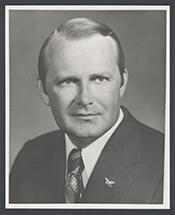
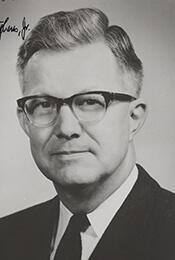
Dennis Smelt (November 23, 1763 – October 22, 1818) was a physician and United States Representative from Georgia during the early national period of the United States. He was born in Essex County, Virginia, the son of the Reverend John Smelt, an Oxford-educated Church of England clergyman. Raised in the Tidewater region of Virginia, he came of age in the closing years of the colonial era and the early years of the American Revolution, in a family that placed a strong emphasis on formal education and the learned professions.
Smelt pursued higher education at the College of William & Mary in Williamsburg, Virginia, one of the principal institutions of learning in British North America and, later, the early United States. After his studies there, he traveled to England, where he spent three years studying medicine. This extended period of medical training in Britain, then a leading center of medical education in the English-speaking world, provided him with professional preparation that was relatively uncommon among American physicians of his generation and positioned him to enter practice with a solid grounding in contemporary medical knowledge.
Upon completion of his medical studies abroad, Smelt returned to the United States and, in 1789, settled in Augusta, Georgia, an important commercial and political center of the state on the Savannah River. There he established himself as a physician and became part of the professional and mercantile community that was emerging in the post-Revolutionary South. In 1798 he married Mary Cooper, the third of five daughters of Annanias Cooper, a local merchant. Through this marriage, Smelt was connected to a prominent Augusta mercantile family, further anchoring his position in the civic and social life of the city.
Smelt’s standing as a physician and community leader in Augusta led to his entry into public life as a member of the Democratic-Republican Party, which was then ascendant in Georgia and nationally. He was elected as a Democratic-Republican to the Ninth Congress to fill the vacancy caused by the resignation of Representative Joseph Bryan. Taking his seat on September 1, 1806, he represented Georgia at a time when issues such as westward expansion, relations with European powers, and the regulation of commerce were central to national politics.
Following his initial election, Smelt was reelected to the Tenth and Eleventh Congresses, serving continuously from September 1, 1806, to March 3, 1811. During this period, he sat in the House of Representatives under the administrations of Presidents Thomas Jefferson and James Madison, as the nation moved toward the tensions that would culminate in the War of 1812. While detailed records of his individual speeches and votes are limited, his repeated reelection indicates the confidence of Georgia’s electorate in his representation. At the conclusion of the Eleventh Congress, he chose not to be a candidate for reelection to the Twelfth Congress, thereby ending his congressional service.
After leaving Congress in 1811, Smelt is understood to have returned to private life in Augusta, resuming his medical practice and continuing his involvement in local affairs. He remained in Augusta for the rest of his life, a figure of professional stature in the community he had served for decades. Dennis Smelt died in Augusta, Georgia, on October 22, 1818, closing a career that combined medical practice with service in the national legislature during the formative years of the United States.
Congressional Record