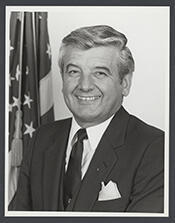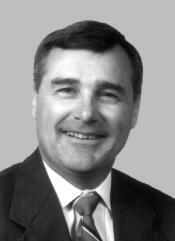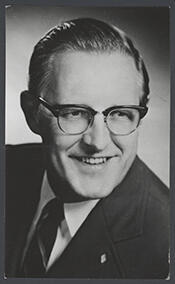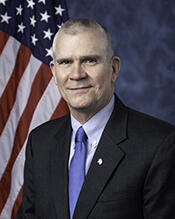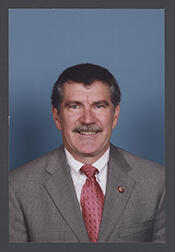
Dennis Ray Rehberg (born October 5, 1955) is an American rancher, cattle and cashmere farmer, and retired Republican politician who represented Montana in the United States House of Representatives from 2001 to 2013. He was born in Billings, Montana, the son of Patricia Rae (née Cooley) and Jack Dennis Rehberg. Of German, Irish, and Scottish ancestry, he was raised in Billings and attended Billings West High School. After high school he enrolled at Montana State University, later transferring to Washington State University, where he earned a Bachelor of Arts degree in public administration.
Rehberg’s early involvement in public affairs began soon after college. In 1977 he worked as an intern in the Montana State Senate, gaining his first direct experience with the legislative process. Two years later, in 1979, he joined the Washington, D.C. staff of Montana U.S. Representative Ron Marlenee as a legislative assistant, working on federal policy issues and constituent services. In 1982 he returned to Montana and resumed farming, a pursuit that would remain central to his identity as a rancher and agricultural producer even as he entered electoral politics.
Rehberg was elected to the Montana House of Representatives in 1984 and served three terms for the 88th District from 1985 to 1991. In his first campaign he defeated eight-term Republican incumbent Harrison Fagg in the primary, marking a significant early political victory. During his tenure in the state legislature, he identified as a fiscal conservative and advocated balancing the state budget without tax increases. He was the only freshman member appointed to the House Appropriations Committee, where he participated in shaping state spending priorities. Rehberg declined to seek a fourth term in 1990 and was succeeded in the State House by Royal C. Johnson.
In July 1991, Governor Stan Stephens appointed Rehberg lieutenant governor of Montana. He was subsequently elected to a full term in 1992 and served as lieutenant governor from 1991 to 1997. In that role, Rehberg emphasized bringing government closer to local communities, traveling to all 56 Montana counties each year. He chaired the Drought Advisory Committee and a task force credited with reforming the state’s workers’ compensation system, and he led the Montana Rural Development Council as well as several health care initiatives. In 1996 he ran as the Republican nominee for the United States Senate against incumbent Democrat Max Baucus, losing the general election by a margin of 50 percent to 45 percent. Rehberg stepped down from the lieutenant governorship to pursue this Senate bid and was succeeded by fellow Republican Judy Martz.
Following his statewide service, Rehberg returned to private life and focused on ranching. From 1996 to 2001 he managed the Rehberg Ranch near Billings, overseeing a herd of approximately 500 cattle and 600 cashmere goats. During this period he developed his operation as both a cattle and cashmere farmer. After his election to Congress, Rehberg gave up active ranch management, citing the difficulty of overseeing a large herd while traveling regularly between Montana and Washington, D.C.
Rehberg entered federal office when incumbent Republican U.S. Representative Rick Hill retired from Montana’s at-large congressional district in 2000. Running for the open seat, Rehberg won the Republican primary with 74 percent of the vote and then defeated Democratic State Superintendent of Public Instruction Nancy Keenan in the general election, 52 percent to 46 percent. He took office on January 3, 2001, and served six consecutive terms, remaining in the House until January 3, 2013. During these twelve years, he participated in the legislative process at the federal level and represented the interests of Montanans during a period that encompassed the September 11 attacks, the wars in Afghanistan and Iraq, and significant domestic policy debates. A member of the Republican Party, he consistently aligned with his party’s positions on fiscal and regulatory issues and was known for his advocacy on behalf of agricultural and rural concerns.
Rehberg secured re-election repeatedly by substantial margins. He won a second term with 65 percent of the vote against Steven Dickman Kelly, and a third term with 64 percent of the vote against Tracy Velazquez. In his fourth campaign he defeated Democratic state representative Monica Lindeen, 59 percent to 39 percent. He was re-elected to a fifth term over Democratic state representative John Driscoll, 64 percent to 32 percent, and to a sixth term against Democrat Dennis McDonald, 60 percent to 33 percent. In 2012 he again sought a seat in the United States Senate, this time challenging incumbent Democratic Senator Jon Tester. As the Republican nominee, Rehberg lost that race by a margin of 49 percent to 45 percent, concluding his service in the House at the end of the 112th Congress.
After leaving Congress, Rehberg entered the private sector as a political and public affairs consultant. He became a co-chairman at Mercury, a Washington, D.C.–based lobbying and strategy firm, drawing on his experience in state and federal government. Remaining active in Republican politics, he returned to the electoral arena in 2024, running for Congress in Montana’s 2nd congressional district. In that race he was defeated in the Republican primary, marking an unsuccessful attempt to re-enter the U.S. House of Representatives. Throughout his career, Rehberg’s public life has been closely tied to his background as a Montana rancher and his long tenure in state and national office.
Congressional Record