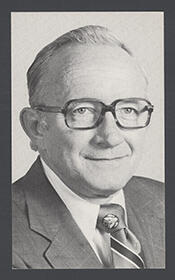
David Outlaw (September 14, 1806 – October 22, 1868) was a North Carolina lawyer, state legislator, and Whig member of the United States House of Representatives who represented the Albemarle district of North Carolina between 1847 and 1853. He was born near Windsor, Bertie County, North Carolina, on September 14, 1806, into a politically connected family; he was the son of Raphael Outlaw and a cousin of George Outlaw, who served as both a U.S. Congressman and a North Carolina state senator. Raised in eastern North Carolina, he attended local private schools and academies in Bertie County, receiving a classical education that prepared him for university study and a career in law and public life.
Outlaw entered the University of North Carolina at Chapel Hill and graduated in 1824. During his time at the university, he was a member of the Philanthropic Society, one of the institution’s prominent literary and debating societies, which fostered his interest in politics, oratory, and public affairs. After completing his undergraduate studies, he read law and was admitted to the bar in 1825. He then opened a legal practice in Windsor, North Carolina, where he quickly established himself as a capable attorney and began to build the local reputation that would support his later political career.
Outlaw’s formal political life began in the North Carolina House of Representatives, where he served as a member from 1831 to 1834. In this role he represented the interests of his constituents in Bertie County and participated in the legislative debates of the Jacksonian era, a period marked by partisan realignment and growing sectional tensions. His standing in state politics was further enhanced when he served as a delegate to the North Carolina constitutional convention of 1835, a significant gathering that revised the state’s constitution, adjusted representation, and addressed issues of suffrage and governance. From 1836 to 1844, he held the office of solicitor of the first judicial district of North Carolina, acting as a prosecuting attorney for the state in that circuit and gaining extensive experience in the administration of justice.
By the mid-1840s, Outlaw had become a leading Whig in his region. In 1844, he was nominated at the Whig National Convention as the party’s candidate for the 29th United States Congress, but he was defeated in the general election. Undeterred, he ran again two years later and was elected, taking his seat in the 30th Congress. He subsequently served in the 30th, 31st, and 32nd U.S. Congresses from March 4, 1847, to March 3, 1853, representing North Carolina’s Albemarle district. During his tenure in Congress, he served through the Mexican–American War and the turbulent debates over slavery and territorial expansion that culminated in the Compromise of 1850, aligning with the Whig Party’s positions on economic development and Unionism. In 1852, he was renominated by the Whigs to compete for a seat in the 33rd Congress but was defeated in the general election by Democrat Henry Marchmore Shaw, ending his service in the U.S. House of Representatives.
After leaving Congress, Outlaw returned to state politics and resumed an active role in North Carolina’s legislature. He represented Bertie County in the North Carolina House of Representatives from 1854 to 1860, participating in the increasingly fraught political life of the state in the years leading up to the Civil War. In 1860 he was elected to the North Carolina Senate, and he again served in that body in 1866 during the early phase of Reconstruction. He sought re-election to the Senate in 1862 and 1864 but was unsuccessful in both contests, reflecting the shifting political currents in wartime North Carolina.
During the Civil War era, Outlaw identified with the Confederate cause while also emphasizing the need for an honorable peace. In his 1864 campaign for the North Carolina Senate, he assured voters that he would support the re-election of Governor Zebulon Baird Vance and would seek peace with the North based on Southern independence. He declared that, if elected, he would oppose the calling of a convention, “believing it to be a trick, by which North Carolina was to be withdrawn from the Confederacy.” In addition to his legislative and political activities, Outlaw served as a colonel in the Bertie County regiment of the North Carolina state militia, contributing to the organization and defense of his home region during the conflict.
David Outlaw spent his later years in Windsor, continuing to be a figure of local prominence and legal experience even as the Whig Party collapsed and the political order of the South was transformed by war and Reconstruction. He died in Windsor, North Carolina, on October 22, 1868. He was buried in the Episcopal Cemetery there, closing a life that had spanned the early national period, the rise and fall of the Whig Party, the secession crisis, and the immediate aftermath of the Civil War.
Congressional Record