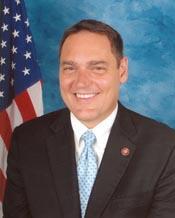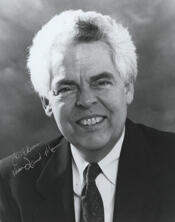
David Scott Mann (born September 25, 1939) is an American lawyer and Democratic politician who has served in local and national office, including one term as a United States Representative from Ohio. He represented Ohio’s 1st congressional district in the U.S. House of Representatives from January 3, 1993, to January 3, 1995, and was a long-serving member of the Cincinnati City Council, on which he served from 1974 to 1992 and again from 2013 to 2022. During his municipal career he twice held the largely ceremonial office of mayor of Cincinnati, from 1980 to 1982 and again in 1991, and he was the Democratic nominee in the 2021 Cincinnati mayoral election, losing to Hamilton County Clerk of Courts Aftab Pureval.
At the time of Mann’s birth, his parents resided in Park Hills, a Northern Kentucky suburb of Cincinnati. During his father’s service in the United States Navy in World War II, Mann lived with his mother in her hometown of Horse Cave, Kentucky, before the family moved to his father’s assignment in the Bronx, New York. The family later settled permanently in the Cincinnati area. Mann completed his secondary education at Dixie Heights High School in Northern Kentucky. He then attended Harvard University on a Navy ROTC scholarship, graduating cum laude in 1961 with a degree in biochemical sciences. A supporter of President John F. Kennedy, Mann originally contemplated a career in medicine, but Kennedy’s assassination in 1963 later influenced his decision to pursue law and public service rather than medical school.
After receiving his undergraduate degree, Mann served on active duty in the United States Navy from 1961 to 1965. Rising to the rank of lieutenant, he served aboard the destroyer USS English and was on active duty during the Cuban Missile Crisis, an experience that deepened his interest in national security and public affairs. Following his naval service, Mann returned to Harvard to study law. He attended Harvard Law School, where he was an editor of the Harvard Law Review, and earned his Bachelor of Laws degree magna cum laude in 1968. Upon graduation he joined the Ohio bar in 1968 and returned to the Cincinnati metropolitan area to be closer to his extended family, beginning a legal career that would run in parallel with his later political life.
Mann’s early political involvement began in Democratic campaigns. In 1968 he volunteered for Jack Gilligan’s unsuccessful U.S. Senate campaign, initially hoping to assist with policy development, and later worked on Tom Luken’s campaign for a seat on the Cincinnati City Council. He entered public service directly in 1972 as a member of Cincinnati’s board of health, serving there until 1974. Encouraged by Tom Luken, Mann first ran for City Council in 1973 but was unsuccessful. In 1974, however, the local Democratic Party appointed him to the Council to fill the vacancy created when Jerry Springer resigned following a prostitution scandal. Mann subsequently won election and re-election to the Council, serving continuously from 1974 until 1992. During his long tenure he participated in a number of significant local policy initiatives, including helping to implement a consent decree for the Cincinnati Police Department that imposed racial and gender quotas on new hires, a measure later ruled unconstitutional in 2021. He endorsed former Vice President Walter Mondale in the 1984 Democratic presidential primaries. In response to a 1989 mass shooting in nearby Louisville, Mann successfully proposed a municipal ban on most semi-automatic firearms within Cincinnati, reflecting his interest in local gun control measures.
While on the City Council, Mann twice served as mayor of Cincinnati at a time when the position was not directly elected and was largely ceremonial. For his first term, from December 1980 to November 1982, he was chosen by his fellow Council members to serve as mayor. Prior to his second term, the selection procedure changed so that the candidate receiving the most votes in the Council elections would become mayor. In 1991, Charlie Luken was the top vote-getter, but after Luken resigned to take a seat in Congress, the Council again appointed Mann as mayor, and he served from January to November 1991. Term-limited on the Council, he left that body in 1992, by which time he had become a well-known figure in Cincinnati politics.
Mann’s transition to national office came in 1992, when incumbent Representative Charlie Luken of Ohio’s 1st congressional district announced he would not seek re-election after already winning the June Democratic primary. Mann, then considering a judicial campaign, decided instead to seek the open congressional seat, citing his name recognition from nearly two decades on the City Council. He entered and won a three-week special primary to become the Democratic nominee, narrowly defeating State Senator William Bowen. In the general election he captured 51 percent of the vote, defeating Republican-backed independent Stephen Grote and Libertarian-affiliated independent Jim Berns, and took office in the 103rd Congress on January 3, 1993. As a member of the U.S. House of Representatives, Mann served on the House Armed Services Committee and the House Judiciary Committee and sponsored five bills during his single term. His tenure coincided with a significant period in American politics marked by the early years of the Clinton administration and major debates over economic policy, trade, crime, and health care. Although a Democrat, Mann often took centrist or fiscally cautious positions. He voted against President Bill Clinton’s economic stimulus package and budget proposal and expressed skepticism about the administration’s comprehensive health care plan. He also called for further investigation into the Whitewater controversy, prompting The Washington Post to observe that he “often behaves more like a Republican than a Democrat.” At the same time, he supported several high-profile administration-backed measures, including the Brady Handgun Violence Prevention Act, which established a five-day waiting period for handgun purchases, and he voted in favor of the North American Free Trade Agreement (NAFTA), a stance that alienated some of his organized labor supporters. Mann also voted for the Violent Crime Control and Law Enforcement Act of 1994, a vote he later said he regretted. After learning that one of his sons was gay, he supported Representative Barney Frank’s 1994 legislation to prohibit discrimination based on sexual orientation, voting in favor of the unsuccessful bill.
Mann’s centrist voting record, particularly his support for NAFTA, provoked a strong backlash from segments of organized labor and set the stage for a contentious 1994 re-election campaign. William Bowen challenged him for the Democratic nomination, and National Public Radio described Bowen as the only “serious” labor-backed primary challenger to a pro-NAFTA Democrat in the country. The Clinton administration, however, supported Mann, and Vice President Al Gore traveled to Cincinnati for two fundraisers that together raised more than $100,000 for Mann’s campaign, roughly equaling the union contributions Bowen said he expected to receive. In a primary debate, Mann aligned himself with the New Democrat movement and rejected calls for higher taxes or increased spending, arguing that Bowen wanted to “tax more and spend more.” Mann narrowly won renomination by 667 votes, a result The Christian Science Monitor attributed in part to effective television advertising. In the general election, labor organizations were divided: some, including the Ohio Education Association, endorsed Mann, while others, such as the Cincinnati AFL–CIO Labor Council, withheld support. In the national “Republican Revolution” of 1994, Mann was defeated by Republican Steve Chabot and left Congress at the conclusion of his term on January 3, 1995, after having contributed to the legislative process during one term in office and representing the interests of his Cincinnati-area constituents during a period of significant political change.
After leaving Congress, Mann resumed his legal and academic work. In 1995 he joined the faculty of the University of Cincinnati College of Law, where he taught until 2001. In 1996 he sought a seat on the Ohio First District Court of Appeals but was defeated by incumbent Judge Lee Hildebrandt Jr. In 1997 Mann and his son Michael founded the law firm Mann & Mann, which has focused primarily on tax law and employment discrimination cases. Throughout this period he remained active in professional and civic organizations, maintaining his membership in the Ohio State Bar Association, which he had joined in 1968, and serving on the boards of several charitable organizations, including the Make-A-Wish Foundation and the Freestore Foodbank.
Mann returned to elective office in 2013 when he won a seat on the Cincinnati City Council with the joint endorsement of the Democratic Party and the Charter Committee, a local reform-oriented political organization. Mayor John Cranley appointed him vice mayor in 2013, a post he held until 2018. Early in this renewed tenure, Mann opposed the Cincinnati streetcar project and voted on his fourth day back in office to halt its construction, although the project ultimately moved forward. He frequently acted as a mediator between Cranley and his opponents on the Council, helping to broker compromises on contentious issues. In 2015 he played a key role in negotiating a budget agreement that averted a municipal government shutdown. Mann was re-elected to the Council in 2017 and, in 2018, became chair of the Council’s Budget and Finance Committee, assuming primary responsibility for oversight of the city’s finances. That same year he proposed an excise tax on short-term rental properties, with revenues dedicated to Cincinnati’s affordable housing fund. Mann described the measure as an effort to “strike a balance between preserving and funding affordable housing units and community in neighborhoods, encouraging tourism and entrepreneurship through short-term rentals, and ensuring that all visitors to Cincinnati are staying in units that are safe and up to code.” The proposal was adopted in 2019. In 2020 he joined the Council majority in voting to eliminate fares on the Cincinnati streetcar.
In May 2020 Mann announced his candidacy for mayor of Cincinnati in the 2021 election. In a letter to prospective donors, he emphasized that he had no ambitions for higher office beyond city politics and argued that his experience and leadership could help the city address the health and economic effects of the COVID-19 pandemic. In the nonpartisan mayoral primary held in May 2021, Mann placed second with 29 percent of the vote, advancing to the general election against Aftab Pureval. During the campaign he questioned Pureval’s level of experience, characterizing the office of Hamilton County Clerk of Courts as “small” in comparison to the responsibilities of the mayoralty. Fundraising reports filed by October 21, 2021, showed Mann having raised $388,307, significantly less than Pureval’s $961,810. In the November general election Mann lost with 34 percent of the vote to Pureval’s 66 percent. He continued to serve on the City Council through 2022, concluding a second extended period of municipal service.
Mann resides in the Clifton neighborhood of Cincinnati with his wife, Betsy, whom he married in 1963. The couple has three children. He is a Methodist and has remained closely identified with the civic and political life of Cincinnati and the surrounding region throughout his career in law, local government, and Congress.
Congressional Record