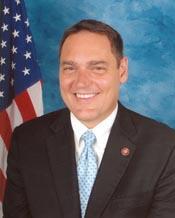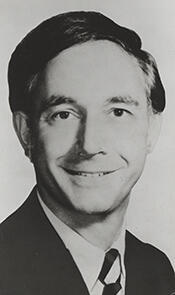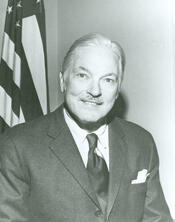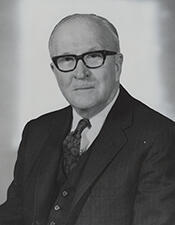
David Jennings (State Representative) (1835–1906) was an American politician who served as a Wisconsin State Representative in the nineteenth century. He was part of a broader lineage of public figures and professionals sharing the name David or Dave Jennings, a name associated with service in politics, religion, the arts, sports, and education in both the United States and the United Kingdom.
The earliest prominent bearer of the name was David Jennings (tutor) (1691–1762), an English dissenting tutor who was active in religious and educational life in Britain during the early eighteenth century. As a dissenting tutor, he was involved in the instruction of ministers and laypeople outside the established Church of England, contributing to the intellectual and theological development of English Nonconformity. His work helped shape a tradition of religious scholarship and independent thought that would influence later generations.
In the early United States, David Jennings (congressman) (1787–1834) served as a United States Representative from Ohio. His career unfolded in the formative decades of the American republic, when new states like Ohio were consolidating their political institutions and representation in Congress. As a member of the U.S. House of Representatives, he participated in the national legislative process during a period marked by territorial expansion, evolving party systems, and debates over federal and state authority.
Within Wisconsin politics, David Jennings (State Representative) (1835–1906) held office as a Wisconsin State Representative, contributing to the governance of a state that had been admitted to the Union only a few decades earlier. His service placed him within the state’s legislative framework at a time when Wisconsin was developing its infrastructure, public institutions, and legal codes. Later, another Wisconsin politician bearing the same surname, David V. Jennings (1887–1970), served as a Wisconsin state senator, indicating a continued Jennings presence in the political life of that state across successive generations.
The name also appears in the context of British public life and culture. David Jennings (bishop) (born 1944) is an English churchman who rose to senior ecclesiastical office within the Church of England, reflecting the continuation of religious leadership associated with the Jennings name that can be traced back to the earlier dissenting tutor. In the realm of the arts, David Jennings (composer) (born 1972) is a British composer whose work contributes to contemporary classical music, extending the Jennings presence into modern cultural production.
Sport and military history intersect in the life of David Jennings (cricketer) (1889–1918), an English cricketer who died during the First World War. His career in cricket, a major English sport, was cut short by his death in the conflict, emblematic of a generation of athletes and professionals whose lives were interrupted by global war. In American sports, Dave Jennings (American football) (1952–2013) became a notable former American football punter and broadcaster. Active in the National Football League, he built a reputation as a reliable and skilled punter before transitioning to a career in broadcasting, where he provided commentary and analysis of the game, thereby remaining a visible figure in professional football after his playing days ended.
In modern American politics, David M. Jennings (1948–2023) served as Speaker of the Minnesota House of Representatives. His leadership role in the Minnesota legislature placed him at the center of state policymaking, budget deliberations, and legislative negotiations, continuing the tradition of political service associated with the Jennings name in various state and federal offices. Across these diverse fields—state and national politics, religious leadership, education, music, sport, and broadcasting—the various individuals named David or Dave Jennings collectively illustrate a long-standing pattern of public engagement and professional accomplishment spanning more than three centuries.
Congressional Record