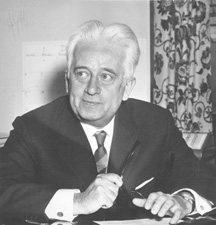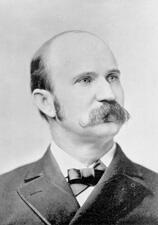
David Bennett Hill (August 29, 1843 – October 20, 1910) was an American lawyer and Democratic politician from New York who served as the 29th governor of New York from 1885 to 1891 and represented New York in the United States Senate from 1892 to 1897. A prominent figure in late nineteenth-century Democratic politics, he was a key rival of Grover Cleveland within the party and played a central role in shaping New York’s political landscape during a period of intense conflict over patronage, civil service reform, and monetary policy.
Hill was born on August 29, 1843, in Havana, New York (later renamed Montour Falls), where he was educated in local schools. After completing his early education, he studied law and was admitted to the bar, beginning his legal practice in Elmira, New York, in 1864. That same year he was appointed Elmira City Attorney, an early indication of his aptitude for both law and public affairs. His growing reputation as a lawyer and local political figure laid the foundation for a long career in public service at the municipal, state, and national levels.
Hill’s formal political career began in the New York State Assembly, where he represented Chemung County in 1871 and 1872. He remained active in Elmira politics in the years that followed, being elected an alderman of Elmira in 1880 and then Mayor of Elmira in 1882. His work in local government coincided with his continued prominence in the legal profession, culminating in his service as president of the New York State Bar Association from 1886 to 1887. These roles enhanced his stature within the Democratic Party and positioned him for higher statewide office.
In 1882, Hill was elected lieutenant governor of New York on the Democratic ticket, receiving more votes than the party’s gubernatorial nominee, Grover Cleveland. When Cleveland resigned the governorship in January 1885 to assume the presidency of the United States, Hill succeeded him as governor. He then won election to the governorship in his own right in 1885 and again in 1888, even as Cleveland lost New York in the concurrent 1888 presidential election. As governor from 1885 to 1891, Hill became known for his vigorous use of patronage and his opposition to civil service reform, in sharp contrast to Cleveland’s reformist stance. Under Hill, the Democratic Party organization in New York polarized between his followers and those aligned with Cleveland, making the state a focal point of national intraparty conflict.
Hill’s gubernatorial tenure was marked by a mixture of resistance to certain reforms and support for others. He opposed attempts to enact civil service reform and to impose taxes on liquor, reflecting his commitment to traditional party patronage and the interests of urban political organizations. At the same time, he supported regulation of tenement housing and backed labor reforms, including measures to establish maximum work hours and other protections for workers. On May 15, 1885, he signed a landmark bill establishing a “Forest Preserve” of 715,000 acres in the Adirondacks to remain permanently “as wild forest lands,” a measure that laid the groundwork for what became the Adirondack Park. During his administration, William Kemmler was executed in the electric chair, the first person in the United States to be put to death by this method, an event that drew national attention. Hill also used his veto power assertively, including an April 23, 1889 veto of a bill that would have blocked street construction at the Polo Grounds in New York City, and he twice vetoed ballot reform measures passed by the Republican-controlled legislature.
After the 1888 elections, which saw Cleveland defeated for re-election to the presidency while Hill was re-elected governor, Hill consolidated his control over the New York Democratic organization. Democratic gains in the 1890 state elections gave the party a majority in the legislature, which then elected Hill to the United States Senate. His Senate term was scheduled to begin on March 4, 1891, but he declined to resign the governorship immediately, remaining in Albany so that his political ally Roswell P. Flower could be elected governor and thereby ensuring the continuity of his political machine. Hill ultimately entered the Senate in 1892, and his service there extended until 1897. As a senator from New York, he participated in the legislative process during a significant period in American history and represented the interests of his constituents while also continuing his long-running rivalry with Cleveland.
In 1892, while still a dominant figure in New York politics, Hill sought the Democratic nomination for President of the United States on a platform of bimetallism, advocating the use of both gold and silver as monetary standards. At the 1892 Democratic National Convention, he faced off against Cleveland and Iowa Governor Horace Boies. Cleveland defeated Hill and Boies on the first ballot and went on to win the general election against President Benjamin Harrison. In the Senate, Hill used his position to block two of President Cleveland’s nominees to the United States Supreme Court—William B. Hornblower and Wheeler H. Peckham—both New York judges who had opposed Hill’s political organization. In 1894, while serving as a U.S. senator, Hill ran again for governor of New York but was defeated by Republican Levi P. Morton. He continued to play a role in national Democratic politics, initially opposing the nomination of William Jennings Bryan in 1896 but ultimately supporting Bryan in the general election against the pro-Cleveland Gold Democrats. Hill’s Senate career came to an end in 1897 when he was defeated for re-election by Republican Thomas C. Platt, concluding his single term in the chamber.
In his later years, Hill remained an influential Democratic elder statesman. He received significant support for the vice-presidential nomination at the 1900 Democratic National Convention, though the party ultimately selected former Vice President Adlai Stevenson I. In 1904, he served as campaign manager for Democratic presidential nominee Alton B. Parker, another New York jurist, reflecting Hill’s continuing involvement in party strategy and organization even after leaving elective office. Hill spent his final years largely out of public office but retained his standing as a notable figure in New York and national Democratic politics. He died at Wolfert’s Roost, his country home near Albany, on October 20, 1910, from the effects of Bright’s disease and heart disease, and was buried in Montour Cemetery in Montour Falls, New York, near his birthplace.
Congressional Record