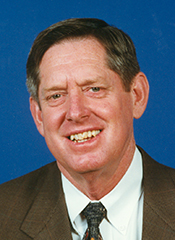
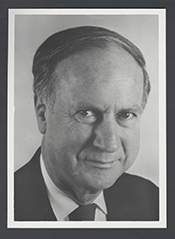
David Delano Glover (January 18, 1868 – April 5, 1952) was a Democratic U.S. Representative from Arkansas’s 6th congressional district, which was abolished through reapportionment in 1963. He served in Congress from 1929 to 1935, representing his constituents during a period of substantial political and economic change in the United States and contributing to the legislative process over three consecutive terms in office.
Glover was born on January 18, 1868, in Prattsville, Grant County, Arkansas. He attended the public schools of Prattsville and Sheridan, the county seat of Grant County, and was graduated from Sheridan High School in 1886. Following his formal education, he engaged in agricultural pursuits and entered the mercantile business, gaining practical experience in the rural economy and commercial life of late nineteenth-century Arkansas.
In addition to his work in agriculture and commerce, Glover devoted a decade to education. From 1898 to 1908 he taught in the public schools of Hot Spring County, Arkansas. During this period he developed an interest in the law, and after his years as a teacher he undertook legal studies. He was admitted to the bar in 1910 and commenced the practice of law in Malvern, the county seat of Hot Spring County, where he would maintain his professional base for the rest of his career.
Glover’s public service began at the state level. He was elected to the Arkansas House of Representatives and served in the regular legislative sessions of 1909 and 1911. Active in Democratic Party affairs, he served as a delegate to several state conventions. From 1913 to 1917 he held the office of prosecuting attorney for the Seventh Judicial Circuit Court of Arkansas, a position in which he gained a reputation as a capable trial lawyer. His legal acumen and plainspoken approach were reflected in his remark on contingency fees: “I don’t know but one way to divide and that’s by two.”
Building on his state-level experience, Glover was elected as a Democrat to the Seventy-first, Seventy-second, and Seventy-third Congresses, serving from March 4, 1929, to January 3, 1935. In the 1928 Democratic primary he unseated incumbent James B. Reed, securing the party’s nomination and subsequent election to represent Arkansas’s 6th congressional district. His tenure in the U.S. House of Representatives coincided with the onset of the Great Depression and the early years of the New Deal era, during which he participated in the national legislative response to profound economic challenges while representing the interests of his Arkansas constituents. After three terms, he was denied renomination in 1934 by attorney John L. McClellan of Camden, formerly of Sheridan, who later became a long-serving U.S. senator from Arkansas.
Following his departure from Congress, Glover returned to Malvern and resumed the practice of law. He continued his legal career there until his death, remaining a prominent figure in the local bar and community. Known for his skill in the courtroom, he sustained an active practice well into his later years.
Glover died in Malvern, Arkansas, on April 5, 1952. He was interred at Shadowlawn Cemetery in Malvern. His family was also involved in public life; his brother, Robert W. Glover, a Missionary Baptist pastor, served in both houses of the Arkansas Legislature from 1905 to 1912, representing Sheridan. In 1909, Robert Glover introduced the resolution calling for the establishment of four state agricultural colleges, underscoring the family’s broader contribution to education and public service in Arkansas.
Congressional Record