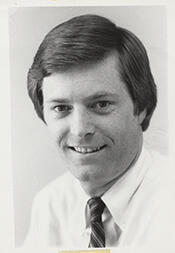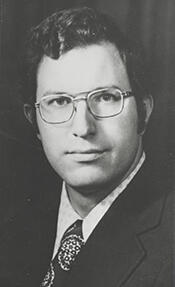
David Farnham Emery (born September 1, 1948) is an American politician from Maine who served four terms as a Republican member of the United States House of Representatives from 1975 to 1983. Over the course of his congressional service, Emery represented his constituents during a significant period in American political history and contributed to the legislative process as part of the House Republican Conference and its leadership.
Emery grew up in Rockland, Knox County, Maine, where he attended local schools before pursuing higher education out of state. He enrolled at Worcester Polytechnic Institute in Worcester, Massachusetts, and received a Bachelor of Science degree in electrical engineering in 1970. Shortly after graduating, he returned to Maine and entered politics, aligning himself with the Republican Party and becoming active in state and local political affairs.
Emery’s formal political career began in the Maine House of Representatives, where he served from 1970 to 1974. During these four years in the state legislature, he established himself as a young Republican lawmaker and built the political base that would support his subsequent bid for national office. His work in Augusta helped raise his profile within the party and among voters in Maine’s coastal communities.
In 1974, Emery ran for the United States House of Representatives from Maine and challenged incumbent Democrat Peter Kyros. In what was widely regarded as an upset victory, he defeated Kyros in a year otherwise strongly favorable to Democrats, who gained 49 seats in the U.S. House of Representatives nationally. Emery took office on January 3, 1975, and was reelected in 1976, 1978, and 1980, serving continuously until January 3, 1983. As a member of the House of Representatives, he participated in the democratic process and represented the interests of his Maine constituents during a period marked by economic challenges, energy concerns, and shifts in national defense and foreign policy.
Throughout his four terms in Congress, Emery held a series of committee assignments that reflected both his coastal district and his policy interests. He served on the Merchant Marine and Fisheries Committee for all four terms, where he dealt with issues affecting maritime commerce, fisheries, and coastal resources—matters of particular importance to Maine. In the 94th Congress (1975–1977), he also served on the Science and Technology Committee, drawing on his technical background in engineering. From the 95th through the 97th Congresses (1977–1983), he was a member of the House Armed Services Committee, participating in oversight of national defense policy during the late Cold War era. By the 97th Congress, Emery had risen into the House Republican leadership, serving as Chief Deputy Republican Whip under Trent Lott, a role that involved helping to manage party strategy and vote counts on key legislation.
In 1982, rather than seek another term in the House, Emery ran for the United States Senate from Maine against Democratic Senator George J. Mitchell, who had been appointed to the seat previously held by Edmund S. Muskie after Muskie became U.S. Secretary of State under President Jimmy Carter. Initially viewed as a strong contender, Emery conducted a highly critical campaign that was perceived negatively by many voters. In the general election, Mitchell defeated him decisively, winning 61 percent of the vote. Emery carried only his native Knox County and lost 15 of Maine’s 16 counties, bringing his congressional career to a close in January 1983.
Emery remained active in Republican politics in the decades following his congressional service. In 2005, he declared his candidacy for Governor of Maine in the 2006 election. He withdrew after the entrance of 2002 Republican nominee Peter Cianchette, then re-entered the race when Cianchette later withdrew. In the June 2006 Republican primary, Emery finished last among the three candidates on the ballot, trailing State Senators Chandler Woodcock of Farmington and Peter Mills of Skowhegan; Woodcock secured the nomination but lost to incumbent Democratic Governor John Baldacci in the November general election. During this period, Emery received the endorsement of U.S. Senator John McCain, who publicly urged Republican voters to support Emery in the primary.
In April 2011, Emery returned to state government in an appointed capacity when Governor Paul LePage named him Deputy Commissioner of Administrative and Financial Services for the State of Maine, a senior role in the department responsible for the state’s budgetary and administrative operations. He served in that position until August 2012, when he resigned without publicly providing an explanation. Emery continued to seek elective office, and in July 2016 he was chosen as the Republican candidate for a Maine State Senate seat, running against incumbent Democrat David Miramant of Camden. In the November 2016 election he was narrowly defeated, receiving 48 percent of the vote to Miramant’s 52 percent.
In addition to his candidacies and public service roles, Emery has remained engaged in national political discourse. He endorsed Mitt Romney for President in the 2012 election, reflecting his longstanding ties to the Republican Party. Later, he crossed party lines to endorse Democrat Kamala Harris in the 2024 presidential election, signaling an evolution in his political stance or priorities. Emery is also a member of the ReFormers Caucus of Issue One, a bipartisan group of former elected officials focused on political reform and reducing the influence of money in politics.
Congressional Record