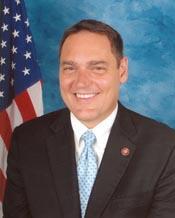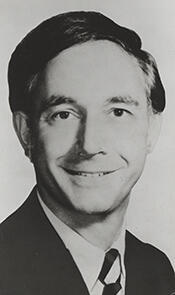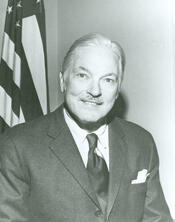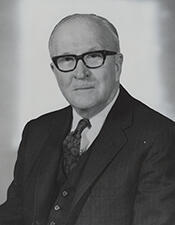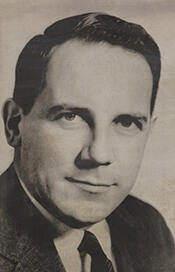
David Short Dennison Jr. (July 29, 1918 – September 21, 2001) was an American lawyer, business executive, and Republican politician who served one term as a United States Representative from Ohio from 1957 to 1959. During his tenure in the House of Representatives, he participated in the legislative process at a significant moment in mid-twentieth-century American history and represented the interests of his Ohio constituents.
Dennison was born in Poland, Mahoning County, Ohio, on July 29, 1918. He was educated in Ohio and New England, graduating from Western Reserve Academy in Hudson, Ohio, in 1936. He went on to attend Williams College in Williamstown, Massachusetts, where he completed his undergraduate studies in 1940. Pursuing a legal career, he enrolled at Western Reserve University School of Law in Cleveland, Ohio—now Case Western Reserve University School of Law—and received his law degree in 1945.
During World War II, before completing his legal education, Dennison worked for the American Field Service from 1942 to 1943, contributing to wartime support activities. After earning his law degree, he entered private practice as an attorney in Ohio. He built a legal career that combined private work with public service, gaining experience in municipal and state legal affairs that would later inform his work as a legislator.
Dennison’s early public legal roles included service as special counsel for the city of Warren, Ohio, from 1950 to 1951. He subsequently served as special assistant to the Ohio Attorney General from 1953 to 1956. In these positions he advised public officials and agencies, further establishing his reputation in legal and governmental circles in Ohio and laying the groundwork for his entry into elective office.
A member of the Republican Party, Dennison was elected to the Eighty-fifth Congress as a Representative from Ohio, serving from January 3, 1957, to January 3, 1959. His single term in Congress coincided with a period of growing national attention to civil rights and federal regulatory policy. As a member of the House of Representatives, David Short Dennison contributed to the legislative process and participated in the democratic governance of the nation while representing his district’s interests. He voted in favor of the Civil Rights Act of 1957, a landmark measure that marked the first major federal civil rights legislation since Reconstruction. Dennison sought reelection but was unsuccessful in his campaigns for the Eighty-sixth and Eighty-seventh Congresses in 1958 and 1960.
After leaving Congress, Dennison continued to serve in federal public roles and in the private sector. In 1959 he was a consultant to the United States Commission on Civil Rights, reflecting his ongoing engagement with civil rights policy following his vote for the 1957 Act. He later served as a member of the Federal Trade Commission from 1970 to 1974, participating in the federal government’s oversight of trade practices and consumer protection during a period of expanding regulatory attention to competition and marketplace fairness. Following his federal service, Dennison worked as a business executive, applying his legal and governmental experience to private enterprise.
David Short Dennison Jr. died in Warren, Ohio, on September 21, 2001. His career encompassed legal practice, municipal and state service, a term in the United States House of Representatives, and subsequent roles in civil rights and federal trade regulation, reflecting a lifelong engagement with public affairs at the local, state, and national levels.
Congressional Record