United States Representative Directory

David Cobb

David Cobb served as a representative for Massachusetts (1793-1795).

  • Unknown
  • Massachusetts
  • District -1
  • Former
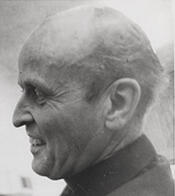
Portrait of David Cobb Massachusetts
Role Representative

Current assignment referenced in the congressional directory.

State Massachusetts

Representing constituents across the Massachusetts delegation.

District District -1

District insights and legislative focus areas.

Service period 1793-1795

Years of public service formally recorded.

Font size

Biography

David Cobb was the name of several notable individuals in American history and public life, including David Cobb (Massachusetts politician) (1748–1830), a U.S. Congressman; David Cobb (slave trader) (died 1826), who was killed in an Ohio River slave revolt; David Cobb (artist) (1921–2014), an artist; David Cobb (activist) (born 1962), an American activist and politician; Dave Cobb (born 1974), a record producer; and David Cobb (American football) (born 1993), an American football player. Among these, the earliest and most historically prominent in the context of congressional biography is David Cobb, the Massachusetts politician and U.S. Congressman, whose life and career spanned the Revolutionary era and the early decades of the United States.

David Cobb, the Massachusetts politician (1748–1830), emerged as a public figure in the late eighteenth century, participating in the political life of Massachusetts during and after the American Revolution. Born in 1748, he came of age as the colonies moved toward independence, and his early life and education prepared him for service in both military and civil capacities. His formative years coincided with the growing tensions between Britain and its American colonies, and he became aligned with the Patriot cause as the Revolutionary War unfolded.

Cobb’s career developed in tandem with the creation of new state and national institutions. In Massachusetts, he held a series of public offices that reflected his standing in the community and his commitment to the emerging republic. As the new federal government was established under the Constitution, Cobb advanced to national office and served as a U.S. Congressman, representing Massachusetts in the United States Congress. His tenure in Congress placed him among the early generation of federal legislators who helped define the powers and practices of the legislative branch in the young nation. During these years he participated in the political life of the early republic, working within the framework of evolving party alignments and regional interests that characterized the post-Revolutionary period.

After his service in Congress, Cobb remained active in public and civic affairs in Massachusetts. Like many leaders of his generation, he divided his time between local responsibilities and broader state or regional concerns, contributing to the consolidation of governmental structures and the stabilization of political life in the decades following independence. His later years were spent as a respected elder statesman of his community and state, and he lived to see the United States expand and mature under the constitutional system he had helped to inaugurate. David Cobb, the Massachusetts politician and U.S. Congressman, died in 1830, closing a life that had bridged the colonial, Revolutionary, and early national periods.

Another historical figure bearing the same name, David Cobb (slave trader) (died 1826), was involved in the transatlantic and domestic slave trade and met a violent end when he was killed in an Ohio River slave revolt in 1826. His death in that revolt underscores the resistance of enslaved people to their captivity and marks a starkly different legacy from that of the Massachusetts congressman. While little detailed biographical information is preserved about this David Cobb, the record of his role as a slave trader and his death in the context of an attempted escape or uprising on the Ohio River situates him within the broader and brutal history of slavery in the United States.

In later centuries, the name David Cobb continued to appear in American public and cultural life, though in very different contexts. David Cobb (artist) (1921–2014) pursued a career in the arts, contributing to the visual culture of the twentieth century. David Cobb (activist) (born 1962) became known as an American activist and politician, engaging in contemporary political movements and advocacy efforts. In the realm of music, Dave Cobb (born 1974) established himself as a record producer, working in the recording industry and shaping modern musical productions. In sports, David Cobb (American football) (born 1993) became known as an American football player, participating in the highly organized and commercialized world of professional athletics. Each of these individuals, though sharing the same name, is distinct in era, profession, and impact, and only David Cobb (Massachusetts politician) held service as a U.S. Congressman.

Congressional Record

Loading recent votes…

More Representatives from Massachusetts