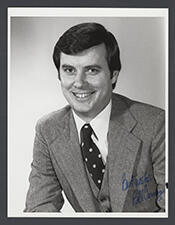
Daniel Bennett St. John (October 8, 1808 – February 18, 1890) was an American businessman and politician who served one term as a U.S. Representative from New York from 1847 to 1849. He was born in Sharon, Connecticut, on October 8, 1808. Little is recorded about his early childhood and family background, but by the early 1830s he had left his native state and established himself in New York, where he would spend the remainder of his life and career.
In 1831 St. John settled in Monticello, New York, in Sullivan County, where he engaged in mercantile pursuits and the real estate business. His work as a merchant and real estate operator placed him among the more prominent local businessmen of the growing community and provided the economic and social footing from which he entered public life. Through these activities he became closely acquainted with the commercial and property interests of his region, experience that later informed his approach to legislative service.
St. John’s formal political career began at the state level. He was elected to the New York State Assembly as the representative for Sullivan County and served in the Assembly in 1840. His tenure in the lower house of the state legislature marked his emergence as a public figure and aligned him with the Whig Party, then one of the two major political parties in New York and the nation. As an assemblyman he participated in the legislative process during a period of significant economic and political development in New York State.
Building on his state legislative experience, St. John was elected as a Whig to the Thirtieth United States Congress. He represented New York in the U.S. House of Representatives from March 4, 1847, to March 3, 1849. As a member of the Whig Party representing New York, he contributed to the legislative process during his single term in office, participating in the democratic process and representing the interests of his constituents at a time when the nation was grappling with issues arising from the Mexican–American War and the expansion of the United States. His service in Congress occurred during a significant period in American history, and he took part in the deliberations of a body that confronted questions of territorial acquisition, internal improvements, and economic policy.
After the conclusion of his congressional term, St. John moved to Newburgh, New York, a Hudson River city that became his principal residence. There he remained active in public affairs and party politics. He served as chief registrar in the banking department of New York State, a position that placed him within the state’s financial regulatory structure and reflected the trust placed in his judgment and experience in business matters. His work in the banking department coincided with an era of expanding financial institutions and evolving state oversight of banking practices.
St. John continued to play a role in national and state politics in the decades following his congressional service. In 1860 he served as a delegate to the Constitutional Union National Convention, a gathering of a short-lived national party that sought to avert sectional conflict by emphasizing adherence to the Constitution and the preservation of the Union on the eve of the Civil War. Later, as party alignments shifted in the postwar period, he became associated with the Democratic Party. He was a delegate to the 1876 Democratic National Convention, which nominated Samuel J. Tilden for the presidency in one of the most closely contested elections in American history.
In addition to his national party activities, St. John returned to elective office in New York State. He was a member of the New York State Senate from 1876 to 1879, representing the 10th District. During this period he sat in the 99th, 100th, 101st, and 102nd New York State Legislatures. His service in the State Senate extended his legislative career into the late nineteenth century and allowed him to participate in debates over issues such as state finance, infrastructure, and the regulation of commerce and industry during the Gilded Age.
Daniel Bennett St. John died in New York City on February 18, 1890. He was interred in Cedar Hill Cemetery in Newburgh, New York, the community that had long been his home. His career spanned local business, state and national legislative service, and financial administration, reflecting the trajectory of a nineteenth-century public figure who moved from mercantile pursuits into a lifetime of political and civic engagement.
Congressional Record