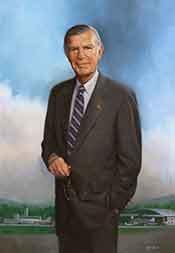
Daniel Montgomery Jr. (October 30, 1765 – December 30, 1831) was an American pioneer, soldier, merchant, and public servant who became one of the most prominent figures in the early development of central Pennsylvania. He was the third son of William Montgomery, a Revolutionary War officer and influential early settler. At about fifteen years of age, he accompanied his father when the elder Montgomery established a settlement on his lands in Northumberland County, Pennsylvania, known as “Montgomery’s Landing.” This settlement later grew into the town of Danville, which would bear Daniel Montgomery’s name and become the center of his commercial and political influence.
Under the guidance and assistance of his father, Montgomery opened the first store in what would become Danville. The store was located on the site where the General William Montgomery House now stands and quickly became a focal point of trade in the region. Through diligence and sound judgment, he gained a reputation as a trusted merchant and factor for a wide circle of patrons on the Pennsylvania frontier. On November 27, 1791, he married Christiana Strawbridge, further cementing his ties to the local community. In 1792 he laid out the town of Danville, particularly the portion east of Mill Street. The town’s name was derived from an abbreviation of his given name, “Daniel,” a reflection of the partiality and esteem of his customers and neighbors. From this period until his death, he was widely regarded as the most prominent man in that part of the state.
Montgomery’s early success as a merchant and landowner provided the foundation for his broader public career. While continuing to operate an extensive mercantile establishment, he purchased and held large tracts of land in the surrounding region, positioning himself as a key figure in the area’s economic development. His business acumen was matched by an interest in public improvements, and he became a chief promoter of turnpike construction in central Pennsylvania, recognizing that improved transportation was essential to the growth of commerce and settlement. His leadership in these endeavors helped to integrate the region more closely with the rest of the Commonwealth.
In addition to his commercial pursuits, Montgomery had an active military career in the state militia. By 1805 he held the rank of lieutenant colonel in the 81st Pennsylvania Militia, reflecting his standing in the community and his experience in local defense and organization. On July 27, 1809, he was appointed major general of the 9th Division of the Pennsylvania Militia. In this capacity he exercised command over a large military district, contributing to the readiness and structure of the state’s citizen-soldier forces during a period of national tension and eventual conflict in the early nineteenth century.
Montgomery’s formal political career began in the Pennsylvania state legislature. Elected to the Pennsylvania Legislature in 1802, he quickly assumed a leadership role in the public enterprises and politics of his district, effectively taking the place his father had long held as a trusted local statesman. He was recognized by leading men throughout the state as a figure of considerable influence in shaping public affairs, and his legislative work coincided with a period of institutional and infrastructural development in Pennsylvania. Throughout these years he continued to manage his business interests, maintaining the dual role of legislator and entrepreneur.
At the national level, Daniel Montgomery Jr. served as a member of the United States House of Representatives from Pennsylvania. Elected to Congress in 1807 as a member of the Democratic-Republican Party (often referred to at the time as the Republican Party), he served one term, participating in the legislative process during a significant period in American history. His tenure in Congress fell in the years leading up to the War of 1812, when issues of trade, national sovereignty, and internal development were increasingly prominent. Montgomery represented the interests of his Pennsylvania constituents ably and acceptably and, after completing his term, declined to seek reelection, choosing instead to focus on state and local affairs.
Following his service in Congress, Montgomery remained deeply engaged in the political and civic life of Pennsylvania. He worked efficiently and persistently for the division of the large Northumberland County and the creation of Columbia and Union Counties, reflecting the growth and changing needs of the region. Danville was designated the county seat of the newly formed Columbia County, and both Daniel Montgomery and his father donated the land for the county buildings and contributed substantial funds toward their construction. His stature in state politics was such that in 1823 he was strongly urged by prominent men from across Pennsylvania to stand as a candidate for governor, an honor he declined.
In the later years of his public career, Montgomery played a notable role in Pennsylvania’s program of internal improvements. In 1828 he was appointed one of the state’s canal commissioners at a time when Pennsylvania was embarking on a major expansion of its transportation infrastructure. During his tenure, the state inaugurated significant internal improvement projects, including the location and substantial advancement of the North Branch Canal, which was intended to enhance navigation and commerce along the Susquehanna River and its tributaries. He was also a large stockholder and strong promoter of the Danville Bridge Company, which completed a major bridge at Danville in 1829, further integrating the town into regional trade networks.
Montgomery’s interest in transportation and economic development extended to the emerging technology of railroads. He originated the project for the Danville & Pottsville Railroad, conceived to link the iron and coal regions with broader markets, and served as the first president of the company. This initiative reflected his forward-looking approach to infrastructure and his continuing commitment to the prosperity of Danville and the surrounding counties. Daniel Montgomery Jr. remained a central figure in the civic, economic, and political life of his region until his death on December 30, 1831. His career as a pioneer, soldier, merchant, legislator, and promoter of internal improvements left a lasting imprint on the development of central Pennsylvania.
Congressional Record