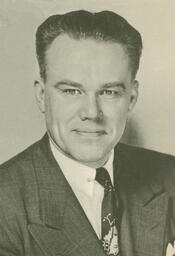
Daniel Garrison (April 3, 1782 – February 13, 1851) was a Representative from New Jersey; born in Pennsville Township, New Jersey, near Salem, New Jersey. Little is recorded about his family background, but his early years were spent in the largely rural environment of southern New Jersey, an area shaped by agriculture and river commerce. Growing up in this setting, he became familiar with the concerns of local farmers and landowners, experiences that would later inform his public service and political outlook.
Garrison pursued an academic course in his youth, acquiring the education considered suitable for public life in the early nineteenth century. Following his studies, he engaged in agricultural pursuits, managing and working land in the vicinity of Salem County. His involvement in agriculture not only provided his livelihood but also grounded him in the practical issues of land use, taxation, and local governance that were central to the politics of his region.
Garrison’s formal political career began at the state level. He was elected a member of the New Jersey General Assembly, serving from 1806 to 1808. During these years he participated in the legislative affairs of New Jersey at a time when the state was adapting to the rapid political and economic changes of the early republic. After his legislative service, he continued in public office as surrogate of Salem County, New Jersey, from 1809 to 1823. In that capacity he was responsible for probate matters and the administration of estates, a position that required legal knowledge, administrative skill, and the confidence of the local community.
Building on his state and county experience, Garrison advanced to national office as a member of the United States House of Representatives. As a member of the Jackson Party representing New Jersey, Daniel Garrison contributed to the legislative process during two terms in office. He was elected as a Jacksonian Democratic-Republican to the Eighteenth Congress and reelected as a Jacksonian to the Nineteenth Congress, serving from March 4, 1823, to March 3, 1827. Garrison’s service in Congress occurred during a significant period in American history, as the nation grappled with issues of economic development, federal power, and the emerging political realignment that would solidify the Jacksonian movement. He participated in the democratic process and represented the interests of his New Jersey constituents during these formative years. He was not a candidate for renomination in 1826, thereby concluding his congressional career after two consecutive terms.
After leaving Congress, Garrison remained connected to federal service. In 1834, President Andrew Jackson appointed him inspector of the revenue and collector of the customs at the port of Bridgeton, New Jersey. In this dual capacity he oversaw the collection of customs duties and the enforcement of federal revenue laws at a growing regional port, reflecting the administration’s trust in his loyalty and administrative competence. He held this position until 1838, extending his record of public service well beyond his years in elective office.
In his later years, Garrison continued to reside in southern New Jersey, maintaining the ties to Salem and its surrounding communities that had characterized his entire life. He died in Salem on February 13, 1851. Daniel Garrison was interred in St. John’s Episcopal Cemetery in Salem, New Jersey, closing a life marked by long-standing engagement in agricultural pursuits, state and county administration, and national legislative and revenue service during a transformative era in the United States.
Congressional Record