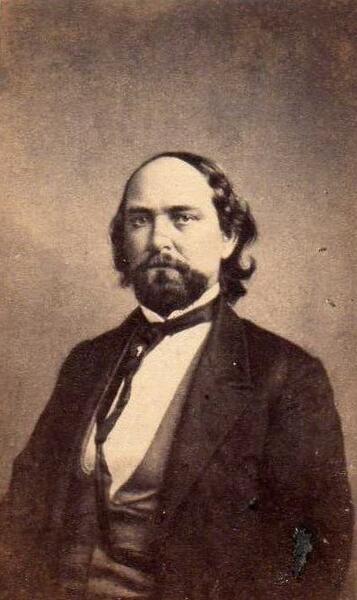
Daniel Coleman DeJarnette Sr. (October 18, 1822 – August 20, 1881) was a prominent Virginia politician who served in the United States Congress and later in the Confederate Congress during the American Civil War. A member of the Independent Party representing Virginia in the U.S. House of Representatives, he contributed to the legislative process during two terms in office, participating in the democratic process at a critical moment in American history and representing the interests of his constituents.
DeJarnette was born in Caroline County, Virginia, into a family of French Huguenot descent that had settled in the colony during the eighteenth century and become prominent Virginia planters. His grandfather, Joseph DeJarnette, founded the Spring Grove plantation in 1740, establishing what would remain the family seat and Daniel DeJarnette’s home throughout his life. The main house stood about a half mile east of the modern Mattaponi River Bridge on U.S. Route 301. Joseph DeJarnette operated the plantation with enslaved labor and also served the community as a local road overseer and debt collector or bail bondsman, roles similarly held by John Woolfolk. Over time he accumulated approximately 5,000 acres between the Mattaponi River and Maracossic Creek. Daniel DeJarnette’s father and grandfather constructed a grist mill on Maracossic Creek, later known as Smoot’s Mill after it left family ownership. Many of his paternal uncles and aunts left Caroline County, but the Spring Grove estate remained the center of the immediate family’s social and economic life.
Raised in this planter milieu, DeJarnette received a private education appropriate to his class and station. His family had long been religious dissenters in Caroline County, initially aligned with the Methodist Church, which shaped the household’s religious and social outlook. Seeking higher education, he traveled to what would later become the state of West Virginia to attend Bethany College, an institution founded by the influential minister Alexander Campbell and chartered by the Virginia legislature in 1840. Bethany was then a new college associated with the Restoration Movement, and DeJarnette’s attendance there reflected both his family’s dissenting religious tradition and their commitment to advanced education.
Following the pattern established by his forebears, DeJarnette became a planter at Spring Grove and operated his estate using enslaved labor. According to the 1840 federal census, he owned 100 enslaved people in Caroline County; by 1850 he held 104 enslaved individuals. In the last federal census of slaveholdings before the Civil War, in 1860, he owned 32 enslaved people. The reduction in the number of enslaved laborers may have been related to financial pressures associated with his decision to demolish the original mansion at Spring Grove and construct a new residence in the Italianate style that was fashionable in the years immediately preceding the war. This new house, which later achieved recognition as a historic structure, symbolized both the wealth and the changing fortunes of the antebellum planter class to which DeJarnette belonged.
DeJarnette entered public life as a member of the Virginia House of Delegates, where Caroline County voters elected him to serve part time in 1853. He was re-elected twice and served continuously through 1858. His legislative work in Richmond coincided with the intensifying national debates over slavery, sectionalism, and states’ rights. In 1858 he resigned from the House of Delegates after winning election to the United States House of Representatives as an Independent Democrat, sometimes described as holding anti-Administration views. Running as an Independent Party candidate representing Virginia, he secured 50.45 percent of the vote and defeated Democrat John Caskie. DeJarnette served in the U.S. Congress from 1859 until 1861, sitting in the Thirty-sixth Congress during the tumultuous period immediately preceding the Civil War. His tenure in Washington placed him at the center of the national crisis as Southern states moved toward secession and the Union began to fracture.
With the outbreak of the Civil War and Virginia’s secession from the Union, DeJarnette aligned himself with the Confederacy. He represented Virginia in both the First Confederate Congress and the Second Confederate Congress, serving from February 1862 through March 1865. In the Confederate legislature he participated in debates over wartime policy, mobilization, and the governance of the breakaway government. His family was directly involved in the conflict: his eldest son, Elliott DeJarnette, enlisted in the Confederate States Army and survived the war, later becoming a Confederate Army officer of note within the family’s history.
After the collapse of the Confederacy and the end of the Civil War, DeJarnette returned to private life at Spring Grove but remained engaged in public affairs during the Reconstruction era. In 1872, Governor Gilbert Carlton Walker appointed him to the Board of Visitors of the newly established Virginia Agricultural and Mechanical College, an institution created under the Morrill Act and known today as Virginia Tech. In this capacity, DeJarnette contributed to the early governance and development of the college, which was intended to promote practical education in agriculture and the mechanical arts for the postwar South.
DeJarnette’s personal life reflected the close-knit nature of Virginia’s planter elite. He married his cousin, Louise Jane DeJarnette, the daughter of Elliott DeJarnette. The couple had at least three sons and three daughters. Their firstborn son, Elliott DeJarnette (1846–1898), served as an officer in the Confederate Army, continuing the family’s military participation in the Southern cause. The family’s political legacy extended into subsequent generations: DeJarnette’s grandson, Edmund Tompkins DeJarnette, later served in the Virginia House of Delegates, representing nearby Hanover and King William Counties, thereby maintaining the family’s long-standing involvement in state politics.
Daniel Coleman DeJarnette Sr. died at White Sulfur Springs, West Virginia, on August 20, 1881. His remains were returned to Caroline County for interment, bringing him back to the community that had shaped his life and career. His home, Spring Grove, then owned by his great-grandson, was listed on the National Register of Historic Places in 1976, recognizing both its architectural significance and its association with a prominent Virginia political family. The name “Spring Grove” has caused some confusion, as another historic home bearing the same name operates as a bed and breakfast near Appomattox, Virginia, but that property is distinct from the DeJarnette family estate in Caroline County.
Congressional Record