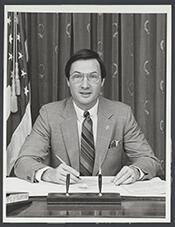
Dan Voorhees Stephens (November 4, 1868 – January 13, 1939) was a Nebraska Democratic politician who represented his state in the United States House of Representatives in the early twentieth century. He was born in Bloomington, Monroe County, Indiana, on November 4, 1868, into a period of post–Civil War expansion that would later shape his interests in education, agriculture, and development on the Great Plains. Little is recorded about his parents or early family life, but his formative years in Indiana provided the foundation for his later pursuits in teaching, writing, and public service.
Stephens attended Valparaiso College in Valparaiso, Indiana, an institution known at the time for its practical curriculum and teacher training. After completing his studies there, he moved west and settled in Fremont, Dodge County, Nebraska. In Fremont he taught school while studying law, reflecting an early commitment to both education and the legal framework of public life. His abilities as an educator were quickly recognized, and he was elected superintendent of schools in Dodge County, serving from 1890 to 1894. In that capacity he oversaw local public education during a period of rapid population growth and institutional development in Nebraska.
Alongside his work in education, Stephens developed a parallel career as an author and businessman. He wrote several books, including “Silas Cobb,” “Phelps and His Teacher,” and “Passing of the Buffalo,” works that reflected contemporary interests in moral instruction, education, and the transformation of the American frontier. He also engaged in farming and became active in publishing, manufacturing, and banking in and around Fremont. These varied pursuits established him as a prominent local figure and provided the economic and social base from which he entered state and national politics.
Stephens became increasingly involved in the Democratic Party in Nebraska and on the national stage. He served as a delegate to the Democratic National Conventions of 1904 and 1908, participating in the party’s deliberations during the Progressive Era. His standing within the party and his regional prominence positioned him as a logical successor when Representative James P. Latta of Nebraska died in office. In a special election held in 1911, Stephens was elected as a Democrat to fill Latta’s vacant seat in the Sixty-second Congress.
In Congress, Stephens represented Nebraska from November 7, 1911, to March 3, 1919. After winning the special election to the Sixty-second Congress, he was reelected to the Sixty-third, Sixty-fourth, and Sixty-fifth Congresses. His tenure in the House thus spanned the administrations of Presidents William Howard Taft and Woodrow Wilson and encompassed major national developments, including the Progressive reform period and World War I. While specific committee assignments and legislative initiatives are not extensively documented in the surviving record, his service coincided with debates over agricultural policy, banking and currency reform, and wartime mobilization, issues of particular importance to his largely rural Nebraska constituency. In 1918 he was an unsuccessful candidate for reelection to the Sixty-sixth Congress, bringing his congressional career to a close at the end of his term in March 1919.
After leaving Congress, Stephens returned to Fremont and resumed his earlier business and civic activities in Nebraska. He continued his involvement in education, serving as a member of the State Board of Education of Nebraska from 1923 to 1926, where he helped oversee statewide educational policy in the interwar years. In the business sphere he held several prominent positions: he served as president of the Stephens National Bank, president of the Stephens-Hammond Company, and vice president of the Nebraska State Building and Loan Association. Through these roles he remained influential in regional finance, industry, and community development, contributing to the economic life of Fremont and the surrounding area.
Stephens remained a loyal Democrat and continued to participate in national party affairs long after his congressional service ended. He again served as a delegate to the Democratic National Conventions in 1920, 1924, and 1932, taking part in the nomination processes that culminated in the presidential candidacies of James M. Cox, John W. Davis, and Franklin D. Roosevelt. His repeated selection as a delegate over nearly three decades reflected his enduring status within the party and his continued engagement with national political issues.
Dan Voorhees Stephens spent his later years in Fremont, where he had built his career and reputation. He died there on January 13, 1939. In accordance with his or his family’s wishes, his remains were cremated. His life encompassed roles as educator, author, businessman, banker, and legislator, and he left a legacy of service to Nebraska in both its educational institutions and its representation in the United States Congress.
Congressional Record