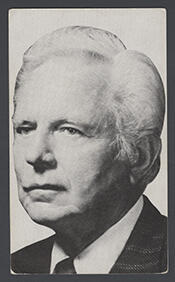
Cydnor Bailey Tompkins (November 8, 1810 – July 23, 1862) was an American lawyer and politician who served two terms as a U.S. Representative from Ohio from 1857 to 1861. A member of the Republican Party, he represented his Ohio constituents in Congress during a critical period leading up to the Civil War and was known for his strong opposition to the expansion of slavery. He was the father of Emmett Tompkins, who later also served in the U.S. House of Representatives.
Tompkins was born near St. Clairsville in Belmont County, Ohio. In 1831 he moved with his parents to Morgan County, Ohio, where the family settled near McConnelsville. He completed preparatory studies and enrolled at Ohio University in Athens, one of the earliest institutions of higher learning in the state. He was graduated from Ohio University in 1835, an educational foundation that prepared him for a professional career in the law and in public service.
After completing his formal education, Tompkins studied law and was admitted to the bar in 1837. He commenced the practice of law in McConnelsville, Morgan County, Ohio, where he quickly became involved in local civic affairs. In 1840 he served as recorder of McConnelsville, an office that involved responsibility for maintaining public records and legal documents. His engagement with municipal administration continued when he served as street commissioner of McConnelsville in 1850, overseeing aspects of local infrastructure and public works.
Tompkins’s legal career expanded to the county level when he served as prosecuting attorney of Morgan County from 1848 to 1851. In that role he represented the state in criminal proceedings and helped shape the administration of justice in the region. As the political realignments of the 1850s unfolded, he became active in the emerging Republican Party. He served as a member of the Republican State convention in 1855, aligning himself with the new party’s opposition to the extension of slavery into the western territories and its broader program of free labor and economic development.
In national politics, Tompkins was elected as a Republican to the Thirty-fifth and Thirty-sixth Congresses, serving from March 4, 1857, to March 3, 1861. During his two terms in the U.S. House of Representatives, he contributed to the legislative process at a time of mounting sectional tension. He served as chairman of the Committee on Militia in the Thirty-sixth Congress, a position that placed him at the center of congressional deliberations concerning the organization and readiness of state militias on the eve of the Civil War. His tenure in Congress coincided with the deepening national crisis over slavery, states’ rights, and the future of the Union, and he participated actively in debates reflecting the interests and concerns of his Ohio constituents.
Tompkins became particularly noted for his antislavery advocacy. On April 24, 1860, he delivered one of his most significant addresses on the House floor, entitled “Slavery: What It Was, What It Has Done, What It Intends to Do.” Published widely by the Republican Congressional Committee, the speech laid out a historical and moral case against the expansion of slavery. Drawing on Revolutionary-era resolutions and the words of the nation’s founders, Tompkins argued that slavery had always been treated as an evil sustained only by local law. He rejected any notion that the Constitution recognized human beings as property, declaring that slavery was “but the creation of some local enactment, and that no property can exist in a human being, unless it is made so by some law. The Constitution of the United States nowhere recognises slaves as property.” He warned of slavery’s corrosive effects on society, politics, and education, and he cataloged a series of “aggressions” by the pro-slavery party—from the annexation of Texas to the violence in Kansas—that he believed had destabilized the Union. For Tompkins, the mission of the Republican Party was to draw “an impassable line” confining slavery to its existing limits, to suppress the African slave trade, and to preserve the western territories as “homes for free men.”
Despite his prominence in these debates, Tompkins was an unsuccessful candidate for renomination in 1860 and thus did not stand for a third term in Congress. After leaving federal office in March 1861, as the secession crisis escalated into open conflict, he resumed the practice of law in McConnelsville. He continued to live and work in the community where he had built his legal and political career, remaining identified with the Republican cause and the Unionist sentiment that was strong in much of Ohio.
Tompkins died in McConnelsville, Ohio, on July 23, 1862, during the early years of the Civil War. He was interred in McConnelsville Cemetery. His career, spanning local office, county legal service, and two terms in the U.S. House of Representatives, reflected the rise of the Republican Party in Ohio and the intense national struggle over slavery and the preservation of the Union in the mid-nineteenth century.
Congressional Record