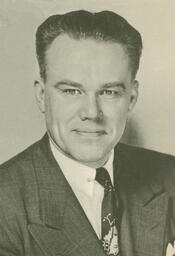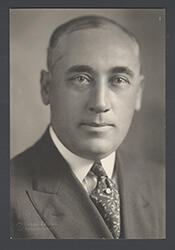
Cornelius Augustine McGlennon (December 10, 1878 – June 13, 1931) was an American Democratic Party politician who represented New Jersey’s 8th congressional district in the United States House of Representatives from 1919 to 1921. Over the course of his single term in Congress, he participated actively in the legislative process and represented the interests of his New Jersey constituents during a period of significant national transition in the aftermath of World War I.
Born on December 10, 1878, McGlennon came of age in an era marked by rapid industrialization and urban growth, developments that would shape the political and social environment in which he later worked. Although detailed records of his early family life and upbringing are limited, his subsequent public career suggests an early engagement with civic affairs and the concerns of working- and middle-class communities in New Jersey.
McGlennon’s education prepared him for a life in public service and politics, equipping him with the skills necessary to navigate the legal and governmental institutions of his time. Like many politicians of his generation, he likely combined formal schooling with practical experience in local affairs, gaining familiarity with the issues that would later come before him as a legislator. His background and training helped position him to enter Democratic Party politics in New Jersey, where he became part of the broader movement of urban, often immigrant-rooted constituencies that shaped the party’s base in the Northeast.
Before entering Congress, McGlennon built a career that reflected both professional advancement and growing political involvement. As he became more active in Democratic Party circles, he developed a reputation as a representative voice for his community, aligning himself with the party’s efforts to address economic and social questions in the early twentieth century. His work during these years laid the foundation for his successful run for federal office and helped establish his standing as a credible advocate for his district.
McGlennon was elected as a Democrat to the Sixty-sixth Congress and served from 1919 to 1921, representing New Jersey’s 8th congressional district. His term coincided with a critical phase in American history, as the nation grappled with postwar readjustment, the early enforcement of Prohibition, and the onset of major social and economic changes. As a member of the House of Representatives, Cornelius Augustine McGlennon contributed to the legislative process, participated in debates on national policy, and worked within the Democratic caucus to advance the interests of his constituents. His service reflected the concerns of a district situated in a rapidly developing state, where industrial growth, labor issues, and urban expansion were central political themes.
After leaving Congress in 1921, McGlennon remained identified with the Democratic Party and the public life of New Jersey. Although he did not return to the House of Representatives, his congressional experience and party ties kept him engaged with the political currents of the 1920s, a decade marked by economic expansion, cultural change, and evolving party alignments. His post-congressional years were spent in the same broader environment of civic and political activity that had characterized his earlier career, maintaining his role as a figure of public standing in his community.
Cornelius Augustine McGlennon died on June 13, 1931. His career, though highlighted by a single term in the United States Congress, reflected the trajectory of many early twentieth-century Democratic politicians who rose from local and state contexts to serve at the national level. His service in the House of Representatives during a pivotal period in American history ensured that he played a part in the democratic process at a time of profound national change.
Congressional Record