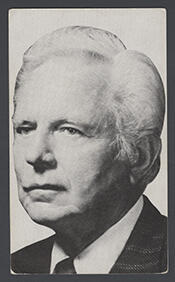
Cooper Kinderdine Watson (June 18, 1810 – May 20, 1880, age 69) was a U.S. Representative from Ohio, lawyer, and judge of the court of common pleas. He was born in Jefferson County, Kentucky, on June 18, 1810. Little is recorded about his parents or early family life, but he pursued preparatory studies in his youth, laying the groundwork for a professional career in the law.
After completing his preliminary education, Watson studied law and prepared for admission to the bar. He was admitted to the bar in Ohio and commenced the practice of law in Delaware, Ohio. In 1830 he married Caroline S. Durkee; the couple had four children, all of whom survived him along with his wife. His early legal practice in Delaware marked the beginning of a long professional life spent in various communities across Ohio.
Following his initial practice in Delaware, Watson moved to Marion, Ohio, where he continued his legal career and became active in local affairs. In 1839 he was an unsuccessful candidate for prosecuting attorney of Marion County, an early indication of his interest in public office and civic responsibility. Seeking broader opportunities, he later moved to Tiffin, Ohio. There he practiced law for twenty years or more, establishing himself as a prominent attorney in the region and building the professional reputation that would support his later political career.
Watson entered national politics in the 1850s, a period of significant realignment in American party politics. He was elected as a Republican and Oppositionist to the Thirty-fourth Congress, representing Ohio from March 4, 1855, to March 3, 1857. His election reflected the emerging strength of the Republican Party in Ohio and the broader political tensions of the pre–Civil War era. During his single term in Congress, he served as part of the growing coalition opposed to the expansion of slavery, although specific committee assignments and legislative initiatives from his term are not extensively documented. He was an unsuccessful candidate for reelection in 1856 to the Thirty-fifth Congress, and his service in the House concluded at the end of his term.
After leaving Congress, Watson resumed the practice of law, returning fully to his profession. He later moved to Sandusky, Ohio, where he continued his legal work and remained engaged in public affairs. His experience as a lawyer and former congressman made him a respected figure in his adopted communities, and he continued to be called upon for public service.
In 1871 Watson served as a member of the Ohio State constitutional convention, participating in the deliberations over the structure and governance of the state. His role in the convention reflected both his legal expertise and his longstanding involvement in Ohio public life. In 1876 he was appointed judge of the court of common pleas, a significant judicial office in the state’s trial court system. He served in that capacity in Sandusky, Ohio, from his appointment in 1876 until his death, presiding over a wide range of civil and criminal matters and capping a career that had spanned law, legislation, and judicial service.
Cooper Kinderdine Watson died in Sandusky, Ohio, on May 20, 1880, while still serving as a judge of the court of common pleas. He was 69 years old. He was interred in Greenlawn Cemetery in Tiffin, Ohio, returning in death to the community where he had practiced law for many years. His widow, Caroline S. Durkee Watson, and their four children survived him, and his career left a record of service at both the state and national levels during a formative period in Ohio and United States history.
Congressional Record