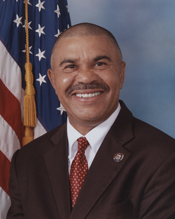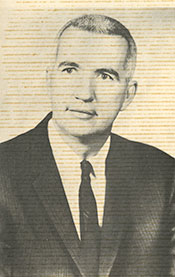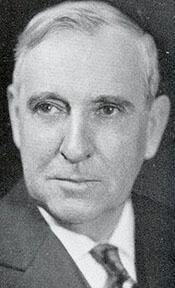
Clyde Williams (Missouri politician) (1873–1954) was a Democratic member of the United States House of Representatives from Missouri who served seven consecutive terms in Congress from 1927 to 1943. As a Representative from Missouri, he participated in the legislative process during a significant period in American history and represented the interests of his constituents in the U.S. House of Representatives. His congressional career placed him at the center of national debates during the late 1920s, the Great Depression, and the early years of World War II.
Born in 1873, Clyde Williams came of age in the post-Reconstruction era, a time when Missouri was transitioning economically and politically within a rapidly industrializing nation. Details of his early life and family background are less extensively documented than his public career, but his later prominence in state and national politics suggests a formative experience rooted in the civic and economic life of his community. Growing up in Missouri during this period would have exposed him to the agricultural concerns, regional trade, and evolving party politics that shaped the state’s alignment with the Democratic Party.
Williams’s education and early professional development prepared him for a career in public service and politics. Like many future members of Congress of his generation, he likely combined formal schooling with practical experience in business, law, agriculture, or local government, building the connections and reputation that would later support his entry into elective office. His eventual rise to the U.S. House of Representatives indicates that by the 1920s he had established himself as a trusted figure within Missouri’s Democratic Party, capable of articulating local interests on the national stage.
By the mid-1920s, Williams had become sufficiently prominent in Missouri politics to secure election to Congress as a Democrat. He entered the U.S. House of Representatives in 1927, beginning the first of seven terms that would extend through 1943. During these years, he contributed to the legislative process as the nation moved from the relative prosperity of the late 1920s into the economic crisis of the Great Depression. As a member of the House, he participated in the democratic process by debating and voting on legislation affecting banking, agriculture, labor, and social welfare, and by working to ensure that the needs of his Missouri constituents were reflected in federal policy.
Williams’s congressional service coincided with the administrations of Presidents Calvin Coolidge, Herbert Hoover, and Franklin D. Roosevelt, placing him in office during the stock market crash of 1929, the onset of the Great Depression, and the implementation of the New Deal. As a Democratic Representative, he served in the House majority during much of Roosevelt’s presidency, when Congress enacted sweeping reforms in economic regulation, relief programs, and infrastructure development. His tenure also overlapped with the early years of World War II, when Congress grappled with issues of national defense, mobilization, and foreign policy. Throughout these seven terms, Williams’s role as a Representative from Missouri required balancing national priorities with the specific economic and social concerns of his district.
After leaving Congress in 1943, Williams concluded a sixteen-year period of continuous federal legislative service. His departure from the House marked the end of his direct participation in national lawmaking, but his long tenure ensured that he remained a figure of note in Missouri’s political history. In the years following his congressional career, he lived through the final stages of World War II and the beginning of the postwar era, a time when many of the policies debated during his service continued to shape American society and government.
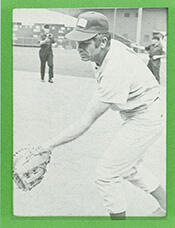
Clyde Williams died in 1954, closing a life that spanned from the late nineteenth century into the modern postwar United States. Remembered as a U.S. Representative from Missouri and a member of the Democratic Party who served seven terms in the House of Representatives from 1927 to 1943, he is part of a broader group of public figures who shared his name but pursued different careers, including Clyde Williams (American football) (1879–1938), an American football player and coach; Clyde Williams (baseball) (1920–2005), an American Negro league baseball player; and Clyde Williams (New York politician), a candidate for Congress in New York’s 13th Congressional District. His own legacy rests on his lengthy service in Congress during some of the most consequential decades in American political and economic history.
Congressional Record