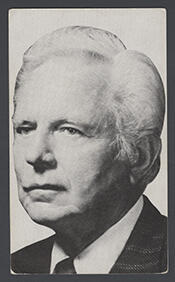
Clifton Bailey Beach (September 16, 1845 – November 15, 1902) was an American lawyer, businessman, and Republican politician who served two terms as a U.S. Representative from Ohio from 1895 to 1899. He was born in Sharon, Medina County, Ohio, where he spent his early years before moving with his family to Cleveland, Ohio. Growing up in northeastern Ohio during the mid-nineteenth century, he came of age in a period marked by rapid industrial growth and the political and social upheavals surrounding the Civil War.
Beach attended the public schools of Cleveland and pursued further studies at Western Reserve College in Hudson, Ohio, an institution that would later become part of Case Western Reserve University. After completing his collegiate studies, he turned to the law, studying in Cleveland and preparing for admission to the bar. He was admitted to the bar and commenced practice in Cleveland, establishing himself professionally in a city that was emerging as a major commercial and industrial center in the Great Lakes region.
In addition to his legal work, Beach became involved in business pursuits, reflecting the broader economic development of Cleveland in the post–Civil War era. He engaged in manufacturing and other commercial enterprises, gaining experience in the private sector that would later inform his public service. His professional activities and growing prominence in local affairs helped to position him for a role in Republican Party politics at a time when the party was dominant in Ohio.
As a member of the Republican Party representing Ohio, Beach contributed to the legislative process during two terms in office. He was elected as a Republican to the Fifty-fourth and Fifty-fifth Congresses, serving from March 4, 1895, to March 3, 1899. His service in Congress occurred during a significant period in American history, marked by debates over tariffs, monetary policy, and the nation’s expanding role on the world stage. Representing his Ohio constituency, he participated in the democratic process and worked to represent the interests of his constituents in the U.S. House of Representatives. After serving these two consecutive terms, he was not a candidate for renomination in 1898 and returned to private life.
Following his congressional service, Beach resumed his business and professional activities in Cleveland. He remained part of the city’s civic and commercial community during a time when Cleveland continued to grow as a major industrial and transportation hub. His combined experience as a lawyer, businessman, and former member of Congress reflected the close ties between commerce and politics in Ohio at the turn of the twentieth century.
Clifton Bailey Beach died in Cleveland, Ohio, on November 15, 1902. He was interred in Lake View Cemetery in Cleveland, a burial place for many of the city’s notable figures. His career encompassed law, business, and public office, and his two terms in the U.S. House of Representatives placed him among the Ohio Republicans who helped shape national policy in the late nineteenth century.
Congressional Record