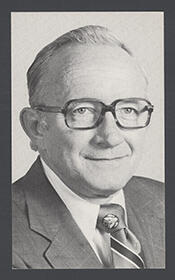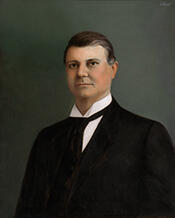
Claude Kitchin (March 24, 1869 – May 31, 1923) was an American politician who served as a member of the United States House of Representatives from North Carolina from 1901 until his death in 1923. A lifelong member of the Democratic Party, he represented North Carolina’s 2nd Congressional District and was elected to 12 consecutive terms, serving in Congress from 1901 to 1925 as recorded in contemporary accounts, and in fact continuously from 1901 until his death in 1923. During his long tenure he rose to national prominence as House majority leader in the 64th and 65th Congresses (1915–1919) and as House minority leader in the 67th Congress (1921–1923), playing a central role in shaping legislative policy during a transformative era in American history.
Kitchin was born on March 24, 1869, near Scotland Neck in Halifax County, North Carolina, the third of eleven children of William H. Kitchin and Maria Arrington Kitchin. He grew up in the post–Civil War South in a politically active family; his father had served in the Confederate Army and later in Congress, and his brother William Walton Kitchin would become governor of North Carolina from 1909 to 1913. Claude Kitchin attended Vine Hill Academy in Scotland Neck, North Carolina, where he received his early education. He then enrolled at Wake Forest College, from which he graduated in 1888, laying the academic foundation for his subsequent legal and political career.
After completing his studies at Wake Forest, Kitchin read law while working in local government, serving as assistant registrar of deeds in Halifax County. He was admitted to the bar in September 1890 and commenced the practice of law. That same year he married Kate Mills; the couple had ten children. As a young lawyer and party activist, Kitchin quickly became involved in North Carolina Democratic politics at a time of intense racial and partisan conflict. During the 1890s he played a leading role in mobilizing the Red Shirts, armed groups of militant white supremacists who rode through rural communities to intimidate and dissuade Black citizens from voting. Operating effectively as an extralegal arm of the state Democratic Party, these groups were instrumental in the party’s efforts to regain and consolidate power in the elections of 1896 and 1898, and Kitchin’s prominence in these campaigns helped launch his congressional career.
Kitchin’s activities reached a notorious peak in 1898, when he helped lead the Wilmington insurrection of 1898, a violent coup d’état carried out by white supremacists against a legitimately elected, biracial city government. At a rally in Laurinburg, North Carolina, on November 1, 1898, he was cheered by a crowd of several thousand white supporters when he declared, “We cannot outnumber the negroes… And so we must either outcheat, outcount or outshoot them,” and he warned that any Black constable attempting to arrest a white man would be lynched. On the day after the election, white citizens in Wilmington expelled Black and white opposition political leaders from the city, destroyed Black-owned property and businesses that had been built since the Civil War—including the city’s only Black newspaper—and killed an estimated 60 to more than 300 people. This episode, and Kitchin’s role in it, became a defining and deeply controversial part of his early public life.
In 1900, capitalizing on his heightened profile within the Democratic Party, Kitchin was elected to the United States House of Representatives from North Carolina’s 2nd District. He took his seat in March 1901 and was re-elected eleven times, serving continuously until his death in 1923. As a member of the House of Representatives, he participated actively in the legislative process and represented the interests of his constituents during a period that encompassed the Progressive Era, World War I, and the early postwar years. He became a member of the powerful House Committee on Ways and Means and, from 1915 to 1919, served as its chairman. His leadership on this committee placed him at the center of debates over tariff policy, taxation, and wartime finance.
Kitchin’s influence expanded further when he was chosen by his colleagues as House majority leader for the 64th and 65th Congresses (1915–1919). In that role he was a principal floor leader for the Democratic majority and a key interlocutor between the House and President Woodrow Wilson’s administration. As World War I shifted the federal government’s focus to foreign policy and national defense, Kitchin became increasingly alarmed by the prospect of the United States becoming a combatant. From his position as majority leader he opposed Wilson’s “preparedness” movement, seeking unsuccessfully to limit the growth in the size of the Army and Navy. In April 1917 he spoke strongly on the House floor against a declaration of war on Germany and was among the relatively few members of Congress who voted against the U.S. declaration of war, which was approved 373–50 in the House and 82–6 in the Senate.
Once war was declared, however, Kitchin accepted the decision and fully supported the war effort, while remaining a critic of certain administration policies, particularly those relating to war finance. He became a leading advocate of progressive taxation to fund the conflict, championing an “excess profits” tax that imposed steeply graduated rates on wartime corporate earnings. He argued that this approach was preferable to relying primarily on the sale of Liberty Bonds, which he believed would unfairly shift the financial burden of the war onto future generations. His work on Ways and Means during these years helped shape the structure of federal taxation and reflected the broader Progressive Era emphasis on using the tax system to address questions of equity and economic power.
After the Republicans gained control of the House in the 1920 elections, Kitchin was chosen as House minority leader for the 67th Congress (1921–1923). Even in the minority he remained an important voice on fiscal and economic policy and a prominent Southern Democrat in national debates. His health, however, began to decline. In March 1920, following an impassioned speech on the House floor, he suffered a severe stroke from which he never fully recovered, though he continued to serve in Congress. During the winter of 1922–1923 he contracted influenza and pneumonia, complications of which led to his death on May 31, 1923, while still in office. Claude Kitchin was buried in Trinity Episcopal Cemetery in Scotland Neck, North Carolina, closing the career of a powerful and controversial figure in early twentieth-century American politics.
Congressional Record