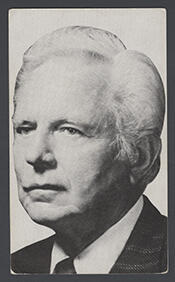
Chilton Allen White (February 6, 1826 – December 7, 1900) was an American lawyer, politician, and white supremacist who served as a Democratic U.S. Representative from Ohio from 1861 to 1865. Born in Georgetown, Brown County, Ohio, he was educated in local public schools and at a subscription school operated by his father, John D. White. At this school he became a classmate and early friend of Ulysses S. Grant, who would later command Union forces in the Civil War and serve as President of the United States. Before entering the professions of law and politics, White worked as a schoolteacher, reflecting the limited but locally grounded educational opportunities available in rural Ohio in the mid-nineteenth century.
As a young man, White served in the Mexican–American War, enlisting in Company G of the First Regiment, Ohio Volunteers. His military service occurred during the 1840s, when the United States was expanding its territory and many future political figures gained experience and public recognition through wartime service. After returning from the war, he studied law and was admitted to the bar in 1848. He then commenced the practice of law in his hometown of Georgetown, establishing himself in the legal profession at a relatively young age.
White’s early public career developed through local and state offices. He served as prosecuting attorney of Brown County, Ohio, from 1852 to 1854, a role that placed him at the center of county-level law enforcement and judicial proceedings. Building on this experience, he won election to the Ohio Senate, serving as a state senator in 1859 and 1860. His tenure in the state legislature occurred on the eve of the Civil War, a period marked by intensifying national conflict over slavery, states’ rights, and the future of the Union.
In 1860, White was elected as a Democrat to the United States House of Representatives. He served two consecutive terms in the Thirty-seventh and Thirty-eighth Congresses, from March 4, 1861, to March 3, 1865, representing Ohio during the entirety of the Civil War. As a member of the Democratic Party representing Ohio, he contributed to the legislative process during this significant period in American history, participating in debates over wartime policy, civil liberties, and the status of slavery. White’s congressional record reflected his racial views and opposition to key elements of the Lincoln administration’s wartime program. He voted against the Thirteenth Amendment to the United States Constitution, which abolished slavery, his vote being recorded as “nay.” During the war he also opposed the use of Black soldiers by the U.S. Army, reportedly declaring that “This is a Government of white men, made by white men for white men, to be administered, protected, defended, and maintained by white men.” He was an unsuccessful candidate for reelection in 1864 to the Thirty-ninth Congress, ending his federal legislative service at the close of his second term.
After leaving Congress, White returned to Georgetown and resumed the practice of law, reestablishing his legal career in the community where he had long resided. He remained active in Ohio politics and public affairs. In 1873 he served as a delegate to the Ohio state constitutional convention, participating in efforts to revise and update the state’s fundamental law during a period of post–Civil War political realignment and reform. Later in his career, he sought statewide office and was an unsuccessful Democratic candidate for Ohio secretary of state in 1896, demonstrating his continued engagement in partisan politics well into the late nineteenth century.
Chilton Allen White spent his entire life closely tied to Georgetown, Ohio, as his place of birth, professional base, and final residence. He died there on December 7, 1900. He was interred in Confidence Cemetery in Georgetown, closing a life that spanned from the Jacksonian era through the Civil War and into the dawn of the twentieth century, and that included service as a soldier, lawyer, state legislator, and member of the United States Congress.
Congressional Record