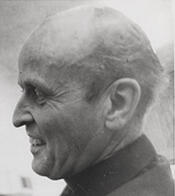
Chauncey Langdon Knapp (February 26, 1809 – May 31, 1898) was an American newspaperman and politician who served two terms as a U.S. Representative from Massachusetts from 1855 to 1859. He was born in Berlin, Vermont, on February 26, 1809. Trained as a printer, he entered the newspaper trade at an early age and established himself in Montpelier, Vermont, where he became a newspaperman of growing influence in the state’s political life.
Knapp’s early career was closely tied to the Anti-Masonic movement in Vermont. For a number of years he was co-proprietor and editor of the State Journal, which served as Vermont’s principal Anti-Masonic Party newspaper. Through this position he became a prominent voice in reform politics and an advocate of the Anti-Masonic cause. His political engagement deepened, and he was elected Secretary of State of Vermont, serving in that office from 1836 to 1843. During these years he combined his editorial work with public service, helping to shape state policy while continuing to use the press as a platform for political and social commentary.
In 1843 Knapp visited Lowell, Massachusetts, a rapidly growing industrial city and a center of reform activity. There he met the poet and abolitionist John Greenleaf Whittier, then editor of the Middlesex Standard, a newspaper that served as the voice of the Anti-slavery Movement and the Liberty Party in Lowell. Whittier invited Knapp to remain in Lowell, assume the editorship of the Middlesex Standard, and continue the fight against slavery and for broader social reform. Knapp accepted the invitation and relocated to Lowell, where he became a leading antislavery editor. Over time he moved from editor of the Middlesex Standard to editor of the Lowell Citizen and News, maintaining a strong reformist and anti-slavery stance in his journalism.
Knapp’s growing prominence in reform circles led him to seek elective office. He ran unsuccessfully for Congress as a Liberty Party candidate in 1846 and again as a member of the Free Soil Party in 1848, campaigns that underscored his commitment to anti-slavery principles even as they failed to secure him a seat. His abilities were nonetheless recognized in Massachusetts politics, and in 1851 he was appointed Clerk of the Massachusetts State Senate. This position placed him at the center of state legislative activity and further solidified his reputation as a capable administrator and steadfast opponent of slavery.
In 1854 Knapp was elected to the United States House of Representatives from Massachusetts as an anti-slavery candidate, beginning his service in the Thirty-fourth Congress on March 4, 1855. During this first term he was identified with the American Party, which at that time was the only major national party to include an explicit anti-slavery plank in its platform. As sectional tensions intensified, he aligned himself more fully with the emerging Republican Party when it was formed on an anti-slavery basis. Running as a Republican, he was again overwhelmingly elected, serving in the Thirty-fifth Congress from March 4, 1857, to March 3, 1859. As a member of the Republican Party representing Massachusetts, Knapp contributed to the legislative process during his two terms in office, participating in the democratic process and representing the interests of his constituents during a critical period in the nation’s history.
Knapp’s congressional service coincided with some of the most heated debates over slavery in the antebellum era. In the aftermath of the brutal attack on Senator Charles Sumner of Massachusetts by Congressman Preston Brooks of South Carolina on May 22, 1856, Knapp delivered his first address on the floor of the House of Representatives. In that speech he declared that his constituents regarded the assault as an “audacious blow hurled at the great right of free opinion…the primal element and safeguard of constitutional liberty.” His remarks reflected both his personal convictions and the sentiments of many in Massachusetts who viewed the incident as an attack on free speech and republican institutions as well as on an individual senator.
After leaving Congress at the close of his second term in 1859, Knapp returned to his principal vocation in journalism. He became editor of the Lowell Daily Citizen in 1859 and held that position until 1882. Under his long editorial leadership, the paper remained an important voice in Lowell’s civic and political life, and he continued to influence public opinion on local, state, and national issues well into the post–Civil War period. His career thus spanned several decades of profound political and social change, during which he consistently used the press and public office to advance causes of reform and constitutional liberty.
Chauncey Langdon Knapp died in Lowell, Massachusetts, on May 31, 1898. He was interred in Lowell Cemetery, where his long association with the city is commemorated. Knapp Avenue, leading from Rogers Street into the Lowell Cemetery, is named in his honor, reflecting the esteem in which he was held by the community he had served as editor, reformer, and representative.
Congressional Record