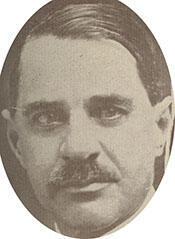
Charles Wesley Willard (June 18, 1827 – June 8, 1880) was an American politician, lawyer, and newspaper editor who served as a U.S. Representative from Vermont. A member of the Republican Party, he represented his state in Congress for three terms during a significant period in American history, participating in the legislative process and representing the interests of his constituents in the years following the Civil War.
Willard was born on June 18, 1827, in Lyndon, Caledonia County, Vermont. He was raised in the rural environment of northern Vermont, where he received his early education in local schools. Demonstrating academic promise, he pursued higher education and prepared for college in the region before entering university. His upbringing in Vermont, a state with a strong tradition of civic engagement and antislavery sentiment, helped shape his later political alignment with the Republican Party.
Willard attended Dartmouth College in Hanover, New Hampshire, and graduated in 1851. His college education provided him with a classical foundation and exposure to the political and legal ideas that were transforming the United States in the antebellum period. After completing his studies at Dartmouth, he returned to Vermont to study law. He was admitted to the bar and commenced practice, establishing himself as a lawyer in his home state. His legal training and practice formed the basis of his later public career and informed his work as both an editor and legislator.
In addition to his legal work, Willard became active in journalism and newspaper editing, a common avenue for politically engaged professionals in the mid-nineteenth century. As a newspaper editor, he helped shape public opinion in Vermont, using the press to discuss issues of law, governance, and national policy. His dual experience as a lawyer and editor enhanced his public profile and contributed to his emergence as a Republican leader in the state during and after the Civil War era.
Willard’s growing prominence in Vermont’s public life led to his election as a Republican to the United States House of Representatives. As a member of the Republican Party representing Vermont, he contributed to the legislative process during three terms in office. His service in Congress occurred during a significant period in American history, in the years of Reconstruction and its aftermath, when questions of national reunification, civil rights, economic development, and federal authority were at the forefront of American politics. In the House of Representatives, he participated in the democratic process, engaged in debate, and worked on legislation affecting both his state and the nation, representing the interests of his Vermont constituents in accordance with the principles of the Republican Party of his time.
After completing his three terms in Congress, Willard returned to private life in Vermont. Drawing on his earlier professional experience, he resumed his legal and editorial pursuits and remained a respected figure in state affairs. His post-congressional years were marked by continued engagement with public questions through his profession and his standing in the community, even as the nation moved from the Reconstruction era into the Gilded Age.
Charles Wesley Willard died on June 8, 1880, just ten days short of his fifty-third birthday. He passed away in Vermont, the state where he had been born, educated, and had built his career in law, journalism, and public service. His life reflected the trajectory of a nineteenth-century New England professional who combined legal practice, editorial influence, and elective office, and his three-term service in the U.S. House of Representatives placed him among the notable Republican legislators of Vermont in the post–Civil War period.
Congressional Record