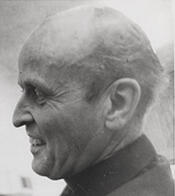
Charles Wentworth Upham (May 4, 1802 – June 15, 1875) was a U.S. representative from Massachusetts, a prominent Massachusetts legislator, and the 7th mayor of Salem, Massachusetts. A member of the Whig Party, he served one term in the United States House of Representatives and later became widely known as a historian of Salem and of the Salem witch trials of 1692. He was closely connected to an established New England family and was the cousin of George Baxter Upham and Jabez Upham, both of whom also served in the United States Congress.
Upham was born on May 4, 1802, in Saint John, in the New Brunswick Colony of British Canada. He was the son of Col. Joshua Upham, a Loyalist officer who became a justice of the Supreme Court of New Brunswick, and his second wife, Mary Chandler. His father, Joshua Upham, had been born in Brookfield, Massachusetts, in 1741 and died in England in 1808. Although born under British rule in New Brunswick, Charles Upham’s family background and connections were firmly rooted in New England, and he was educated in the traditions of the region’s professional and clerical elite.
Upham attended Harvard College, where he was a member of the class of 1821 and belonged to the Porcellian Club, one of the college’s most exclusive social organizations. During his Harvard years he formed an early friendship with Ralph Waldo Emerson, though he later became an outspoken opponent of Emerson’s Transcendentalist movement. After college, Upham entered the ministry and was ordained as a Unitarian clergyman, serving for a time as pastor of a church in Salem, Massachusetts. His theological and philosophical conservatism shaped his later public and literary career, and he engaged vigorously in the religious and intellectual controversies of his day.
On March 29, 1826, Upham married Ann Susan Holmes, the daughter of the Reverend Abiel Holmes and Sarah Oliver Wendell. Through this marriage he became the brother‑in‑law of Dr. Oliver Wendell Holmes Sr., the noted physician and man of letters. Charles and Ann Upham had fifteen children, all born in Salem, Massachusetts, though only four survived to adulthood. Their son Charles Wentworth Upham Jr., born in 1830, married Mary Haven and died at the age of thirty in Buffalo, New York, leaving no children. Another son, William Phineas Upham, born in 1836, married Cynthia Bailey Nurse and had two daughters, Mary Wendell Upham and Elizabeth Upham; he died in Newton, Massachusetts, in 1905. Their daughter Sarah Wendell Upham, born in 1839, died unmarried at the age of twenty‑five. Their youngest surviving son, Oliver Wendell Holmes Upham, born in 1843, married Caroline Ely Wilson and had two children, Dorothy Quincy Upham (born 1881) and Charles Wentworth Upham (born 1883); he died in Salem in 1905.
Upham’s public career in Massachusetts began at the local and state levels. Settling permanently in Salem, he became active in civic affairs and in the Whig Party. He served twice as a member of the Massachusetts House of Representatives, participating in the 78th Massachusetts General Court in 1857 and the 79th Massachusetts General Court in 1858. He also served in the Massachusetts State Senate and rose to the position of president of that body, reflecting his prominence within state politics. In municipal government, he was elected the 7th mayor of Salem, Massachusetts, where he helped oversee the city’s affairs during a period of commercial and social change in the mid‑nineteenth century.
As a member of the Whig Party representing Massachusetts, Upham contributed to the legislative process during one term in the United States Congress. His service in the House of Representatives occurred during a significant period in American history, as sectional tensions over slavery, economic policy, and westward expansion intensified. In Congress he participated in the democratic process and represented the interests of his Salem and Massachusetts constituents, aligning with the Whig emphasis on legislative supremacy, economic development, and cautious reform. His national service complemented his extensive work in state and local government and solidified his reputation as a capable, if sometimes controversial, public figure.
Upham’s intellectual and literary activities were as notable as his political career. A vigorous critic of Transcendentalism, he broke with his former classmate Ralph Waldo Emerson and took a conservative stance in religious and philosophical debates. He was involved in several contentious episodes in the cultural life of New England, including engineering the dismissal of author Nathaniel Hawthorne from his position at the Salem Custom House and arranging for the poet and mystic Jones Very to be institutionalized at McLean Asylum. His manner and methods drew criticism from some contemporaries; Senator Charles Sumner once referred to him as “that smooth, smiling, oily man of God.” Despite such criticism, Upham remained a respected figure in historical and antiquarian circles and, in 1858, was elected a member of the American Antiquarian Society.
Upham achieved lasting distinction as a historian of Salem and of the Salem witchcraft episode of 1692. His works include “Lectures on Witchcraft: Comprising a History of the Delusion in Salem in 1692” (first published in 1831), “Salem Witchcraft with an Account of Salem Village and a History of Opinions on Witchcraft and Kindred Subjects” (later reprinted in two volumes), and “Salem Witchcraft and Cotton Mather: A Reply” (1869). He also wrote widely on American historical and biographical subjects, including “Life, Explorations and Public Services of John Charles Frémont” (1856), “Life of Sir Henry Vane, Fourth Governor of Massachusetts” in Jared Sparks’s “Library of American Biography,” “A Discourse Delivered on the Sabbath After the Decease of the Hon. Timothy Pickering,” “Eulogy on the Life and Character of Zachary Taylor,” “Memoir of Francis Peabody, President of the Essex Institute,” and “Letters on the Logos” (1828). Many of these works have been reprinted in modern editions and are available through digital libraries such as Project Gutenberg, Faded Page, and the Internet Archive.
In his later years, Upham continued to reside in Salem, where he remained engaged in historical research, writing, and the activities of learned societies. His long career as clergyman, legislator, mayor, congressman, and historian made him a central figure in the civic and intellectual life of nineteenth‑century Massachusetts. Charles Wentworth Upham died in Salem, Massachusetts, on June 15, 1875. His life and work were memorialized by contemporaries, notably in George Edward Ellis’s “Memoir of Charles Wentworth Upham” (1877), and his contributions to the study of early New England and the Salem witch trials continue to be cited in historical scholarship.
Congressional Record