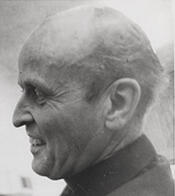
Charles Russell Train (October 18, 1817 – July 29, 1885) was an American lawyer and politician who served two terms as a U.S. Representative from Massachusetts from 1859 to 1863. A member of the Republican Party, he represented Massachusetts in Congress during a significant period in American history, participating in the legislative process at the outset of the Civil War and representing the interests of his constituents in Middlesex County and the Commonwealth at large.
Train was born in Framingham, Massachusetts, on October 18, 1817. He attended the local common schools and Framingham Academy before pursuing higher education. He graduated from Brown University in Providence, Rhode Island, in 1837, reflecting an early commitment to classical and legal studies that would shape his professional life. After college, he studied law at Harvard University, receiving the legal training that prepared him for admission to the bar and a long career in public service.
In 1841, Train was admitted to the bar and commenced the practice of law in his native Framingham, Massachusetts. He quickly became active in state affairs and was elected to the Massachusetts House of Representatives, serving in 1847 and 1848. His legal abilities led to his appointment as district attorney of Middlesex County, a position he held from 1848 to 1851 and again from 1853 to 1855. In 1852 he declined an appointment as Associate Justice of the Supreme Court of the United States, an unusual distinction that underscored his prominence at the bar and in public life. He also took part in shaping the state’s basic law as a delegate to the Massachusetts Constitutional Convention of 1853.
As the new Republican Party emerged in the 1850s, Train aligned himself with its principles and became one of its active leaders in Massachusetts. He served as a delegate to the Republican National Convention in 1856, participating in the early national organization of the party. At the state level, he continued in public service as a member of the Massachusetts Governor’s Council in 1857 and 1858, advising the governor and contributing to executive and administrative decisions during a period of mounting sectional tension in the United States.
Train was elected as a Republican to the Thirty-sixth and Thirty-seventh Congresses, serving from March 4, 1859, to March 3, 1863. During his two terms in the U.S. House of Representatives, he served as chairman of the Committee on Public Buildings and Grounds in both Congresses, overseeing matters related to federal buildings and property at a time when the national capital and other federal facilities were expanding and being adapted to wartime needs. His service in Congress coincided with the secession crisis and the early years of the Civil War, and he was one of the managers appointed by the House of Representatives in 1862 to conduct the impeachment proceedings against West H. Humphreys, United States judge for the several districts of Tennessee, who had adhered to the Confederacy. He was not a candidate for renomination in 1862. During the Civil War, in addition to his legislative duties, Train served in the Union Army as a volunteer aide-de-camp to General George B. McClellan, further demonstrating his support for the Union cause.
After leaving Congress, Train moved from Framingham to Boston, Massachusetts, where he continued to combine legal practice with public service. He served on the Boston Common Council in 1867, participating in the municipal governance of the growing city. He again became a member of the Massachusetts House of Representatives from 1868 to 1871, returning to the state legislature where he had begun his political career two decades earlier and taking part in postwar legislative issues, including those before the 1868 Massachusetts legislature.
In 1872, Train was elected Attorney General of Massachusetts, the chief legal officer of the Commonwealth, and he held that office until 1879. In this capacity he oversaw the legal affairs of the state, represented Massachusetts in important litigation, and advised state officers and agencies during a period of industrial growth and legal change in the post–Civil War era. At the conclusion of his tenure as attorney general, he resumed the private practice of law, drawing on his extensive experience in both state and federal matters.
Charles Russell Train died while on a visit to North Conway, New Hampshire, on July 29, 1885. He was interred in Edgell Grove Cemetery in Framingham, Massachusetts, returning in death to the community where he had been born, begun his legal career, and first entered public life.
Congressional Record