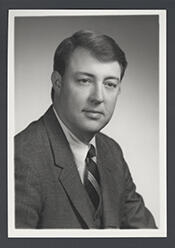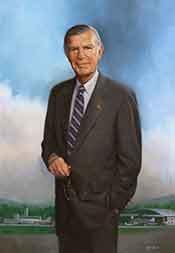
Charles Clarence Pratt (April 23, 1854 – January 27, 1916) was a Republican member of the U.S. House of Representatives from Pennsylvania. He was born in New Milford, Susquehanna County, Pennsylvania, to Ezra and Addie Pratt, members of a family long established in that rural community. Growing up in New Milford, he attended the local rural schools, receiving the basic education typical of small-town Pennsylvania in the mid-nineteenth century.
Seeking further education beyond his hometown, Pratt attended the Sedgwick Institute in Great Barrington, Massachusetts, a preparatory school that drew students from across the region. He subsequently returned to Pennsylvania to pursue formal teacher training, graduating from the State Normal School at Bloomsburg, Pennsylvania, an institution founded to prepare educators for the public school system. His education at Bloomsburg provided him with a grounding in both academic subjects and civic responsibility that would inform his later public service.
After completing his studies, Pratt returned to New Milford and entered private business. In 1879 he became engaged in the lumber and oil businesses in and around New Milford, participating in two of the principal extractive industries that were then transforming the economy of northern Pennsylvania. His business activities helped establish him as a prominent local figure and provided the financial base for his later civic and political endeavors.
Pratt’s involvement in local affairs developed alongside his business career. He served his community in several elected and appointed capacities, including as assessor, school director, and justice of the peace in New Milford. Through these positions he gained practical experience in local governance, taxation, education administration, and the minor judiciary. Demonstrating an interest in public institutions and civic improvement, he undertook in 1903 the construction of what is now known as the Pratt Memorial Library, expanding upon a library that had originally been established by his parents. This project reflected both his family’s commitment to education and his own desire to provide cultural and educational resources to the residents of New Milford.
Pratt’s growing reputation in Republican politics led to service at the state level. From 1899 to 1907 he served as a colonel on the respective staffs of three Republican governors of Pennsylvania: William A. Stone, Samuel W. Pennypacker, and John K. Tener. In this honorary but influential capacity, he was associated with the executive branch during a period of industrial expansion and political realignment in the state, strengthening his ties to the Republican Party organization and broadening his political experience beyond local office.
Building on his business success and state-level connections, Pratt was elected as a Republican to the Sixty-first Congress, representing Pennsylvania in the U.S. House of Representatives. He served a single term from March 4, 1909, to March 3, 1911. During his time in Congress, he aligned with the Republican majority of the era, although specific details of his committee assignments and legislative initiatives are not extensively documented in contemporary sources. In 1910 he was an unsuccessful candidate for reelection, losing his bid to return to the House in the changing political climate of the early twentieth century.
Following his congressional service, Pratt resumed his former business pursuits in the lumber and oil fields. He divided his time seasonally, residing in Binghamton, New York, during the winters and returning to New Milford, Pennsylvania, during the summers, maintaining close ties to both communities. He continued to be regarded as a leading citizen and former congressman until his death in Binghamton on January 27, 1916, at the age of 61. He was interred in New Milford Cemetery in his native town, where his family, business, and civic legacy had been most deeply rooted.
Congressional Record