United States Representative Directory

Charles Pelham

Charles Pelham served as a representative for Alabama (1873-1875).

  • Republican
  • Alabama
  • District 3
  • Former
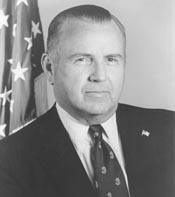
Portrait of Charles Pelham Alabama
Role Representative

Current assignment referenced in the congressional directory.

State Alabama

Representing constituents across the Alabama delegation.

District District 3

District insights and legislative focus areas.

Service period 1873-1875

Years of public service formally recorded.

Font size

Biography

Charles Pelham was the name of several notable public figures in British and American political life, most prominently a British landowner and politician who died in 1763 and Charles Pelham (1835–1908), a United States Representative from Alabama. The name was also borne by a number of British peers connected with the Yarborough and Worsley titles, including Charles Pelham, 1st Earl of Yarborough (1781–1846); Charles Pelham, 4th Earl of Yarborough (1859–1936); Charles Pelham, 8th Earl of Yarborough (born 1963); Charles Pelham, Lord Worsley (1887–1914); and Charles Anderson-Pelham, 1st Baron Yarborough (1749–1823). These individuals, though separated by generations and national contexts, were linked by landownership, public service, and, in several cases, membership in the British aristocracy.

The earliest prominent bearer of the name in public life was Charles Pelham, a British landowner and politician who died in 1763. Active during the mid‑eighteenth century, he belonged to the landed gentry and participated in the political life of his time as a Member of Parliament, reflecting the close connection between landownership and parliamentary representation in Georgian Britain. His family and estates formed part of the social and economic foundation from which later Pelham and Anderson-Pelham titles emerged. In the following generation, Charles Anderson-Pelham, born in 1749, rose to prominence as a British politician. He was created 1st Baron Yarborough in 1794, entering the peerage as Baron Yarborough of Yarborough in the County of Lincoln. As a member of the House of Commons before his elevation and subsequently of the House of Lords, he exemplified the transition of influential landowning families from commoner representation to hereditary peerage.

The Yarborough line was further consolidated by Charles Pelham, born in 1781, who became the 1st Earl of Yarborough. A British peer and substantial landowner, he was elevated from the barony established by his father to an earldom in the nineteenth century, reflecting the family’s growing prominence and service. His estates and influence were centered in Lincolnshire and surrounding counties, and he participated in the social and political life of the British aristocracy during the Regency and early Victorian periods. Over time, the title passed through successive generations, including Charles Pelham, 4th Earl of Yarborough, born in 1859. The 4th Earl, a British peer, held the title during the late Victorian and Edwardian eras, a period marked by both the persistence of aristocratic influence and the gradual evolution of Britain’s political and social order. As with his predecessors, his role combined the management of extensive landed estates with participation in the ceremonial and political functions of the peerage.

Another notable bearer of the name in the British aristocracy was Charles Pelham, Lord Worsley, born in 1887. As the heir apparent to the Yarborough earldom, he held the courtesy title Lord Worsley. His life, however, was cut short by the First World War. Serving in the British Army during that conflict, he was killed in action in 1914, one of many members of the British upper classes who died on active service in the early months of the war. His death not only represented a personal and familial loss but also symbolized the profound impact of the war on the traditional aristocratic families of the United Kingdom. In the modern era, the title has continued within the family, and Charles Pelham, born in 1963, holds the title of 8th Earl of Yarborough. As a British peer and landowner, he represents the contemporary continuation of a lineage that has been associated with the Pelham and Anderson-Pelham names, British politics, and landed society since the eighteenth century.

In the United States, the most prominent political figure bearing the name was Charles Pelham, born in 1835, who served as a U.S. Representative from Alabama. His early life was shaped by the antebellum South, and he came of age in a period of sectional tension that culminated in the Civil War. He served in the Confederate Army during the conflict, aligning with his state and region. After the war, during the era of Reconstruction and its aftermath, he entered public life in Alabama. Elected to the United States House of Representatives, he served as a congressman from Alabama, participating in the national legislature at a time when the former Confederate states were being reintegrated into the Union and the legal and political status of formerly enslaved people was being contested and redefined. His congressional service placed him among those southern Democrats who navigated the complex transition from rebellion to representation in Washington.

Charles Pelham (1835–1908) completed his term in Congress and remained active in legal and civic affairs in Alabama in the later decades of the nineteenth century. His career reflected the broader trajectory of many southern political figures who moved from Confederate service to roles in the restored federal system. He lived through Reconstruction, the end of federal military oversight in the South, and the establishment of new state constitutions and laws that reshaped political life in Alabama. He died in 1908, leaving a record as a former Confederate officer and as a U.S. Representative from Alabama. Across the Atlantic, the various British Charles Pelhams and Anderson-Pelhams—whether as landowners, Members of Parliament, barons, earls, or heirs who fell in war—collectively illustrate the enduring association of the Pelham name with public service, landed influence, and the evolving institutions of representative government in Britain and the United States from the eighteenth century into the modern era.

Congressional Record

Loading recent votes…

More Representatives from Alabama