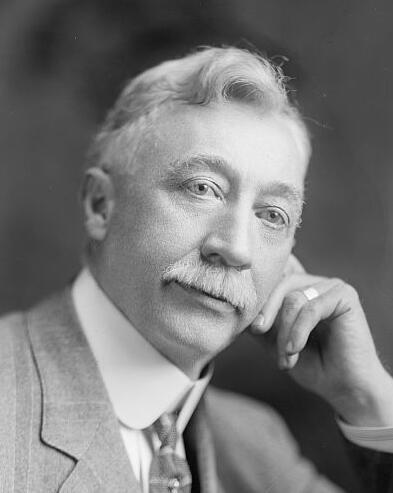
Charles Matthews (October 15, 1856 – 1932) was a Republican member of the United States House of Representatives from Pennsylvania who served a single term in Congress from 1911 to 1913. He represented his Pennsylvania constituents during a period of significant political and social change in the United States.
Born in Pennsylvania in 1856, Charles Matthews came of age in the aftermath of the Civil War and during the rapid industrialization of the late nineteenth century, developments that would shape both the economy and politics of his home state. Although detailed records of his early life and family background are limited, his emergence as a public figure in Pennsylvania reflects the opportunities and challenges of a state undergoing transformation in manufacturing, mining, transportation, and urban growth. These conditions provided the backdrop for his later engagement in public affairs and Republican Party politics.
Matthews’s education and early professional career unfolded in an era when many future officeholders combined formal schooling with practical experience in business, law, or local government. While specific institutions he may have attended are not documented in the available sources, his eventual election to Congress suggests that he developed a reputation for competence and leadership within his community and party. Like many Pennsylvania politicians of his generation, he likely built his career through involvement in local or state matters before seeking national office, gaining familiarity with the concerns of workers, farmers, and industrial interests that dominated the state’s economy.
By the early twentieth century, Charles Matthews had become sufficiently prominent within the Republican Party to secure election to the United States House of Representatives from Pennsylvania. He entered Congress at a time when the nation was grappling with Progressive Era reforms, debates over tariffs and trusts, and questions of labor rights and regulatory policy. His term in the House began in 1911 and concluded in 1913, encompassing one full term in office. During this period, he contributed to the legislative process, participated in the deliberations of the House of Representatives, and took part in the democratic process by representing the interests and concerns of his constituents at the federal level.
Matthews’s congressional service coincided with the closing years of the presidency of William Howard Taft and the contentious national political realignments that preceded the election of 1912. As a Republican, he served in a party that was internally divided between more conservative and progressive elements, a division that affected legislative priorities and electoral outcomes. Within this environment, Matthews fulfilled the responsibilities of a Representative by engaging in committee work, voting on national legislation, and advocating for Pennsylvania’s needs in areas such as industry, commerce, and infrastructure. Although the detailed record of his specific committee assignments or sponsored measures is not preserved in the available summary, his role as a member of the House placed him within the broader currents of national policy-making at a pivotal time.
After his term ended in 1913, Charles Matthews did not return to Congress, and he is recorded as having served only that single term in the House of Representatives. Like many one-term members, he likely resumed private life or other forms of public or civic engagement in Pennsylvania, drawing on his experience in national office and his connections within the Republican Party. His post-congressional years unfolded against the backdrop of World War I, the interwar period, and continued economic and political change in both Pennsylvania and the nation, though specific details of his activities during these decades are not extensively documented in the surviving biographical summaries.
Charles Matthews died in 1932, closing a life that spanned from the immediate post–Civil War era through the onset of the Great Depression. His career as a member of the U.S. House of Representatives from Pennsylvania, serving from 1911 to 1913 as a Republican, situates him among the many public officials who contributed to the governance of the United States during the Progressive Era.
Congressional Record