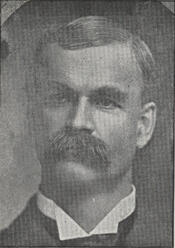
Charles Edgar Littlefield (June 21, 1851 – May 2, 1915) was a United States Representative from Maine who served in Congress from 1899 to 1909. A member of the Republican Party, he contributed to the legislative process during five terms in office and participated actively in representing the interests of his constituents during a significant period in American political and economic history.
Littlefield was born in Lebanon, York County, Maine, on June 21, 1851. He attended the common schools of his native state and pursued further studies at Foxcroft Academy in Foxcroft, Maine. After completing his preparatory education, he studied law and was admitted to the bar, beginning the practice of law in Rockland, Knox County, Maine. His legal career in Rockland established him as a prominent attorney in the region and provided the foundation for his subsequent public service.
Littlefield entered public life in state politics as a member of the Maine House of Representatives, in which he served from 1885 to 1887. In his final year in the state legislature, he was chosen as Speaker of the Maine House of Representatives, reflecting the confidence of his colleagues in his leadership and parliamentary abilities. Building on this experience, he was elected Attorney General of Maine, serving from 1889 to 1893. During this period he gained statewide recognition as a leading Republican figure. He also participated in national party affairs as a delegate to the Republican National Conventions in 1892 and 1896, taking part in the deliberations that helped shape the party’s national platforms in the closing years of the nineteenth century.
In addition to his political and legal work, Littlefield maintained an ongoing relationship with higher education in Maine. He served as a fellow of Bates College from 1899 until his death in 1915, a role that connected him to the academic community and reflected his standing in the state’s civic and intellectual life. His service to Bates coincided with his years in Congress and his later legal practice, indicating a sustained commitment to educational and institutional governance.
Littlefield’s congressional career began with his election as a Republican to the Fifty-sixth Congress to fill the vacancy caused by the death of Representative Nelson Dingley Jr. He took his seat in the U.S. House of Representatives on June 19, 1899. He was subsequently reelected to the four succeeding Congresses, serving continuously from June 19, 1899, until his resignation, effective September 30, 1908. Over this period, which spanned the administrations of Presidents William McKinley, Theodore Roosevelt, and the early years of William Howard Taft’s era, Littlefield participated in the democratic process at the national level and represented the interests of his Maine constituents during a time marked by industrial expansion, regulatory reform, and growing federal involvement in economic affairs.
During his tenure in the House of Representatives, Littlefield held important committee responsibilities. He served as chairman of the Committee on Expenditures in the Department of Agriculture during the Fifty-ninth and Sixtieth Congresses. In that capacity, he oversaw aspects of fiscal oversight related to the Department of Agriculture, which was increasingly significant as the federal government expanded its role in agricultural research, rural policy, and food regulation. His work on this committee placed him at the intersection of budgetary scrutiny and policy development in an era when agricultural issues were central to both Maine and the nation.
After resigning from Congress on September 30, 1908, Littlefield moved from Maine to New York City. There he resumed and continued the practice of law, engaging in legal work in the nation’s principal commercial center. He remained in New York City until his death on May 2, 1915. Following his death, his body was returned to Maine, and he was interred in Achorn Cemetery in Rockland, reflecting his long-standing ties to the community where his legal and political career had first taken root.
Congressional Record