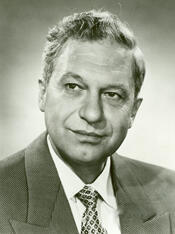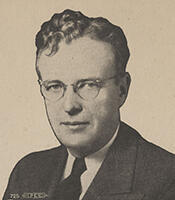
Charles Marion La Follette (February 27, 1898 – June 27, 1974) was an American lawyer and Republican politician who represented Indiana in the United States House of Representatives from 1943 to 1947 and later served as a deputy chief of counsel at the post–World War II Nuremberg Trials. He was born in New Albany, Floyd County, Indiana, into a family with a notable political lineage. His great-grandfather, William Heilman, had served as a Republican member of the United States House of Representatives from Indiana in the nineteenth century, and La Follette was also a third cousin of prominent Wisconsin progressives Robert M. La Follette Jr. and Philip La Follette. This family background placed him within a longstanding Midwestern Republican and reformist political tradition.
During World War I, La Follette entered military service in the United States Army from 1917 to 1919. He served in the 151st Infantry Regiment of the 38th Infantry Division, a unit that was mobilized as part of the American Expeditionary Forces. His wartime experience coincided with his formative years and preceded his entry into the legal profession and public life. After his discharge from the Army, he pursued higher education in law, reflecting a transition from military to civilian public service.
Following his military service, La Follette studied law at Vanderbilt University in Nashville, Tennessee. Upon completion of his legal studies, he was admitted to the Indiana bar in 1925. He established a law practice in Evansville, Indiana, where he built his professional reputation. His legal career in Evansville provided the foundation for his subsequent involvement in state and national politics, and it situated him in one of Indiana’s key industrial and commercial centers during the interwar period.
La Follette’s formal political career began at the state level. A member of the Republican Party, he served in the Indiana House of Representatives from 1927 to 1929. In that capacity, he participated in the legislative process in Indianapolis during a period marked by economic growth and the evolving role of state government in regulating industry and public welfare. His state legislative service helped establish his credentials within the Republican Party and prepared him for higher office.
La Follette was elected as a Republican to the United States House of Representatives and served two terms from 1943 to 1947, representing Indiana during the 78th and 79th Congresses. His tenure in Congress coincided with World War II and the immediate postwar period, a significant era in American and world history. As a member of the House of Representatives, he contributed to the legislative process, participated in the democratic governance of the nation, and represented the interests of his Indiana constituents at a time of global conflict, wartime mobilization, and the early stages of postwar reconstruction. His service in Congress reflected both his party affiliation and his commitment to national policy debates during a transformative period.
After leaving Congress in 1947, La Follette played a notable role in the international legal reckoning that followed World War II. In that year he served as deputy chief of counsel for war crimes at the Nuremberg Trials, participating in the prosecution of Nazi officials and the development of legal principles governing crimes against humanity and war crimes. His work at Nuremberg linked his legal expertise and public service to one of the most consequential judicial proceedings of the twentieth century and underscored his engagement with emerging norms of international law and justice.
In the years following his work at Nuremberg, La Follette continued his involvement in public affairs. He served as director of Americans for Democratic Action from 1949 to 1950, aligning himself with a liberal, anti-totalitarian advocacy organization that promoted civil rights, social welfare, and democratic values in the early Cold War era. He then served on the Subversive Activities Control Board from 1950 to 1951, a federal body created to oversee the registration and investigation of organizations deemed subversive under U.S. law. These positions placed him at the intersection of domestic policy, civil liberties, and national security during a period of intense concern over communism and political extremism.
Charles Marion La Follette died in Trenton, New Jersey, on June 27, 1974. His body was cremated, and his ashes were interred at Locust Hill Cemetery in Evansville, Indiana, returning him to the community where he had established his legal practice and begun his rise in public life. His career encompassed service as a state legislator, a two-term member of Congress, a key participant in the Nuremberg war crimes prosecutions, and a figure in mid-twentieth-century debates over democracy, security, and civil liberties in the United States.
Congressional Record