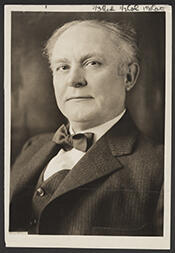
Charles Landon Knight (June 18, 1867 – September 26, 1933) was an American lawyer, newspaper publisher, and Republican politician who represented Ohio in the United States House of Representatives for one term from 1921 to 1923. Over the course of his varied career, he combined legal training, business leadership, and public service, and his family later expanded his publishing enterprise into the national newspaper chain that became Knight Ridder.
Knight was born on June 18, 1867, and came of age during the post–Civil War era, a period of rapid industrialization and political realignment in the United States. Details of his early life and upbringing are less extensively documented than his later public career, but he pursued formal education that prepared him for the legal profession and for eventual leadership in the newspaper industry. His early experiences in a changing economic and social landscape helped shape his later interest in public affairs and civic engagement.
Trained as a lawyer, Knight entered the legal profession before turning increasingly to journalism and publishing. His legal background provided him with a strong understanding of statutory and constitutional issues, which proved valuable both in managing a growing business and in his later legislative work. He became a newspaper publisher in Ohio, building a regional enterprise that would form the foundation of a much larger media organization. Under his direction, the newspaper business gained influence in its community and state, reflecting his interest in public policy, politics, and the role of a free press in democratic society.
Knight’s prominence as a publisher and his longstanding involvement in civic matters led him into elective politics as a member of the Republican Party. In the context of the early 1920s—a period marked by post–World War I adjustment, debates over economic policy, and shifts in domestic and foreign affairs—he sought and won election to the United States House of Representatives from Ohio. He served in the House from 1921 to 1923, completing a single term in Congress. During this time, he contributed to the legislative process and participated in the democratic governance of the nation, representing the interests and concerns of his Ohio constituents in national deliberations.
As a Representative, Knight served during a significant period in American history, when Congress addressed issues related to postwar recovery, industrial growth, and evolving international responsibilities. While in office, he took part in the work of the House of Representatives as a Republican, aligning with his party’s priorities of the era, which included support for business development and a generally conservative approach to fiscal and economic policy. His service, though limited to one term, reflected his broader commitment to public life and to the responsibilities of representative government.
After leaving Congress in 1923, Knight returned to his principal vocation in the newspaper industry. He continued to oversee and develop his publishing interests in Ohio, maintaining his role as a prominent figure in both business and civic affairs. His work in journalism and publishing extended his influence beyond electoral politics, as his newspapers helped shape public opinion and provided a forum for discussion of local, state, and national issues. He remained active in these endeavors into the later years of his life.
Knight’s legacy extended through his family, particularly his sons, who built upon the foundation he had established in the newspaper business. Under their leadership, the enterprise expanded significantly and evolved into Knight Ridder, one of the largest and most influential newspaper chains in the United States during the twentieth century. This development linked Knight’s name not only to a brief but notable period of congressional service, but also to the long-term growth of American journalism and the modern media landscape.
Charles Landon Knight died on September 26, 1933. At the time of his death, he was recognized as a figure who had combined legal expertise, business acumen, and public service. His career in Congress from 1921 to 1923, his leadership in the Ohio newspaper industry, and the subsequent national prominence of Knight Ridder together secured his place in the historical record as both a public official and a significant early figure in American newspaper publishing.
Congressional Record