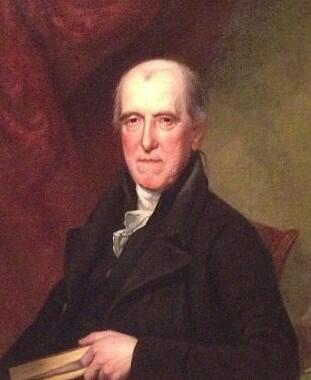
Charles Jared Ingersoll (October 3, 1782 – May 14, 1862) was an American lawyer, writer, and politician who served multiple terms in the United States House of Representatives from Pennsylvania and held a variety of legal, diplomatic, and legislative posts over a long public career. He was born in Philadelphia, Pennsylvania, to Jared Ingersoll and Elizabeth Petit (or Pettit). His father, Jared Ingersoll, was a prominent lawyer who served in the Continental Congress and later as attorney general of Pennsylvania, and his maternal grandfather, Charles Pettit, served as a delegate for Pennsylvania to the Confederation Congress. His brother, Joseph Reed Ingersoll, also became a member of the U.S. House of Representatives from Pennsylvania, making the family one of notable political influence in early national and antebellum America.
Ingersoll received his early education in Philadelphia and entered the College of New Jersey (later Princeton University), but he dropped out in 1799 before completing his degree. He then turned to the study of law, was admitted to the bar in 1802, and commenced practice in Philadelphia. Early in his career he traveled in Europe, where he was associated for a time with Rufus King, the United States minister to the United Kingdom, gaining exposure to international affairs that would later inform his political and literary work. In 1804 he married Mary Wilcocks, daughter of Alexander Wilcocks, a distinguished Philadelphia lawyer; the couple had six surviving sons and two daughters. One of their sons, Edward Ingersoll, became known for his own writings on legal topics.
Alongside his legal practice, Ingersoll developed a reputation as a man of letters. He published “Chiomara,” a poem in The Port Folio in 1800, and followed it with the tragedy Edwy and Elgira (Philadelphia, 1801). He continued to write extensively on political and literary subjects, including Right and Wrongs, Power and Policy of the United States of America (1808) and Inchiquin the Jesuit’s Letters on American Literature and Politics (New York, 1810). His early writings reflected his engagement with questions of American national character, foreign policy, and the young republic’s place in the world of letters. Over the course of his life he contributed numerous anonymous articles to the Democratic Press of Philadelphia and the National Intelligencer of Washington, particularly on controversies with Great Britain in the years leading up to and during the War of 1812.
Ingersoll entered national politics during that conflict. In 1812 he was elected as a Democratic-Republican to the Thirteenth Congress, representing Pennsylvania’s 1st congressional district, and served from 1813 to 1815. During this first term in the U.S. House of Representatives he was chairman of the House Committee on the Judiciary, playing a significant role in legislative oversight of legal and constitutional matters at a time when the nation was at war. He was not a candidate for renomination in 1814, instead accepting appointment as United States district attorney for Pennsylvania. He held that federal prosecutorial office from 1815 to 1829, a lengthy tenure that spanned the administrations of multiple presidents. In 1815 he was elected a member of the American Philosophical Society, before which he later delivered his “Discourse Concerning the Influence of America on the Mind” (1823), an oration that was republished in England and France.
Ingersoll’s public service in Pennsylvania extended beyond his federal duties. He was a member of the Pennsylvania canal and internal improvement convention in 1825, reflecting his interest in infrastructure and economic development in the state. In 1829 he was removed from the office of United States district attorney by President Andrew Jackson, a decision that underscored the partisan and patronage-driven character of Jacksonian politics. The following year, in 1830, he served as a member of the Pennsylvania House of Representatives, marking his formal participation in state-level legislation. He later took part in the Pennsylvania constitutional convention of 1837, contributing to debates over the structure of state government and the reform of its fundamental law.
In the late 1830s Ingersoll combined diplomatic and political ambitions. On March 8, 1837, he was appointed secretary of the American legation to Prussia, a post that drew on his earlier exposure to European diplomacy. That same year he was an unsuccessful candidate for election to the Twenty-fifth Congress in a special election to fill the vacancy caused by the death of Francis J. Harper, and he again failed in a bid for election in 1838. Despite these setbacks, he remained active in Democratic Party politics and in public discourse through his writings and speeches.
Ingersoll returned to Congress in the 1840s as a member of the Democratic Party. He was elected to the Twenty-seventh Congress from Pennsylvania’s 3rd congressional district, serving from 1841 to 1843, and then to the Twenty-eighth, Twenty-ninth, and Thirtieth Congresses from Pennsylvania’s 4th congressional district, serving from 1843 to 1849. Over these four consecutive terms he played a prominent role in national affairs, most notably as chairman of the House Committee on Foreign Affairs during the Twenty-eighth and Twenty-ninth Congresses. In that capacity he was involved in debates over U.S. foreign policy during a period marked by issues such as the annexation of Texas, the Oregon boundary question, and the Mexican–American War. He was appointed Minister to France in 1847, but the Senate did not confirm the appointment, and he therefore did not assume that diplomatic post. He was not a candidate for renomination in 1848, concluding his service in the House after five terms in total, during which he participated in the legislative process at a significant and often contentious period in American history.
Throughout his later career, Ingersoll continued to write extensively on historical and political subjects. Beginning in 1845 he published several editions of a major historical work on the War of 1812, issued as Historical Sketch of the Second War between the United States and Great Britain (4 vols., Philadelphia, 1845–1852), which included detailed accounts of military events and the Congressional investigation into the Burning of Washington in 1814. He also produced “Julian,” a dramatic poem (1831); Recollections, Historical, Political, Biographical, and Social, of Charles J. Ingersoll (Philadelphia: Lippincott & Co., 1861); and numerous speeches and discourses, including several “Speeches” on the War of 1812 (1813–1815). He translated a French work on the freedom of navigation, published in the American Law Journal in 1829, and continued to contribute literary and political essays throughout his life. At the time of his death he was preparing a History of the Territorial Acquisitions of the United States, reflecting his sustained interest in the expansion and development of the nation.
Charles Jared Ingersoll died in Philadelphia on May 14, 1862. His papers, including correspondence and writings, are preserved for research at the Historical Society of Pennsylvania, documenting his multifaceted career as lawyer, legislator, diplomat, historian, and man of letters.
Congressional Record