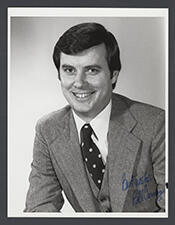
Charles Brooks Hoard (June 5, 1805 – November 20, 1886) was a U.S. Representative from New York. Born in Springfield, Vermont, he attended the public schools before moving as a young man to Antwerp, Jefferson County, New York. In Antwerp he trained and worked as a clerk, watch repairer, and mechanic, acquiring the practical and technical skills that would shape his later business career. During the 1830s he served as Antwerp’s postmaster, an early public position that placed him at the center of local communications and commerce.
Hoard soon entered manufacturing, forming a partnership with Gilbert Bradford. The firm of Hoard & Bradford became successful as a producer of portable steam engines used to operate printing presses and other machinery, reflecting the growing industrialization of the period. His prominence in local affairs led to election to the New York State Assembly from Jefferson County, where he served in 1838. Seeking broader opportunities, he moved to Watertown, New York, in January 1844. There he continued his involvement in public life, serving as Clerk of Jefferson County from 1844 to 1846, a position that involved responsibility for county records and administrative matters.
Originally a Democrat, Hoard was identified with the Free Soil and Barnburner movements within that party, aligning himself with the anti-slavery and reform elements of New York politics in the 1840s and early 1850s. His strong anti-slavery views led him to join the newly formed Republican Party in the mid-1850s, as that party emerged as the principal national vehicle for opposition to the expansion of slavery. As a member of the Republican Party representing New York, Charles Brooks Hoard contributed to the legislative process during two terms in office, participating in the democratic process and representing the interests of his constituents during a significant period in American history.
Hoard was elected as a Republican to the Thirty-fifth and Thirty-sixth Congresses, serving from March 4, 1857, to March 3, 1861. His congressional service coincided with the intensifying sectional crisis that preceded the Civil War, including debates over slavery in the territories and the preservation of the Union. In this context, he took his place among the growing number of northern Republicans who opposed the extension of slavery and supported policies aligned with the emerging national Republican platform. His two terms in Congress concluded just as several Southern states were seceding from the Union.
After leaving Congress, Hoard turned his attention to wartime industry. During the Civil War he engaged in the manufacture of rifles for the Union, applying his earlier mechanical and manufacturing experience to the war effort. Disputes with the War Department over the fulfillment of his arms contract, however, resulted in substantial financial losses, leaving him in difficult economic circumstances despite his loyalty to the Union cause.
Hoard’s business interests also extended beyond New York. Eli Thayer, the antislavery reformer and founder of Ceredo, in what is now West Virginia, had established that community as a model free-labor town intended to demonstrate that a Southern community could prosper without slavery. Thayer borrowed funds from Hoard to help finance the creation and development of Ceredo, linking Hoard financially and ideologically to this experiment in free labor on the border of the slave South.
In the late 1860s Hoard traveled extensively in the western and southern states to inspect and manage his business concerns, including his interests in Ceredo. In 1870 he relocated permanently to Ceredo, then part of the newly formed state of West Virginia. There he devoted himself to rebuilding his fortunes and advancing the town’s economic prospects. He played a leading role in expanding Ceredo’s timber industry, overseeing the construction of a sawmill and promoting the building of roads and rail connections that integrated the community more fully into regional markets. Through these efforts he helped stabilize and grow the town that had been conceived as a demonstration of free labor principles.
Charles Brooks Hoard died in Ceredo on November 20, 1886. He was interred in Spring Hill Cemetery in nearby Huntington, West Virginia. His life spanned the early republic, the rise of industrial enterprise in the North, the realignment of political parties over slavery, and the upheavals of the Civil War and Reconstruction era, and he left a record of service in both state and national office as well as in commercial and civic development.
Congressional Record