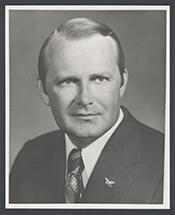
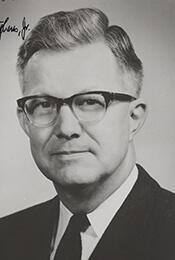
Charles Eaton Haynes (April 15, 1784 – August 29, 1841) was an American politician and physician who represented Georgia in the United States House of Representatives for five terms during the early nineteenth century. A member of the Democratic Party and aligned in his congressional career with the Jacksonian movement, he participated in the legislative process during a significant period in American history, representing the interests of his Georgia constituents in the evolving national debate over federal power, economic policy, and territorial expansion.
Haynes was born on April 15, 1784, in Brunswick, Mecklenburg County, Virginia. Little is recorded about his early childhood and family background, but his formative years in Virginia occurred against the backdrop of the early national period following the American Revolution. At some point as a young man, he left Virginia to pursue higher education and professional training, a path that would lead him into the medical profession and later into public life in Georgia.
Haynes pursued formal medical education at one of the leading institutions of the era, the University of Pennsylvania School of Medicine in Philadelphia, Pennsylvania. After completing his medical studies and graduating from the University of Pennsylvania School of Medicine, he entered the practice of medicine. His training at a prominent medical school and subsequent practice as a physician provided him with professional standing and community respect, which likely facilitated his entry into political life in the South. By the time he emerged as a candidate for national office, he was established as a physician and public figure in Georgia.
Transitioning from medicine to politics, Haynes became active in Georgia’s political affairs during the rise of Jacksonian democracy. Identified with the Jacksonian wing of what would become the Democratic Party, he was elected as a Jacksonian Representative from Georgia to the Nineteenth, Twentieth, and Twenty-first Congresses. His first period of congressional service extended from March 4, 1825, to March 3, 1831. During these three consecutive terms, he served in the U.S. House of Representatives at a time marked by contentious issues such as the role of the national bank, internal improvements, and the balance of power between the federal government and the states. As a member of the Democratic Party representing Georgia, Haynes contributed to the legislative process over these years, participating in debates and votes that reflected both the Jacksonian program and the interests of his constituents.
Haynes’s initial congressional career was interrupted when he failed to secure reelection in 1830 to the Twenty-second Congress. He also ran unsuccessfully for a seat in the Twenty-third Congress, temporarily halting his service in the national legislature. Despite these setbacks, he remained engaged in public life and Georgia politics. His defeats during this period coincided with shifting political alignments and intense factionalism within Georgia and the broader Jacksonian coalition, as regional and national questions continued to reshape party loyalties.
Haynes returned to the U.S. House of Representatives after winning election as a Jacksonian to the Twenty-fourth Congress and securing reelection to the Twenty-fifth Congress. His second stretch of congressional service lasted from March 4, 1835, until March 3, 1839. In these two additional terms, he again represented Georgia as a Democratic and Jacksonian-oriented member, serving during the administrations of Andrew Jackson and Martin Van Buren and participating in the legislative response to economic and political challenges of the late 1830s, including the aftermath of Jackson’s banking policies and the Panic of 1837. Across his five terms in office, Haynes’s service in Congress occurred during a significant period in American history, and he consistently took part in the democratic process on behalf of his Georgia constituents.
After leaving Congress in 1839, Haynes returned to private life in Georgia. Although detailed records of his later activities are limited, his background as a physician suggests he may have resumed medical practice or continued to play a role in local affairs. His surviving papers from the years 1827 to 1838, preserved in the Stuart A. Rose Manuscript, Archives, and Rare Book Library at Emory University, indicate his ongoing engagement with political and professional matters during and around his time in Congress.
Charles Eaton Haynes died on August 29, 1841. He was buried in Sparta, Georgia, reflecting his long-standing connection to the state he had represented in the national legislature. His career as both a physician and a five-term member of Congress places him among the notable Jacksonian-era public figures who helped shape Georgia’s role in the federal government during a transformative period in the United States.
Congressional Record