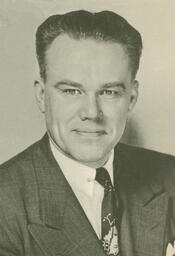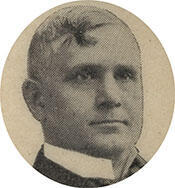
Charles Newell Fowler Sr. (November 2, 1852 – May 27, 1932) was an American lawyer, banker, and Republican Party politician who represented New Jersey in the United States House of Representatives from 1895 to 1911. Over eight consecutive terms in Congress, he contributed to the legislative process during a significant period in American history, participating actively in the democratic process and representing the interests of his constituents as a member of the House of Representatives.
Fowler was born on November 2, 1852, in Lena, Illinois, where he attended the local public schools. He pursued higher education at Beloit College in Wisconsin before enrolling at Yale College. At Yale, from which he graduated in 1876, he was a member of the secret society Skull and Bones and rowed on the Yale crew team. After completing his undergraduate studies, he taught school for a period and then entered the University of Chicago Law School, from which he graduated in 1878. That same year he was admitted to the bar, beginning a professional career that would combine law, finance, and politics.
Following his admission to the bar, Fowler commenced the practice of law in Beloit, Kansas. In 1883 he moved east to Cranford, New Jersey, marking the beginning of his long association with that state. He relocated again in 1891 to Elizabeth, New Jersey, where he became deeply involved in local civic and political affairs. In addition to his legal work, he engaged in banking and served as president of a mortgage company, experience that would later shape his legislative focus on financial and monetary issues.
Fowler’s political career developed within the Republican Party. He served for a number of years as chairman of the Republican city committee of Elizabeth, helping to organize and lead the party locally. At the state level, he was a member of the Republican State Committee from 1898 to 1907, participating in party strategy and statewide political organization. His growing prominence in Republican circles in New Jersey set the stage for his election to national office.
Elected as a Republican to represent New Jersey’s 8th congressional district, Fowler entered the Fifty-fourth Congress on March 4, 1895, and was reelected to the seven succeeding Congresses, serving continuously until March 3, 1911. His district was centered on Union County, New Jersey, where he resided. From 1895 to 1903, the district also encompassed Bayonne and most of Essex County; after redistricting, from 1903 to 1911 it was reconfigured to include Morris and Warren counties. During his eight terms in the House of Representatives, Fowler became one of the chamber’s leading voices on banking and currency. He served as chairman of the Committee on Banking and Currency from the Fifty-seventh through the Sixtieth Congresses, where he played a central role in shaping financial legislation. He was also a member of the Committee on Foreign Affairs and authored a bill to establish a tariff commission, reflecting his broader interest in national economic policy.
Fowler’s congressional service coincided with intense national debates over monetary policy and banking reform. He emerged as a leader at the 1897 monetary convention in Indianapolis, a key gathering of advocates for sound money and financial stability. In 1898 he debated Andrew Jackson Warner at the Omaha Convention, arguing in favor of paper money against fiat money in the context of the era’s currency controversies. He drafted a comprehensive financial measure known as the “Fowler Bill,” which proposed reforms to the American banking and currency system and became a focal point in discussions of monetary policy. His legislative and public advocacy on these issues continued beyond his years in office, and he later authored works such as “Seventeen Talks on the Banking Question” (1913), “An American Banking System” (1916), “The National Issues of 1916” (1916), and “The United States Reserve Bank: The Fundamental Defects of the Federal Reserve System Exposed and the Necessary Remedy” (1922), reflecting his sustained engagement with financial and economic questions.
Within party politics, Fowler sought higher office but met with limited success. In 1910 he was an unsuccessful candidate for the Republican nomination for election to the United States Senate from New Jersey, narrowly losing the nomination to Governor Edward C. Stokes in the state’s first direct primary election. He again faced Stokes in the 1913 Republican gubernatorial primary, but this time lost by a much wider margin. These defeats effectively ended his pursuit of major elective office, though he remained an influential commentator on financial and political issues.
After leaving Congress in 1911, Fowler returned to Elizabeth, New Jersey, where he resumed his banking activities and continued to engage in business and intellectual pursuits. He operated a group of marble quarries in Vermont, expanding his interests into the extractive industries. He also devoted attention to education, serving as president of the Pingry School in Elizabeth, a prominent preparatory institution. In addition to his business and educational roles, he pursued literary work, publishing several books and pamphlets on banking, currency, and national policy that drew on his congressional experience and expertise in financial matters.
In his personal life, Fowler married Hilda S. Heg in 1879. She was the daughter of Hans Christian Heg, a noted Norwegian-American abolitionist and Union Army officer in the Civil War. The couple had one son, Charles Newell Fowler Jr. Late in life, Fowler moved from Elizabeth to Orange, New Jersey, in 1930. He died on May 27, 1932, and was interred in Fairview Cemetery in Westfield, New Jersey. His former home in Elizabeth has been listed on the National Register of Historic Places, a recognition that underscores his lasting association with the city and his role in New Jersey’s political and civic history.
Congressional Record