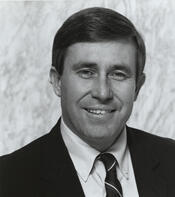
Charles Wilson Buttz (November 16, 1837 – July 20, 1913) was an American lawyer, Civil War officer, and Republican politician who served as a U.S. Representative from South Carolina during the Reconstruction era. Born in Stroudsburg, Pennsylvania, he moved with his parents in 1839 to White Township, New Jersey. He grew up in New Jersey and pursued legal studies in Belvidere, New Jersey, preparing for a professional career in the law that would later underpin his work in both state and national politics.
Buttz studied law in Belvidere and was admitted to the bar in 1863. Even before his formal admission to practice, the outbreak of the Civil War drew him into military service. In 1861 he joined the Union Army as a second lieutenant in the Eleventh Pennsylvania Cavalry. He was promoted to first lieutenant in 1862 and saw active service until he was wounded in 1863. Owing to impaired health resulting from his injuries, he resigned his commission in October 1863. In recognition of his service, he received two brevet commissions from the President, one as captain and the other as major, both dated from May 1865. During the war and immediately afterward, he also began to establish himself in civil life, being appointed a director of the Exchange Bank of Virginia in 1864.
Following the Civil War, Buttz combined his legal training and military reputation to build a career in public service. After his admission to the bar, he practiced law in Norfolk, Virginia, and in 1866 he was appointed Commonwealth’s attorney for King William County, Virginia. He was active in Republican politics, serving as a delegate to the Republican National Convention in 1864, reflecting his early alignment with the party that led the Union war effort and Reconstruction. In 1870 he moved to Charleston, South Carolina, where he continued his legal practice and became involved in the state’s Reconstruction-era political struggles. From 1872 to 1880 he served as solicitor of the first judicial circuit of South Carolina, a key prosecutorial position that placed him at the center of the state’s legal and political affairs during a turbulent period.
As a member of the Republican Party representing South Carolina, Buttz contributed to the legislative process during one term in the United States Congress. In 1875 he contested as a Republican the election of Edmund W. M. Mackey to the Forty-fourth Congress. After examining the disputed election, the House of Representatives decided that neither claimant was entitled to the seat. A special election was then held to fill the vacancy created by that decision, and Buttz was elected as a Republican to the Forty-fourth Congress. He served from November 7, 1876, to March 3, 1877, representing South Carolina during a significant period in American history at the close of Reconstruction. During this time he participated in the democratic process and represented the interests of his constituents in a Congress that grappled with the political and constitutional issues arising from the end of federal military intervention in the South. He was not a candidate for renomination in 1876.
After his brief tenure in Congress, Buttz left South Carolina and moved in 1878 to Fargo, in what was then Dakota Territory, where he became a “bonanza” farmer, participating in the large-scale agricultural development that characterized the region’s settlement. He played an important role in the political organization of the area, securing the official organization of Ransom County in 1882. He continued his legal and public service career there, serving as state’s attorney of Ransom County from 1884 to 1886. His involvement in territorial and, later, state politics extended into the early twentieth century.
In his later years, Buttz remained active in public life in North Dakota. After statehood, he served as a member of the North Dakota House of Representatives from 1903 to 1909, contributing to the legislative development of the young state. He spent his final years in Ransom County, North Dakota. Charles Wilson Buttz died in Lisbon, Ransom County, North Dakota, on July 20, 1913, and was interred in Oakwood Cemetery.
Congressional Record