Charles Montague Bakewell (April 24, 1867 – September 19, 1957) was an American university professor and Republican politician who served as a Representative from Connecticut in the United States Congress from 1933 to 1935. Over the course of a long academic and public career, he combined scholarly work in philosophy with service in state and national government, contributing to the legislative process during one term in the House of Representatives.
Bakewell was born in Pittsburgh, Pennsylvania, on April 24, 1867. He attended the public schools of Pittsburgh and pursued higher education locally at the University of Pittsburgh before moving west to the University of California at Berkeley. He graduated from the University of California in 1889 and received a master’s degree there in 1891. He then undertook advanced study in philosophy, earning a Ph.D. from Harvard University in 1894. To further broaden his academic training, he attended the Universities of Berlin, Strasbourg, and Paris from 1894 to 1896, immersing himself in contemporary European philosophical currents.
Following his studies abroad, Bakewell embarked on an academic career that would span several decades. He began as an instructor in philosophy at Harvard University from 1896 to 1897, then served as an instructor at the University of California from 1897 to 1898. From 1898 to 1900 he was an associate professor at Bryn Mawr College. Returning to the University of California, he served as an associate professor and then professor of philosophy from 1900 to 1905. In 1905 he joined the faculty of Yale University, where he was a professor of philosophy from 1905 to 1933. His standing in the field was recognized nationally when he served as president of the American Philosophical Association in 1910, reflecting his prominence among American scholars of his discipline.
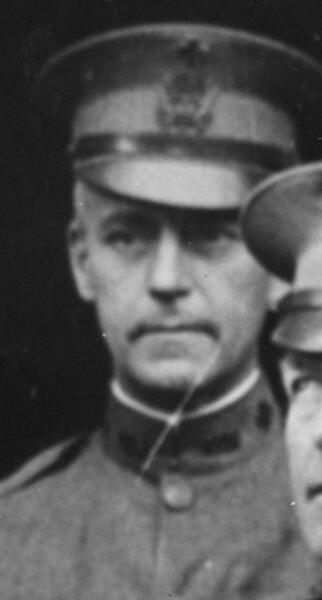
During World War I, Bakewell temporarily left academic life for service overseas. He served under the Italian Commission of the American Red Cross in Italy, where he held the rank of major and acted as deputy commissioner. In this capacity he performed duties as an inspector and historian, documenting and overseeing aspects of the Red Cross’s work in support of the Italian front. His wartime experience added an international and administrative dimension to his career that would later inform his public service.
After the war, Bakewell entered elective politics in Connecticut as a member of the Republican Party. He was elected to the Connecticut State Senate and served from 1920 to 1924. During this period he played a significant role in shaping state educational policy, serving from 1921 to 1923 as chairman of the state commission that revised and codified Connecticut’s educational laws. His work on this commission reflected both his academic background and his interest in public education and governance.
In 1932, amid the economic and political upheavals of the Great Depression, Bakewell was elected as a Republican to the United States House of Representatives from Connecticut. He served one term in the Seventy-third Congress, from March 4, 1933, to January 3, 1935. His service in Congress occurred during a significant period in American history, as the federal government responded to the crisis with far-reaching New Deal legislation. As a member of the House of Representatives, Charles Montague Bakewell participated in the democratic process and represented the interests of his Connecticut constituents, contributing to the legislative deliberations of this transformative era. He was an unsuccessful candidate for reelection in 1934, and his congressional service concluded at the end of his term. In 1936, he remained active in national party affairs as a delegate to the Republican National Convention.
Following his congressional service, Bakewell returned to private life, his long academic career at Yale having already concluded in 1933. He continued to be remembered both for his contributions to American philosophy and for his role in public service at the state and national levels. Charles Montague Bakewell died in New Haven, Connecticut, on September 19, 1957. He was buried in Grove Street Cemetery in New Haven, a city that had been the center of his academic and political life for many years.
Congressional Record